
You’ll have heard of roasting pumpkin seeds and maybe winter squash seeds in general, but what about melon seeds? It might sound peculiar if you’ve never tried them before, but melons are from the same family as pumpkins, so actually taste amazing. Here’s how to roast melon seeds.
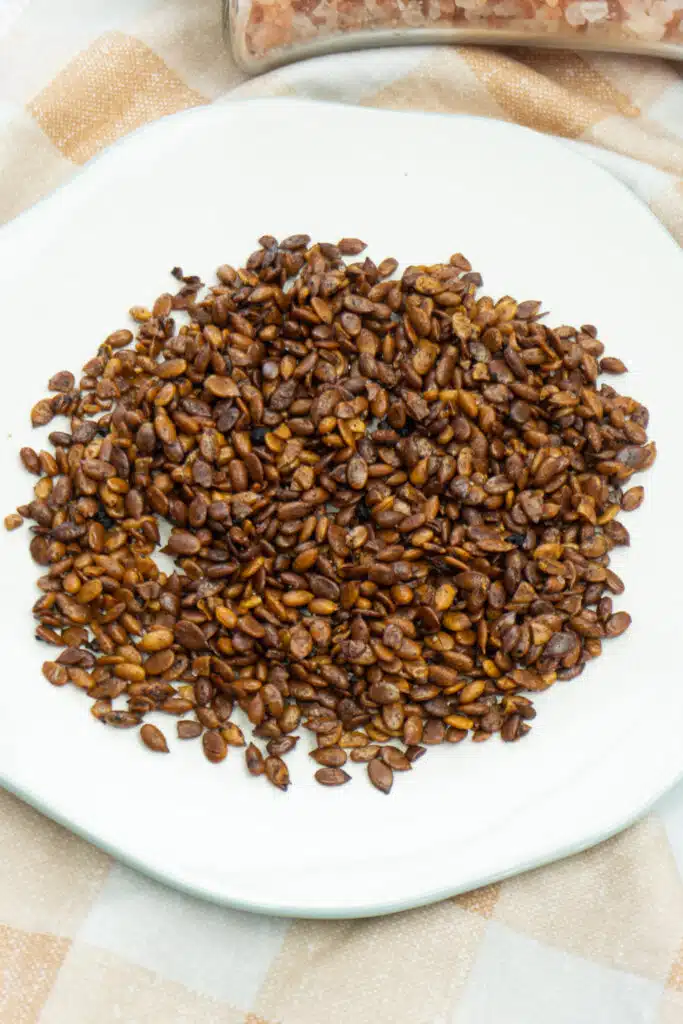
It might seem like an unusual snack in the West but melon seeds have been a popular snack and ingredient across much of Asia, Africa and the Middle East.
What I love is that it’s a great way to prevent food waste. We’re all becoming more and more aware of what we throw out. You’ve probably never taken a second look at the melon seeds you immediately tip into the bin. But this recipe just goes to show that the most unassuming waste product can become a delicious snack.
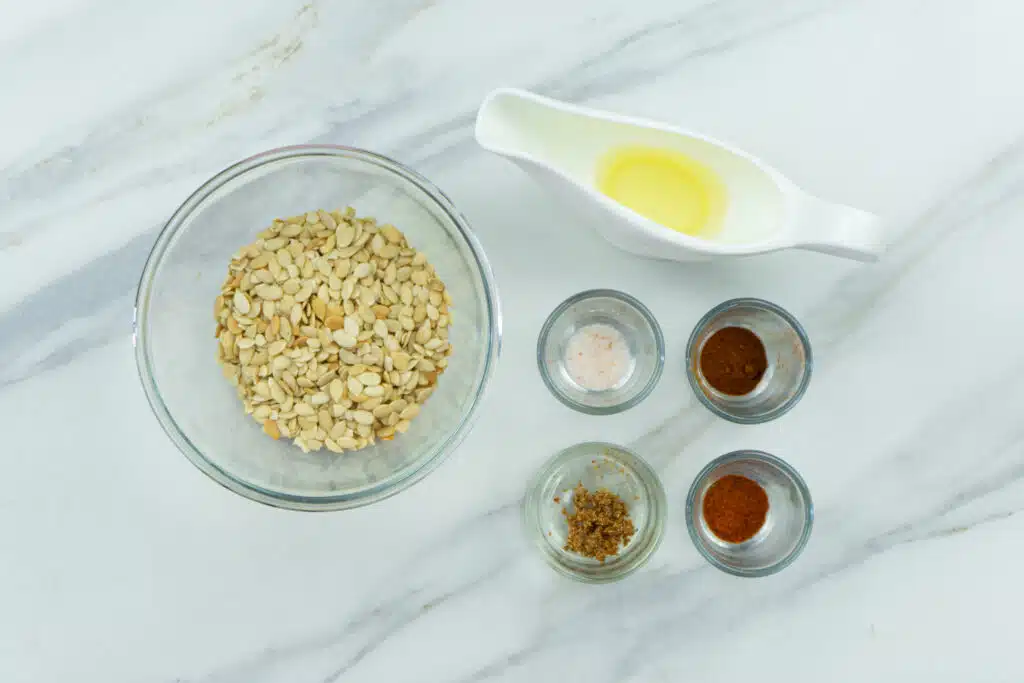
What You’ll Need to Roast Melon Seeds
To create a crunchy snack from 1 melon, you’ll need the following ingredients:
- Melon Seeds from 1 Melon: You can use the seeds from almost any melon. Watermelon is an option but you won’t get many seeds from one. Instead, try using a canteloupe or honeydew melon.
- 1 tbsp Olive Oil: You only need a little oil as it will help to crisp up the outsides of the seeds. Use too much and you’ll end up with greasy seeds!
- Salt: Salt is a given in most recipes, but it’s particularly important here for turning them into a moreish and addictive snack.
- ½ tsp Each of Chilli Powder, Paprika and Garlic Powder: Melon seeds don’t have a huge amount of flavour, which is why you’ll want to pile on the seasonings.
How to Roast Melon Seeds
Once you’ve got your ingredients ready, the method for roasting melon seeds is similar to how you would roast other seeds:
- Preparation
Preheat your oven to 160°C. Line a baking tray with parchment paper. - Cleaning
Wash the melon seeds to remove any fruit pulp and spread them on paper towels to dry completely. To get a good crunch, they need to be completely dry. - Seasoning
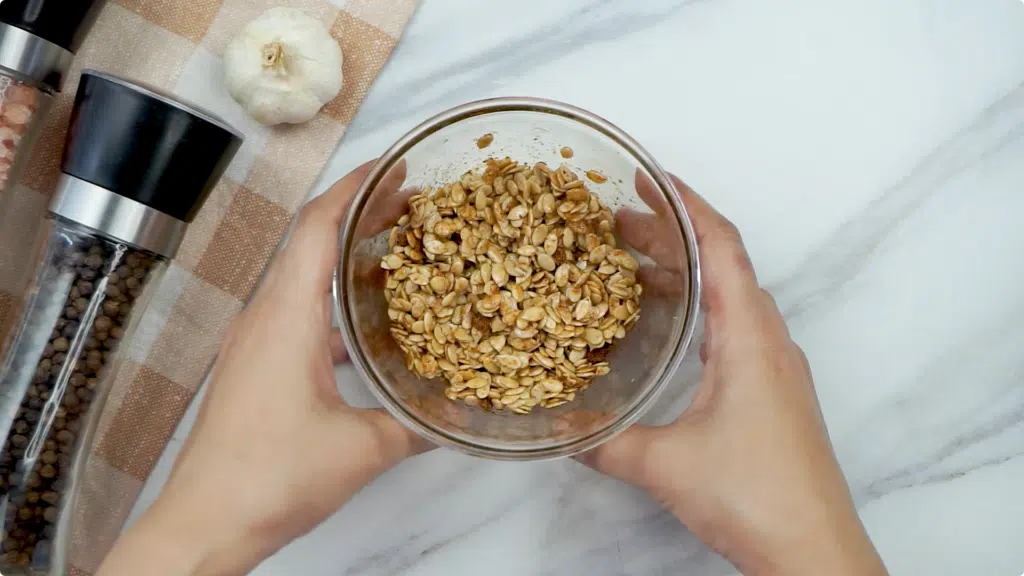
In a bowl, toss the dried melon seeds with olive oil, salt, chilli powder, paprika, and garlic powder. This will give you a tasty snack. Melon seeds on their own can be a little dull.
- Roasting
Spread the seasoned seeds in a single layer on the prepared baking tray. Roast for 15-20 minutes, stirring occasionally until golden and crispy.
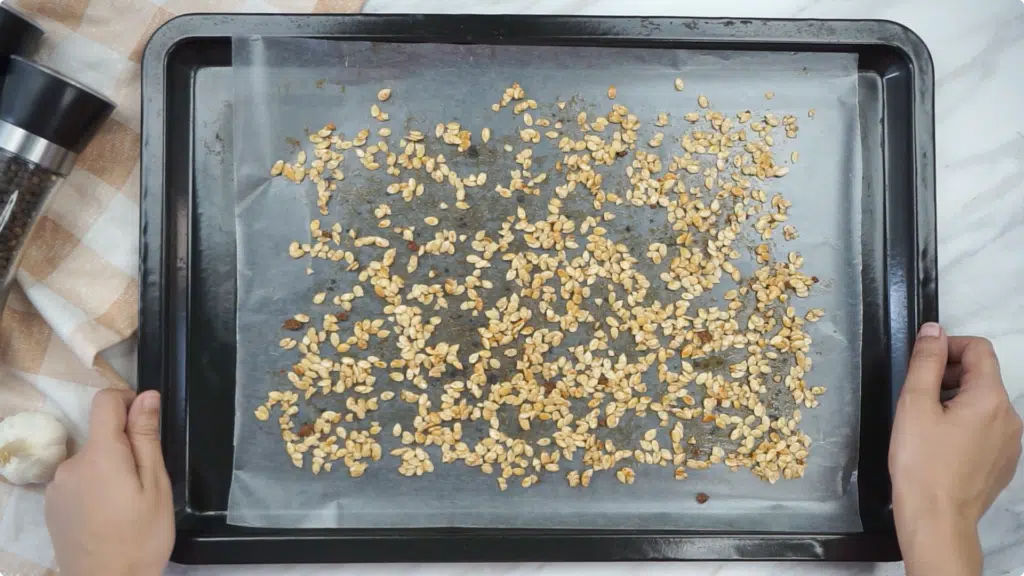
- Cooling
Allow the roasted seeds to cool on the tray, as they will become crunchier upon cooling, then enjoy. They can also be stored in an airtight container for up to 2 weeks.
Substitutes and Tweaks
Once the seeds have cooled, melt some chocolate and drizzle it, from a height, over the seeds to give them some sweetness.
Replace the chilli powder, paprika, and garlic powder with a mixture of cinnamon and sugar for a sweet treat.
Before roasting, drizzle with a bit of sesame oil and sprinkle sesame seeds for an added nutty flavour.
Before roasting, drizzle with a bit of sesame oil and sprinkle sesame seeds for an added nutty flavour.
Combine melon seeds with pumpkin and sunflower seeds, season, and roast together for a varied texture.
Instead of paprika, use turmeric for a mild flavour and vibrant yellow colour. For heat, consider ground cayenne or black pepper instead of chilli powder.
Tips for Roasting Melon Seeds
Below are my top tips for roasting melon seeds. If you’ve never roasted them before then make sure you give these a read:
- Pre-Roast Soaking: Soaking seeds overnight in a light brine of salty water not only seasons them but also helps achieve a crispy exterior during roasting.
- Soak Excess Oil: If your seeds seem too oily post-roasting, spread them on paper towels to absorb excess oil.
- Oven Door Ajar: Keeping the oven door slightly open in the last 5 minutes can let out steam and make the seeds crispier.
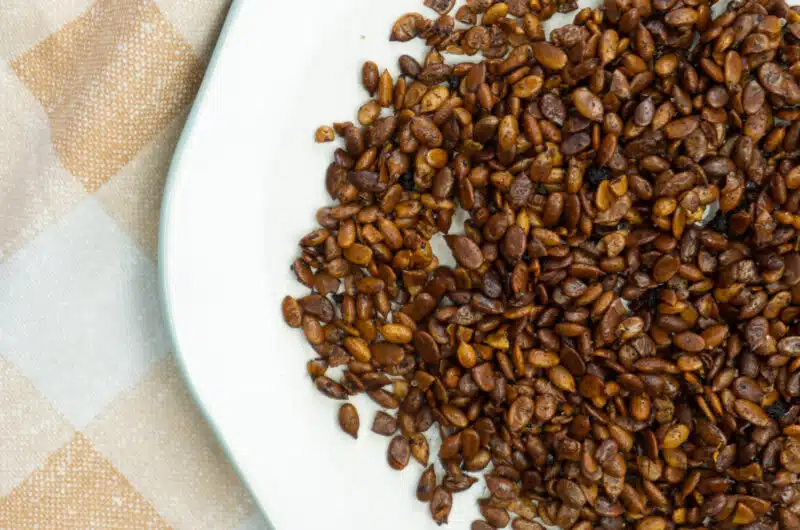
Spiced and Roasted Melon Seeds
Course: SnacksCuisine: Middle EasternDifficulty: Easy4
servings10
minutes20
minutes30
minutesMelon seeds roasted with plenty of salt, chilli, paprika and garlic powder for the ultimate snack.
Ingredients
1 Melon, Seeds Only
1 tbsp Olive Oil
Salt, to Taste
1/2 tsp Chilli Powder
1/2 tsp Paprika
1/2 tsp Garlic Powder
Directions
- Preheat your oven 160°C fan, and then line a baking tray with parchment paper. Once you have removed the seeds from the melon, you need to give them a good clean to remove the pulp and melon residue. You then need to dry them fully with lots of paper towels.
- In a bowl, add your salt, chilli powder, paprika and garlic powder along with the olive oil, then tip them in the melon seeds. Toss to coat. You want each melon seed to be evenly coated in your seasoning mix.
- Spread the seeds out on the baking tray, ensuring they sit in one layer and are evenly spaced out before roasting in the oven for around 20 minutes.
- Remove from the oven then allow them to cool fully. This will ensure they crisp up further.
Recipe Video

Hailing from Liverpool, Oliver is an adventurous chef with a penchant for exploring diverse cuisines and novel ingredients. Ollie, combining his love for local British flavours with global influences, brings innovation and charm to home cooking.