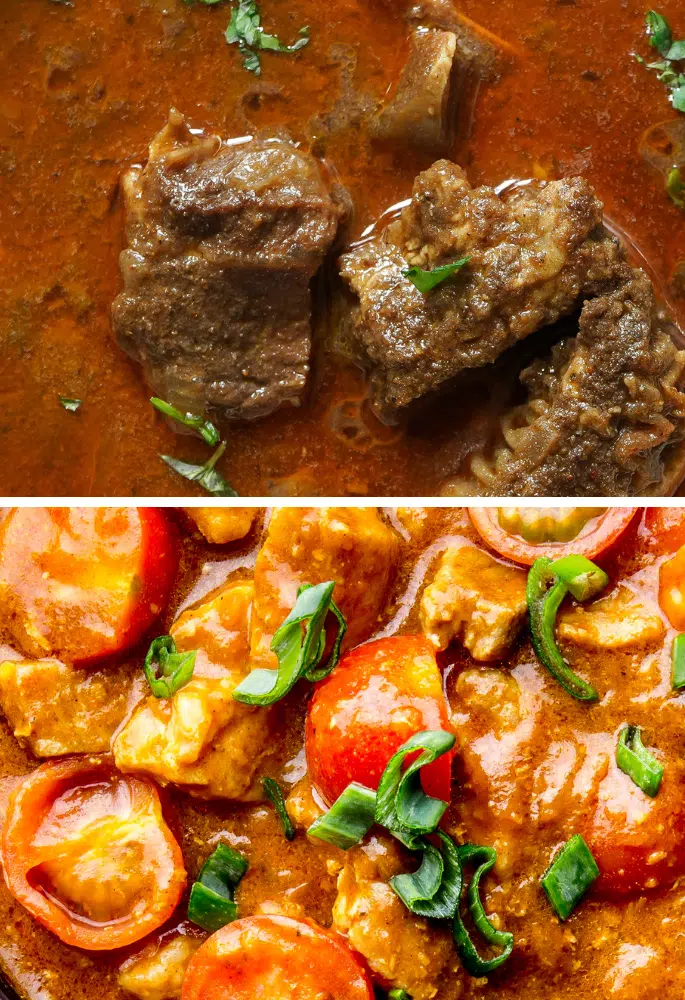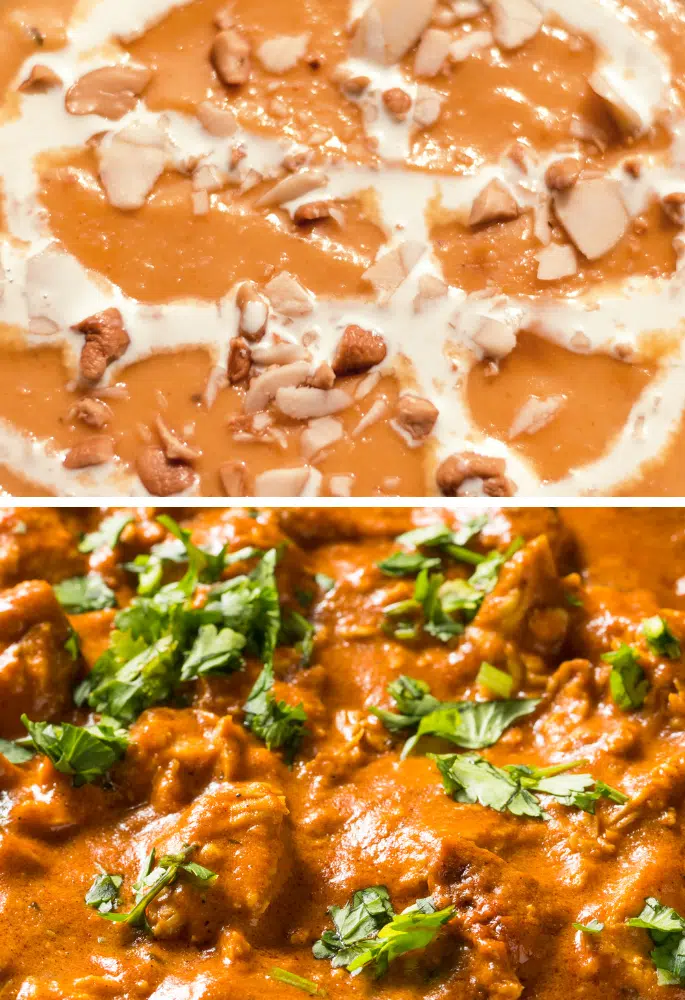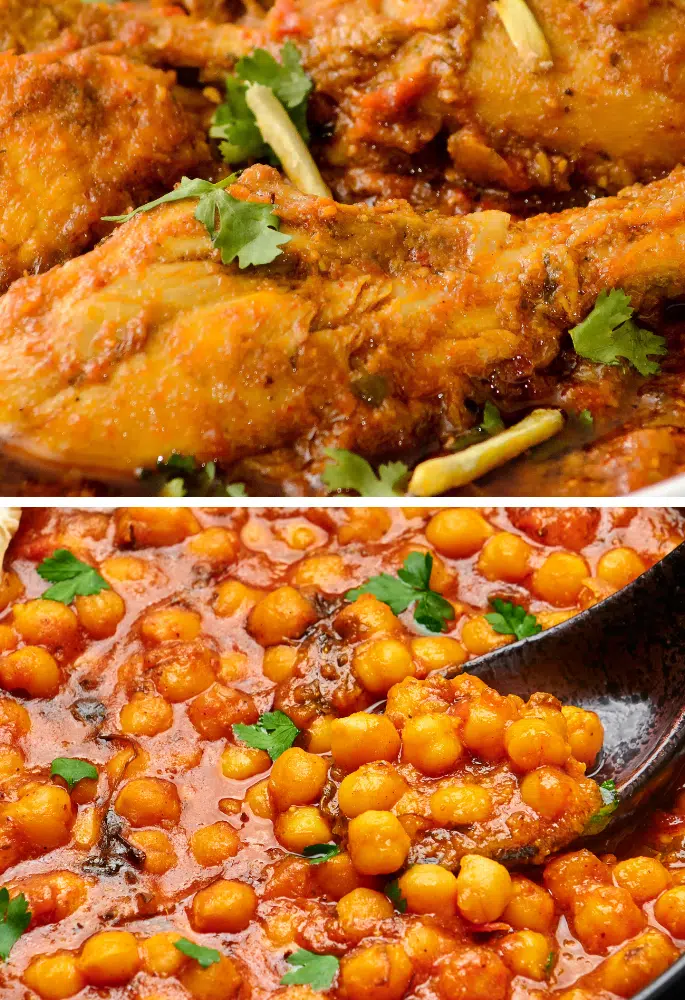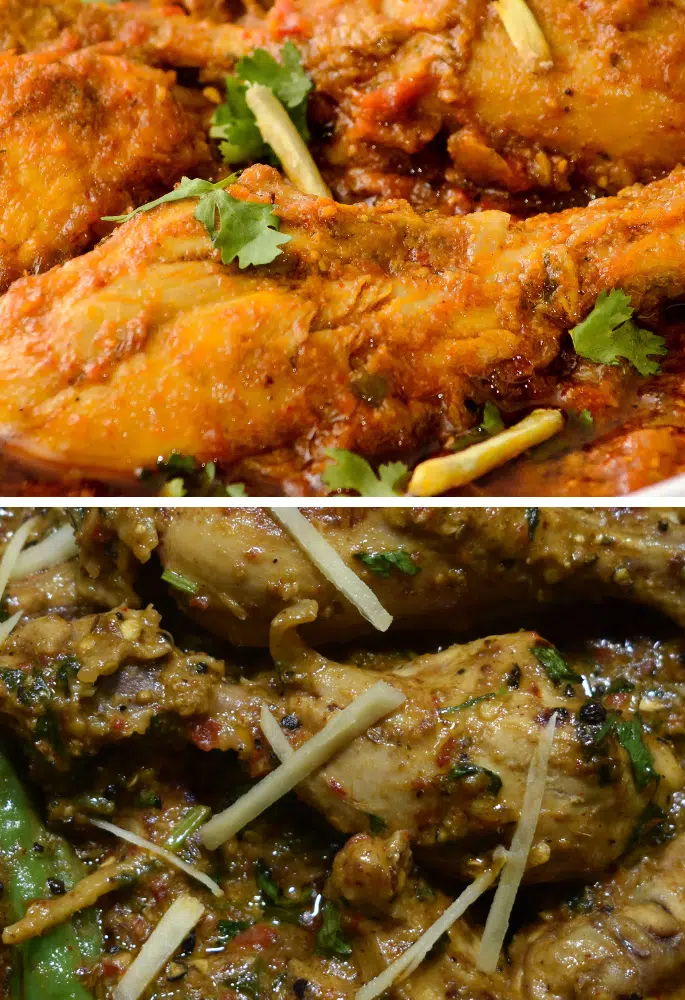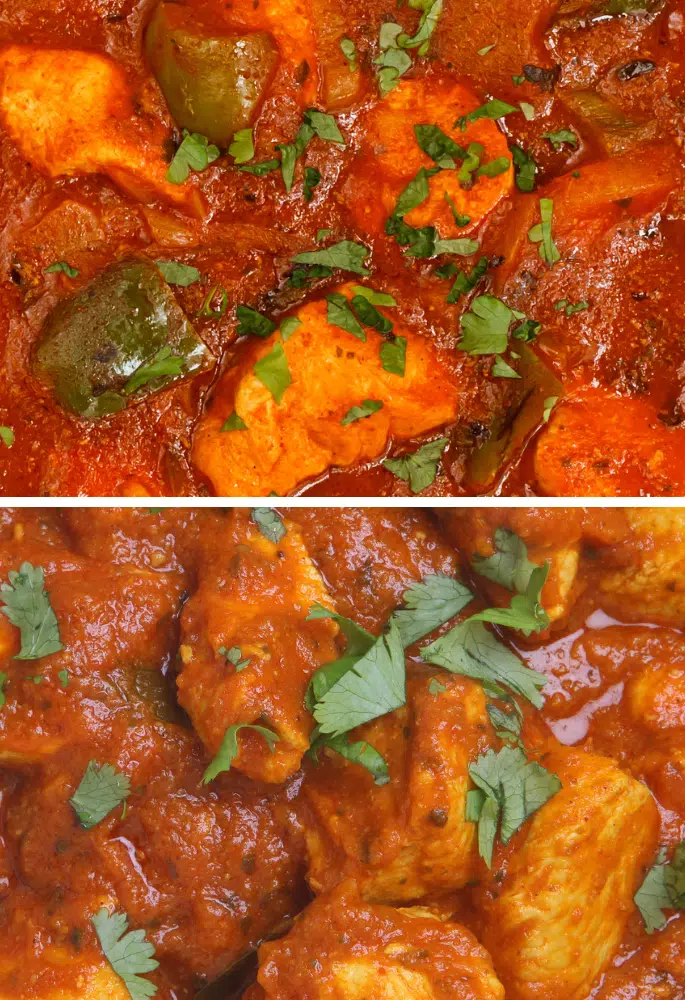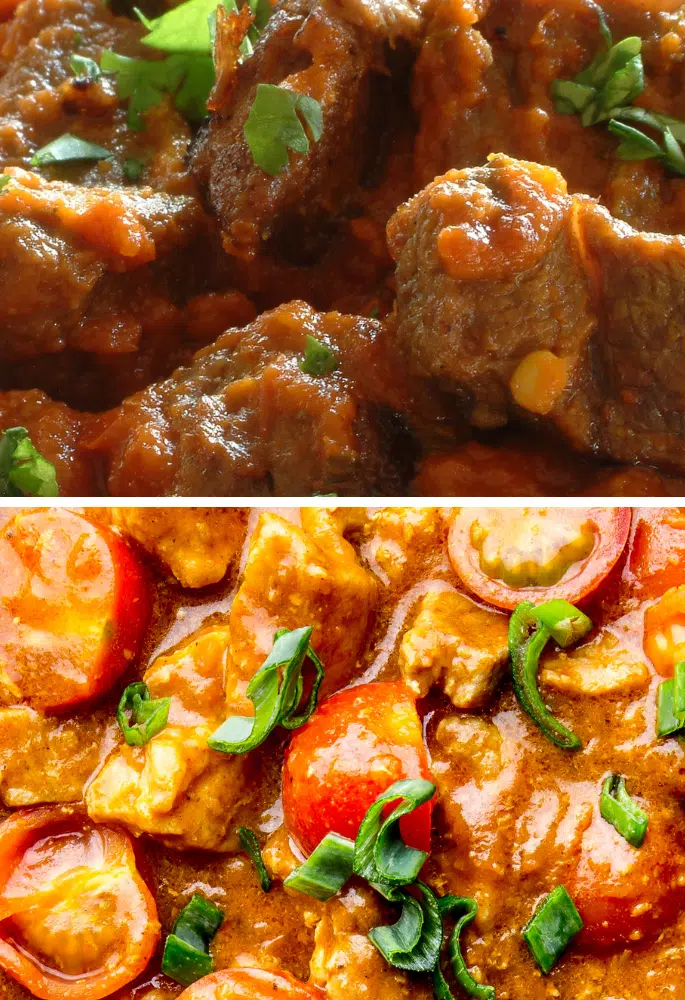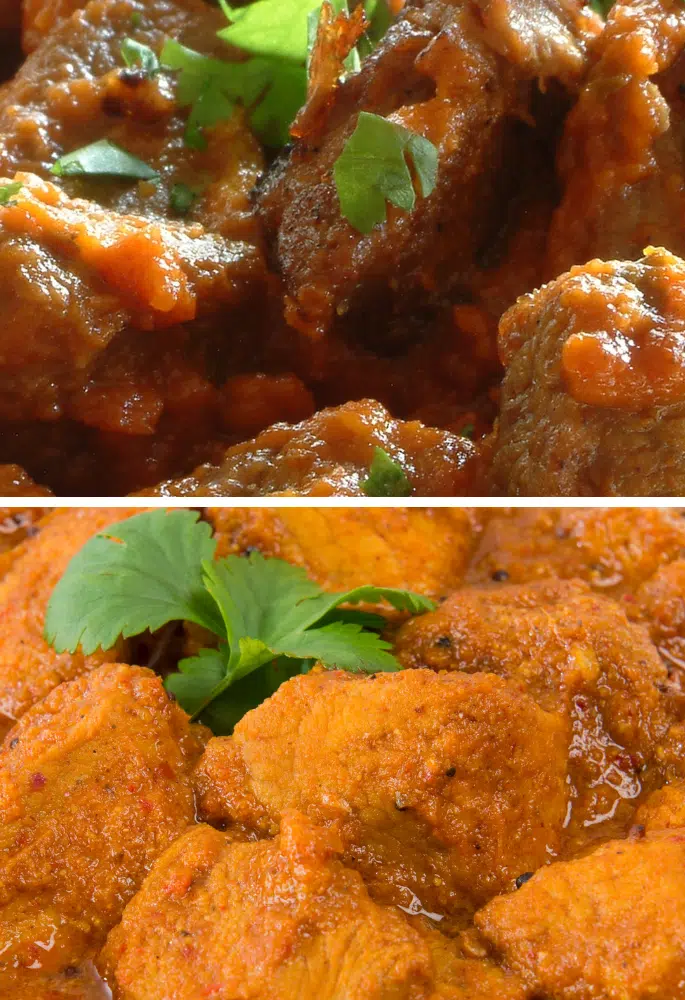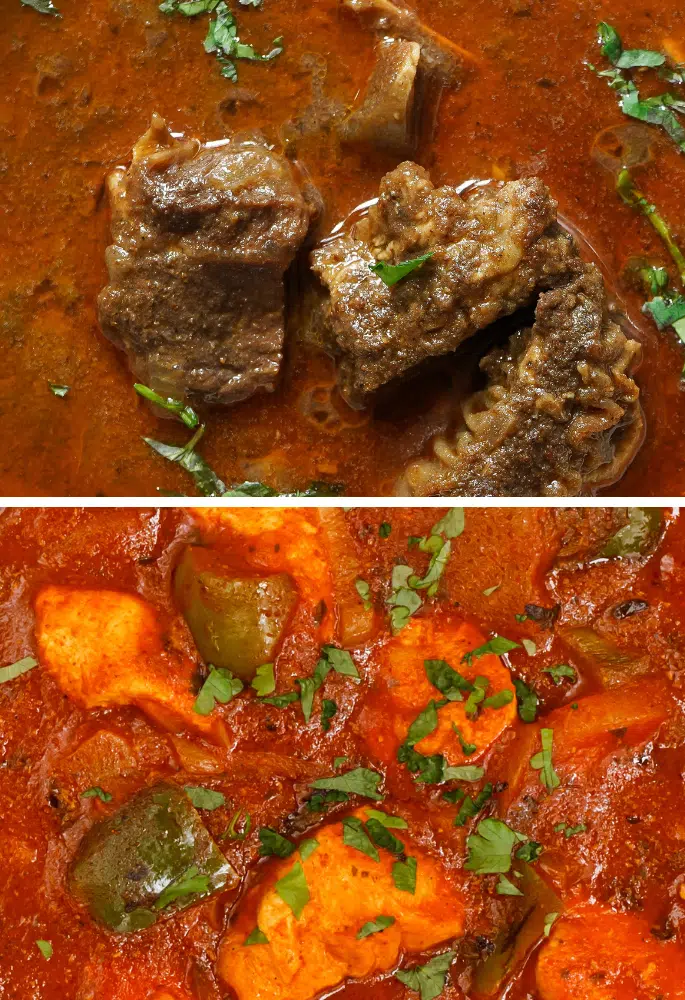
Order from almost any Indian restaurant menu in the US and butter chicken and tandoori chicken are usually sitting right next to each other.
They share a kitchen tradition, a spice cabinet, and the same main protein, so it’s easy to see why people mix them up.
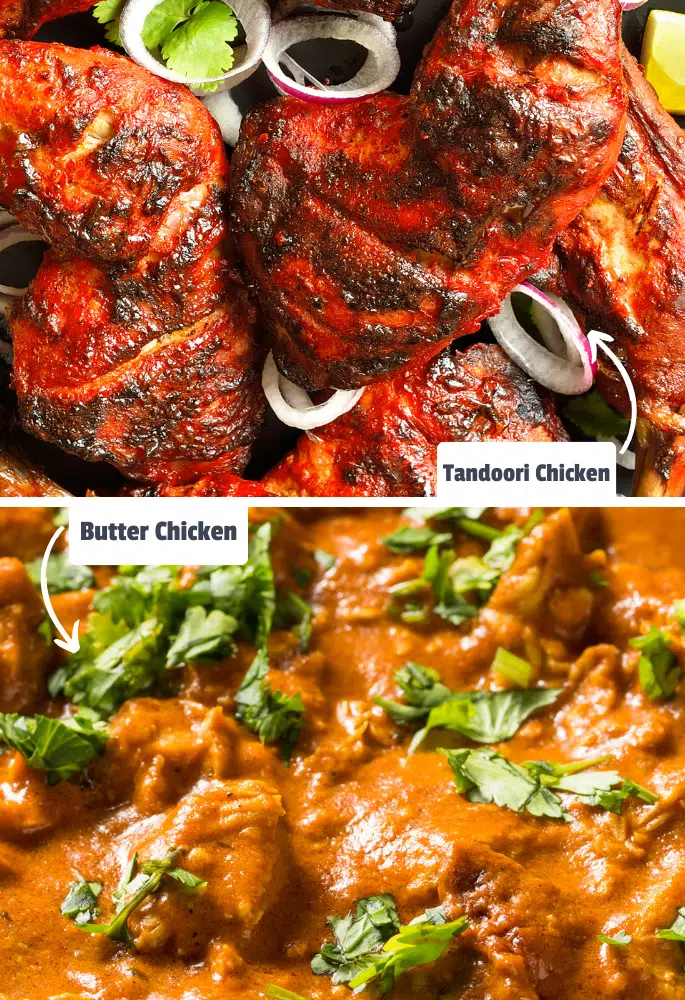
The short answer: tandoori chicken is yogurt-marinated chicken roasted dry in a blistering-hot clay oven, while butter chicken takes that same style of chicken and simmers it in a rich tomato-butter-cream sauce.
Key Takeaways
- Tandoori chicken is a dry, char-roasted dish; butter chicken is a saucy, simmered dish that often starts with tandoori-style chicken.
- Butter chicken gets its richness from butter, cream, and tomato; tandoori chicken gets its flavor from a yogurt-and-spice marinade plus tandoor heat.
- Tandoori chicken usually runs spicier and smokier; butter chicken is milder and mellowed out by dairy.
- Both share core spices like garam masala, cumin, and ginger-garlic, and both are staples of Indian restaurant menus in the US.
- You don't need a tandoor to make either at home — a hot broiler or grill gets you most of the way there.
What Is Butter Chicken?
Butter chicken, or murgh makhani, was invented in Delhi restaurant kitchens in the 1950s as a way to use up leftover tandoori chicken.
Cooks simmered the extra chicken in a sauce built from tomatoes, butter, and cream so nothing went to waste.
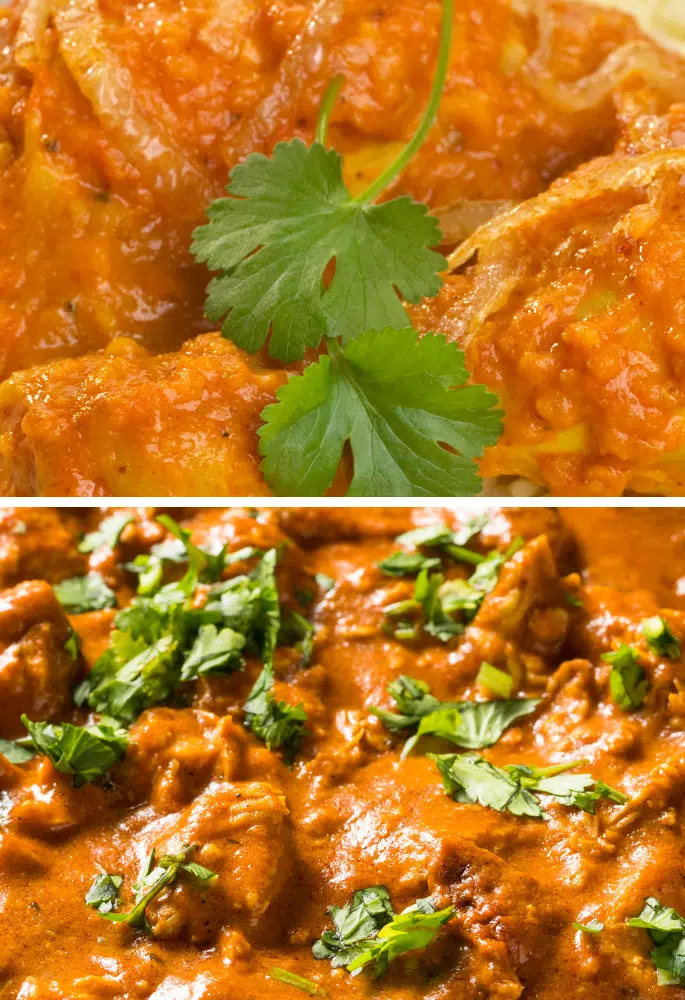
That’s still roughly how it’s made today: a tomato base cooks down, gets finished with butter and heavy cream, and is seasoned with garam masala, turmeric, and a little sugar to round out the tang.

The result is smooth, orange-red, and mild enough that it’s often the dish people order when they’re not sure how spicy they want their meal.
I’ve found the difference between a good butter chicken and a great one usually comes down to how long you let the tomato base actually cook down — rush it and the sauce stays thin and sharp instead of rounded.
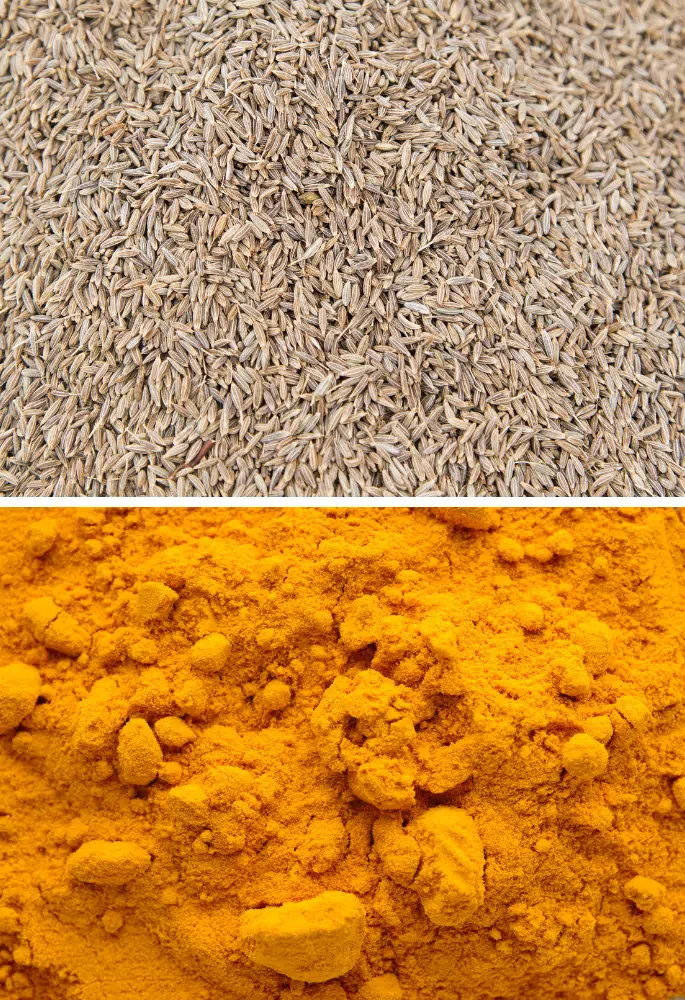
Turmeric is one of the spices doing a lot of the work here, and it’s partly responsible for that golden-orange color along with the tomatoes. The National Institutes of Health’s Turmeric fact sheet notes it’s one of the most widely used spices in South Asian cooking, valued for both flavor and color.
If you’ve ever wondered how butter chicken stacks up against another creamy restaurant favorite, it’s worth reading how butter chicken vs tikka masala actually differ, since the two get confused constantly on menus.
What Is Tandoori Chicken?
Tandoori chicken is named for the tandoor, a cylindrical clay oven that runs 500°F or hotter.
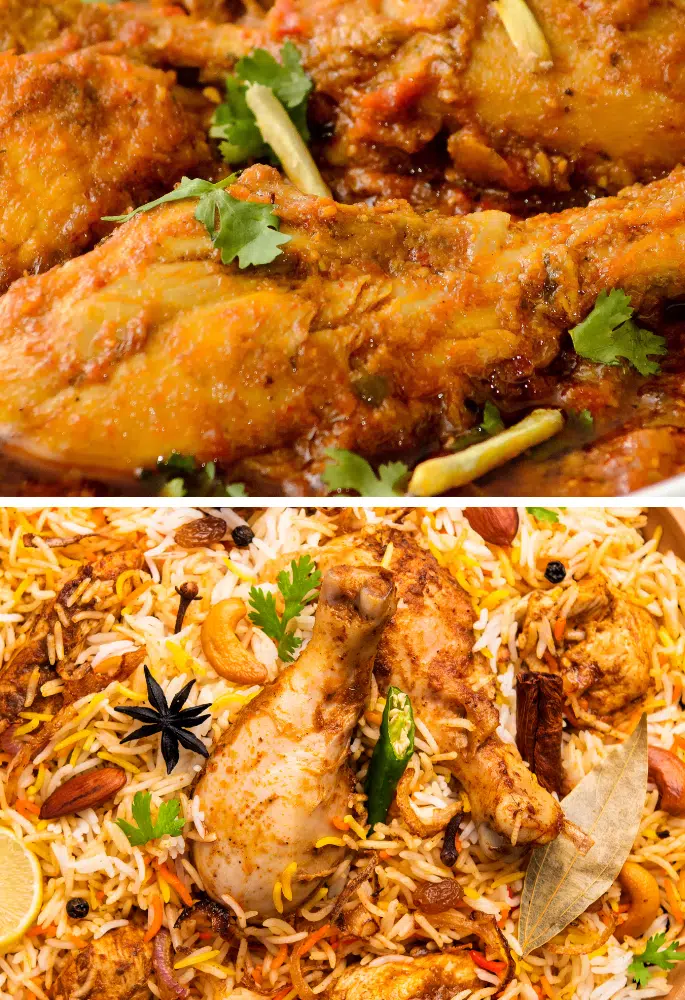
The chicken — usually bone-in legs, thighs, or a whole bird cut into pieces — gets marinated in yogurt, lemon juice, and a spice blend that typically includes cayenne, garam masala, ginger, and garlic.
That yogurt marinade does double duty: it tenderizes the meat and helps the spices cling, so every bite is seasoned, not just the surface.
The signature red color traditionally comes from Kashmiri chile powder, though plenty of restaurants lean on red food coloring to get that fire-engine look.
Marinating chicken in yogurt overnight is standard practice, but it still needs to stay refrigerated the whole time. USDA guidance on marinating is clear that raw chicken should never sit out at room temperature, even briefly.
Once it hits the tandoor, intense dry heat chars the exterior while keeping the inside juicy — that’s the smoky edge a stovetop pan just can’t replicate.
Most home cooks don’t have a tandoor, so the workaround is a very hot oven broiler or a charcoal grill. You won’t get an identical result, but you’ll get close.
Butter Chicken vs Tandoori Chicken: Key Differences
Once you line them up side by side, the differences are pretty clear-cut.
Cooking method is the biggest split: tandoori chicken is roasted dry in intense heat, while butter chicken is simmered in a sauce on the stovetop.
Sauce is the next obvious one — tandoori chicken is typically served with just a squeeze of lemon and maybe a mint chutney on the side, no sauce required.
Butter chicken is defined by its sauce; take that away and it’s not really butter chicken anymore.
Texture follows from that: tandoori chicken has a charred, slightly dry-fired exterior, while butter chicken is uniformly soft and coated in a creamy glaze.
Dairy shows up in both, just differently — yogurt in the tandoori marinade, and butter plus heavy cream in the butter chicken sauce.
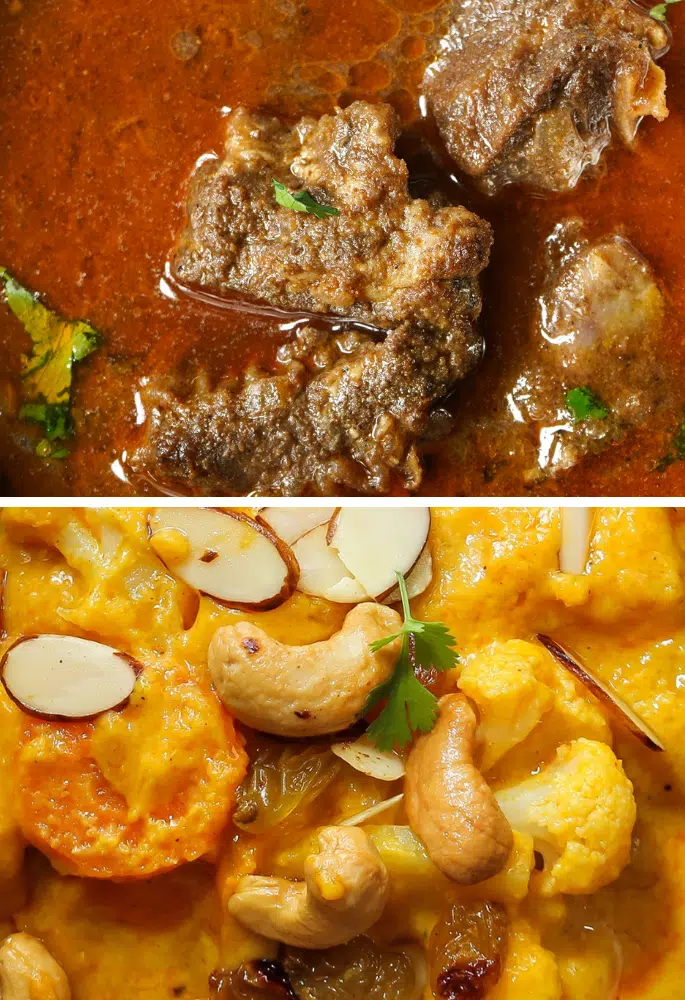
If you’re comparing butter chicken to other creamy curries, it’s also worth seeing how butter chicken vs chicken korma differ, since korma leans on nuts and yogurt rather than tomato for its richness.
And if pasanda is on your radar too, the breakdown of butter chicken vs pasanda explains why pasanda tends to be even milder and sweeter.
| Feature | Butter Chicken | Tandoori Chicken |
|---|---|---|
| Cooking method | Simmered in sauce on the stovetop | Roasted dry in a tandoor or broiler |
| Sauce | Rich tomato, butter, and cream sauce | Served dry, sometimes with chutney |
| Spice level | Mild, mellowed by dairy | Usually spicier and smokier |
| Chicken cut | Boneless, often pre-cooked | Bone-in legs and thighs |
| Signature flavor | Creamy, sweet-tangy | Charred, smoky, tangy from yogurt |
What They Have in Common
For all their differences, these two dishes share a lot of DNA.
Both trace back to Punjabi cooking traditions and both were popularized internationally through Indian restaurants over the past several decades.
They lean on a lot of the same core spices — garam masala, ginger-garlic paste, cumin, and coriander all show up in both the marinade and the sauce.
Chicken is the standard protein for both, though the cut differs: tandoori chicken usually keeps the bone in for flavor, while butter chicken is almost always boneless.
In fact, a lot of butter chicken recipes literally start with tandoori chicken — the tandoori-style piece gets chopped and dropped into the sauce, which is exactly how the dish was invented in the first place.
Both are typically served with the same sides too: basmati rice, naan, or a simple onion salad, which makes them easy to mix and match on a shared plate.
Which One Is Spicier?
In general, tandoori chicken runs hotter than butter chicken.
The marinade for tandoori chicken usually includes a real dose of cayenne or Kashmiri chile powder with nothing to mellow it out.
Butter chicken’s tomato-cream-butter base does the opposite job — it tames the chile heat and turns the dish creamy and mild by design.
That said, spice level really comes down to the cook or the restaurant; I’ve had butter chicken with a serious kick and tandoori chicken that was almost mild.
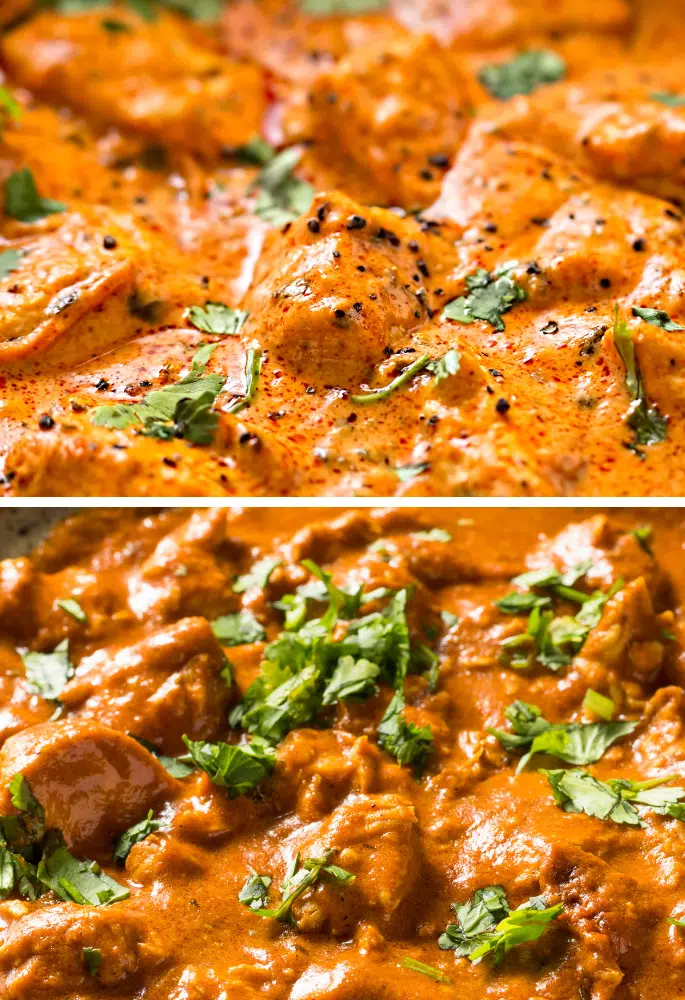
If you like your curry with more punch than butter chicken but still want a sauce, it’s worth trying a butter chicken vs dopiaza comparison — dopiaza brings a sharper, onion-forward heat that butter chicken doesn’t.
My rule of thumb when ordering: if the menu lists a dish as ‘tandoori’ anything, expect noticeable heat; if it says ‘makhani’ or ‘butter,’ expect it to be dialed back.
Making Them at Home
Both dishes are very doable in a home kitchen, and neither requires special equipment beyond what you probably already own.
For tandoori chicken, marinate bone-in thighs or drumsticks in yogurt, lemon juice, and spices for at least 4 hours, though overnight is better.
Cook it under a hot broiler or on a hot grill until it’s charred in spots and cooked through.
Chicken needs to hit an internal temperature of 165°F to be safe to eat, according to USDA’s guidance on poultry safety — a meat thermometer takes the guesswork out of it.

For butter chicken, I usually start with already-cooked tandoori-style chicken (leftovers work great here) and build the sauce separately: onions, garlic, ginger, tomato puree, garam masala, a spoon of sugar, then butter and cream stirred in at the end.
One thing that trips people up: adding the cream too early and letting it boil hard, which can cause it to split. Stir it in off the heat or at a bare simmer instead.
Serve either one with warm naan, basmati rice, or alongside a plate of onion bhaji vs onion pakora if you want a crunchy starter on the table too.
Leftovers of both keep well in the fridge for 3 to 4 days, and butter chicken sauce actually tastes better the next day once the flavors settle in.
Frequently Asked Questions
Are butter chicken and tandoori chicken made with the same spices?
They share a lot of the same base spices, including garam masala, cumin, ginger, and garlic. Butter chicken leans into sweetness and creaminess, while tandoori chicken leans on cayenne and Kashmiri chile for heat, so the finished flavors are quite different.
Is tandoori chicken always spicier than butter chicken?
Usually, yes, since butter chicken's tomato-cream sauce is built to be mellow and tandoori chicken's marinade includes more chile. Individual recipes vary a lot, so it's not a hard rule.
Can I make butter chicken from tandoori chicken leftovers?
Absolutely, and it's actually the traditional method. Chop leftover tandoori chicken, warm it through, and simmer it in a tomato-butter-cream sauce for a few minutes at the end.
Which is healthier, butter chicken or tandoori chicken?
Tandoori chicken generally has less added fat since it skips the butter and cream, but it's still worth checking a specific recipe or menu item, since sodium and oil content vary a lot by kitchen.
What's the best chicken cut for each dish?
Bone-in thighs or drumsticks work best for tandoori chicken because the bone keeps the meat moist under high heat. Butter chicken is more forgiving and is usually made with boneless thigh or breast meat.