
With Italian pasta, Agnolotti and Ravioli are both beloved for their filled, bite-sized shapes. Although they may appear similar at first glance, these two types of pasta have unique characteristics and origins that set them apart.
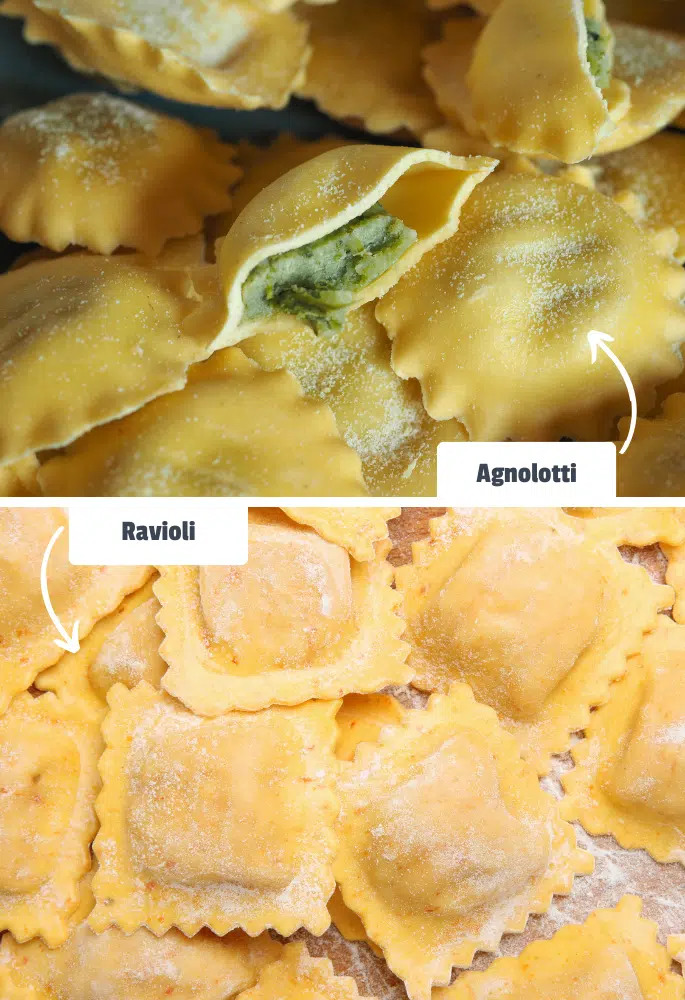
Agnolotti and Ravioli differ primarily in their shape, regional origin, and traditional fillings. While both are filled pastas, Agnolotti is typically associated with Piedmont in Italy and often features a meat-based filling, whereas Ravioli, more widespread, usually has a cheese or vegetable filling.
What is Agnolotti?
Agnolotti is a type of pasta originating from the Piedmont region of Italy. Traditionally, it is made by folding a sheet of pasta over a filling, resulting in a semi-circular or rectangular shape.
The fillings for Agnolotti are typically meat-based, often a mix of roasted meats and herbs. This pasta is usually served with a simple sauce to highlight the rich flavours of the filling.
For agnolotti, which are typically filled with meat or cheese, a simple butter and sage sauce or a light broth are excellent choices. These enhance the filling’s flavors without overpowering them. A light tomato sauce can also be a good match, especially for cheese-filled agnolotti.
What is Ravioli?
Ravioli, on the other hand, is made by sandwiching the filling between two layers of pasta, creating a square or circular shape.
This type of pasta is found throughout Italy, with each region offering its own variation. Common fillings include cheese, spinach, and other vegetables. Ravioli is often served with a variety of sauces, from light tomato to rich cream-based ones.
The best sauce for ravioli depends on the filling. For cheese or vegetable ravioli, a light butter or cream sauce works well. For meat-filled ravioli, a richer tomato or bolognese sauce is ideal. Sage butter sauce is a classic choice for enhancing the delicate flavours of ravioli.
Similarities Between Agnolotti and Ravioli
Besides the fact they look so similar, there are a few other things that make these two pasta shapes alike.
- Filled Pasta: Both Agnolotti and Ravioli are types of filled pasta, featuring an outer pasta layer encasing various fillings.
- Italian Cuisine: They are both integral parts of Italian cuisine and have evolved with regional influences.
- Cooking Method: Typically, both are boiled in salted water until they float to the surface, indicating they are cooked through.
Differences Between Agnolotti and Ravioli
Although it might be harder to decipher what sets these two apart (they do look pretty similar, after all), there are a number of things that means they are not the same.
- Shape and Assembly: Agnolotti is typically folded into a semi-circle or rectangle, whereas Ravioli is sealed between two sheets of pasta, forming squares or circles.
- Origin: Agnolotti originates from Piedmont, Italy, and is deeply rooted in the culinary traditions of this region. Ravioli, however, is more universally found across Italy, with regional variations.
- Traditional Fillings: The classic filling for Agnolotti is a mixture of meats and herbs, reflecting the hearty cuisine of Piedmont. Ravioli often features lighter fillings, such as cheese or vegetables.
- Serving Style: Agnolotti is usually served with a broth or light sauce to emphasise the flavour of the filling. Ravioli can be accompanied by a wider variety of sauces, from tomato to cream-based.
Agnolotti vs Ravioli: Which Wins?
It’s time to decide which of these two is the best… Do you prefer Agnolotti or Ravioli? Hit the winner below:
Do You Prefer Agnolotti or Ravioli?
Comparing Other Pastas
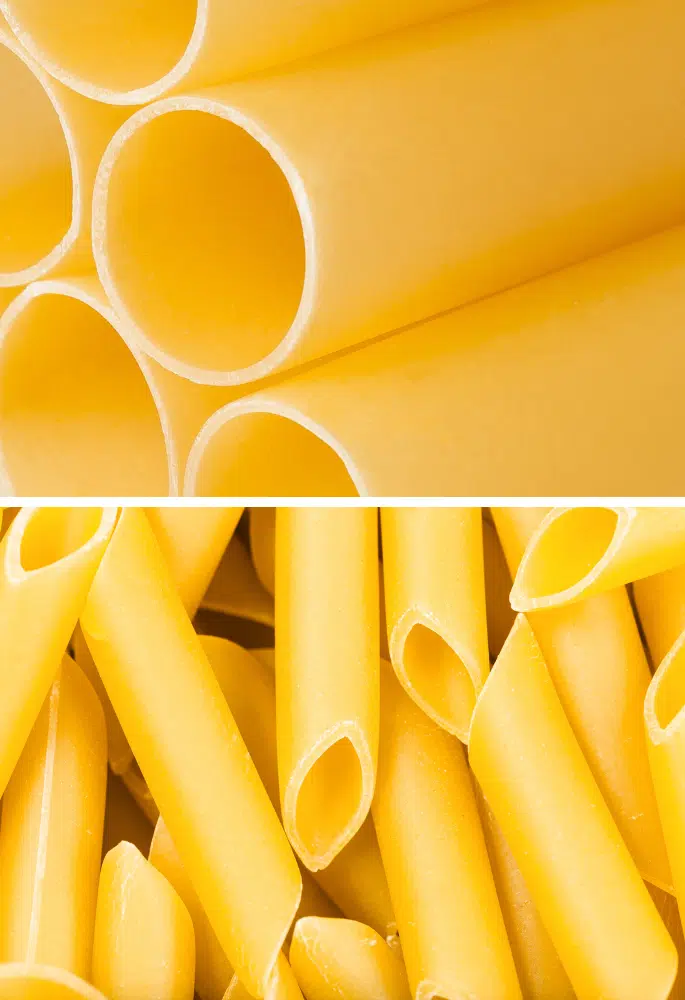
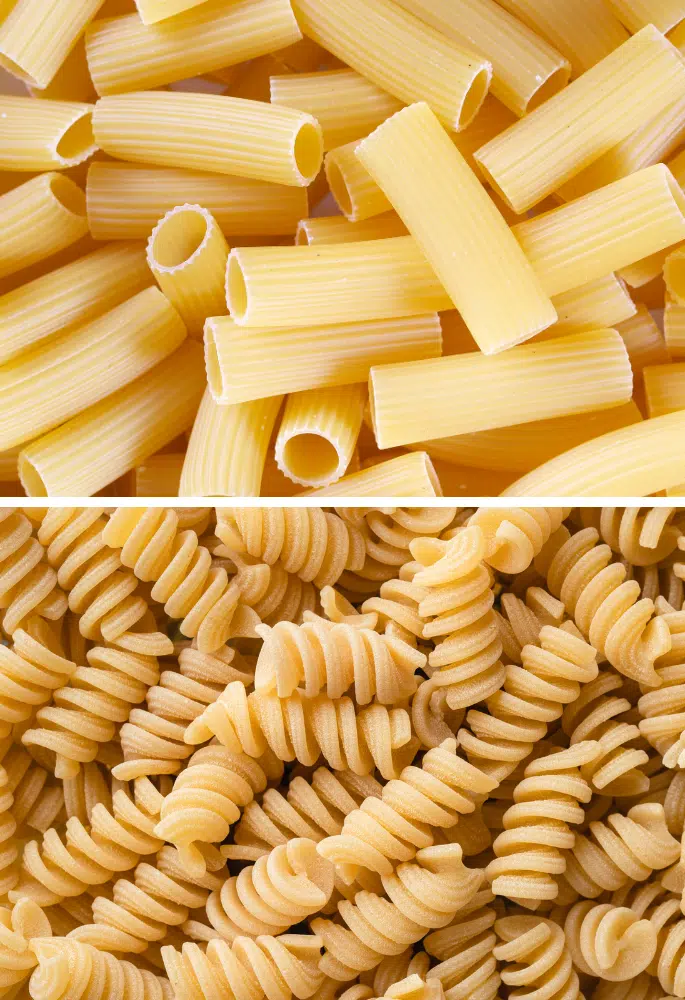
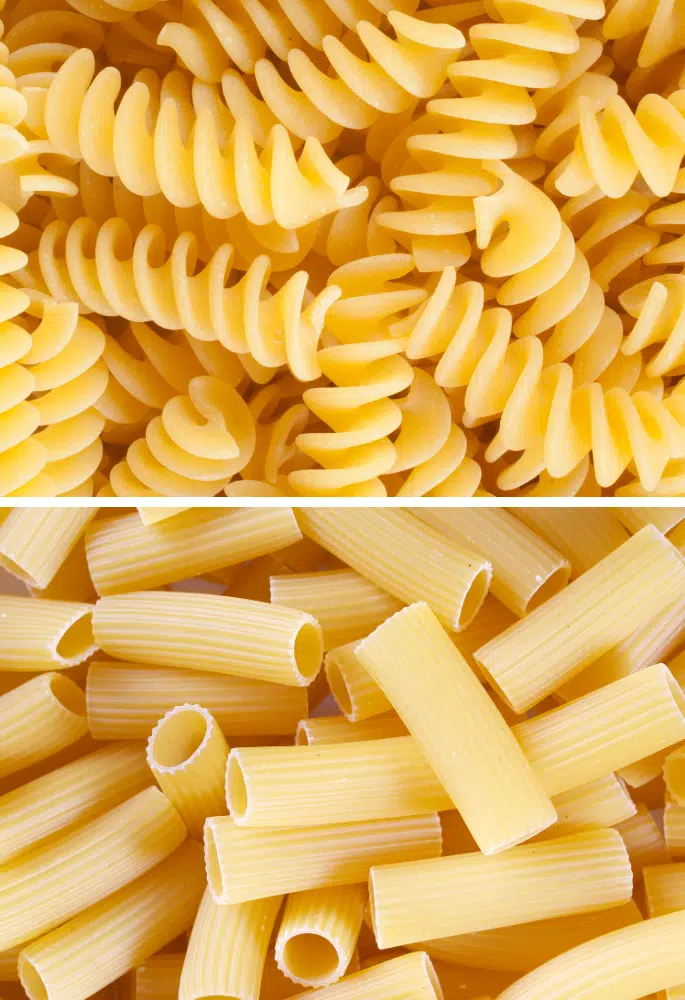
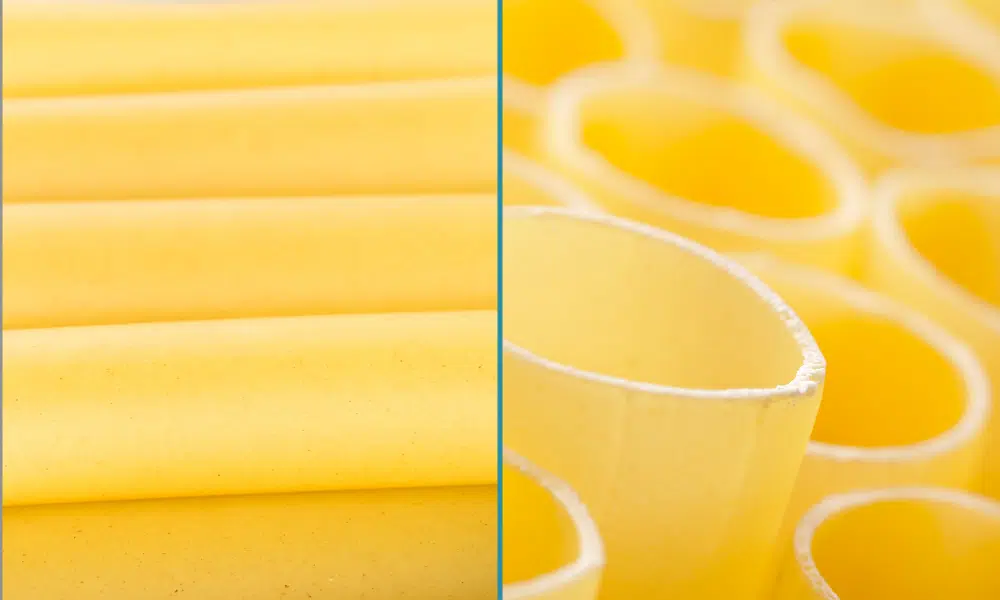
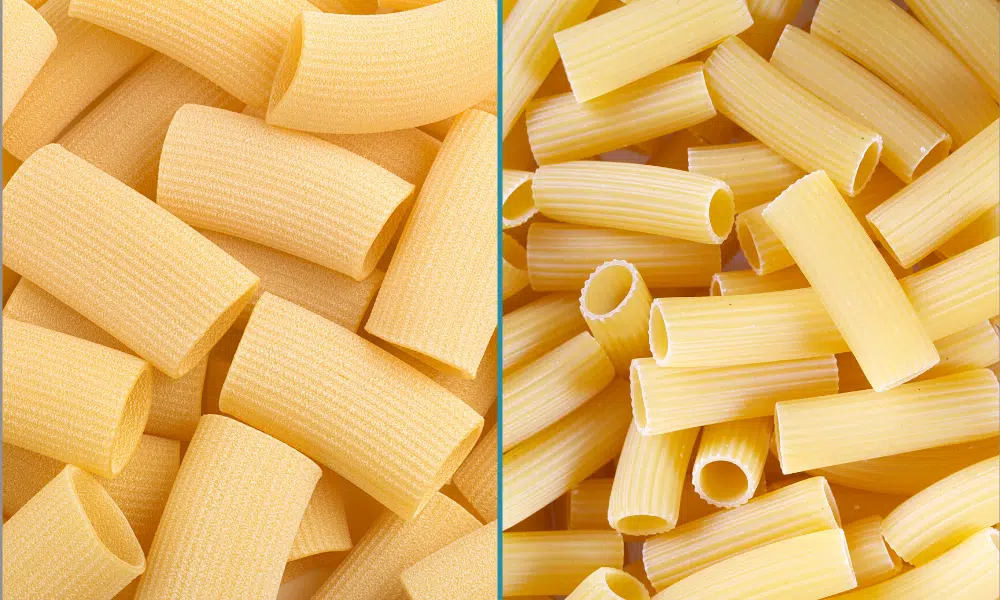
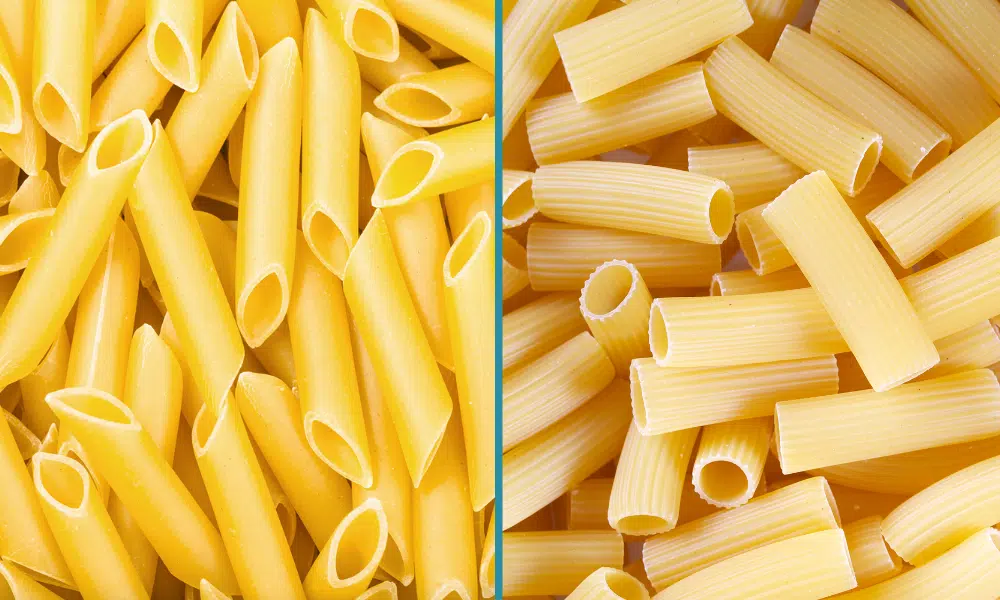
Pasta comes in all shapes and sizes from long and thin spaghettini to thick long cannelloni tubes. We’ve compared many of them below:

Hailing from Liverpool, Oliver is an adventurous chef with a penchant for exploring diverse cuisines and novel ingredients. Ollie, combining his love for local British flavours with global influences, brings innovation and charm to home cooking.