
There are few things that beat waking up on a weekend and stuffing your face full of sweet, fluffy breakfast food. And there is no better breakfast food than pancakes!
Traditionally, pancakes are cooked in a hot frying pan on the stove, creating a crispy exterior to the slightly sweet treat. But, as delicious as the final result is, pancakes can be quite a time-consuming breakfast to make – so your microwave can work as an alternative.
To microwave pancakes, make your batter as you usually would. Line a plate with parchment paper and then add a portion of batter. Layer it up with more paper and more batter then microwave for around 2 minutes and 30 seconds.
How to Microwave Pancakes
There is not much difference in the preparation you need to follow when cooking pancakes in your microwave. There are a few ways you will need to adapt your stove-top pancake recipe to better suit a microwave.
Don’t worry, we have made these adaptions for you so all you have to do is follow the method below for the best pancakes cooked in the microwave:
- Measure Out The Ingredients
The best way to ensure that you do not miss a step when preparing your pancake batter is to measure out the ingredients before you start making the batter. Find your favourite pancake batter recipe and follow the ingredients as instructed. - Mix The Batter
Once you have all your ingredients prepared, you can start the batter by combining the dry ingredients with the wet ingredients until combined. - Prep A Plate
When using a microwave to cook your pancakes, you are essentially replacing your frying pan with a plate. Lay a piece of grease-proof parchment paper on a microwaveable plate. - Add Batter
Use a tablespoon to ladle 2 tablespoons of batter directly onto the parchment paper. - Cover
Use another sheet of parchment paper and lay it directly over the top of your first layer of batter. - Add Batter Again!
Add another 2 tablespoons of pancake batter to your new layer of parchment paper. - Repeat
Continue to lay down parchment paper and batter until you have up to 4 layers of pancakes. - Set The Microwave
Set your microwave to a medium-high or high setting and programme the timer for 2 minutes and 30 seconds. - Cook
When your pancakes are ready, place the plate of batter directly into your microwave. - Top And Serve
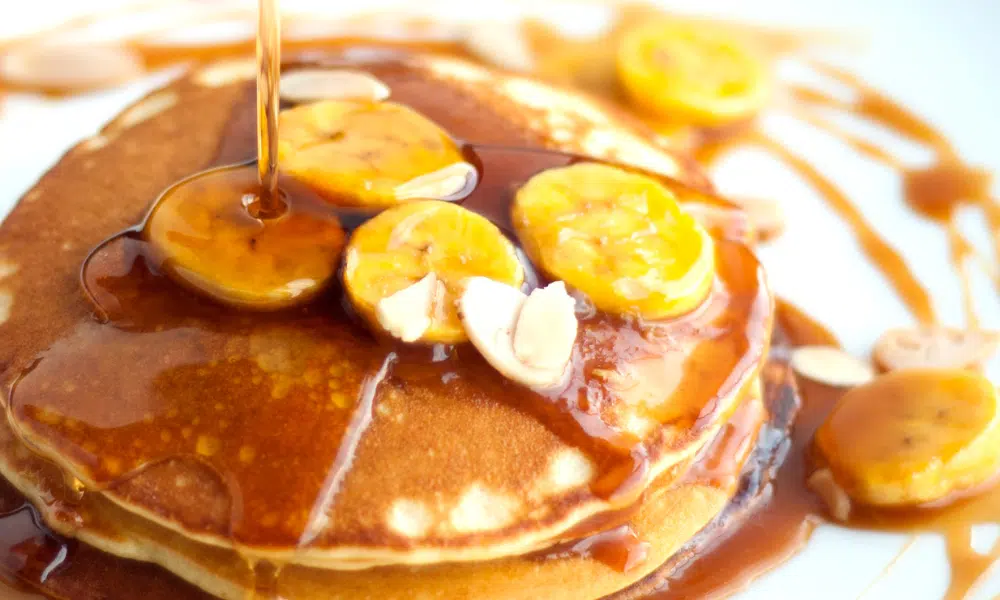
Once the pancakes have finished cooking, peel off the layers of parchment paper and transfer the pancakes to a serving plate to dress in your favourite toppings – maple syrup, of course – and enjoy.
How to Microwave Pancakes Successfully
The first time you try making pancakes in the microwave, you may run into some problems that are easily avoidable if you know the tips needed to avoid disaster. Here are a few to keep in mind:
- Use Precise Measurements – Just because you are using your microwave to cook your pancakes does not mean you can skip out on precisely measuring the batter’s ingredients.
- Follow Your Favourite Recipe – You do not need to follow a specific pancake batter recipe. Follow your favourite pancake batter recipe as precisely as possible, and you will indeed have great-tasting microwaved pancakes.
- Appropriate Parchment Size – If you use a piece of parchment paper to cover your microwavable plate that is far too big, then you will have difficulties keeping the paper on the plate. Instead, cut a piece that is a good size for the plate and use a little oil to keep the parchment paper stuck to the plate.
- Leave The Pancakes Alone – Avoid opening your microwave to check your pancakes as they are cooking. Otherwise, you will allow the heat to escape, ruining the texture of your pancakes.
Why You Should Microwave Pancakes
Using your microwave to cook pancakes may seem like an out-of-the-box idea, but there are some very valid reasons why busy families prefer the microwave method. Such as:
Saves On Cooking Time
Unless you have an abundance of frying pans to hand, which most people don’t, you are usually limited to making only 1 or 2 pancakes at once when frying them on the stove.
With the microwave cooking method, you can make up to 4 pancakes at once, making the method twice as quick as the stovetop.
Much Healthier
You do not need to use any butter or oil to prevent your pancakes from sticking to a plate or frying pan. So, cooking pancakes in the microwave is actually much healthier than cooking them on your stovetop.
Very Little Mess
All you will need to cook your pancakes in a microwave is a microwavable plate and parchment paper which is extremely easy to clean up once you are done cooking compared to other cooking methods.
Why You Shouldn’t Microwave Pancakes
There are always some drawbacks to using a microwave to cook conventionally stove-prepared food. The even heat of a frying pan is perfect for a crispy exterior and fluffy inside.
However, the heat of a microwave is very different to a frying pan, so expect some of these issues if you choose to microwave your pancakes:
The Wrong Colour
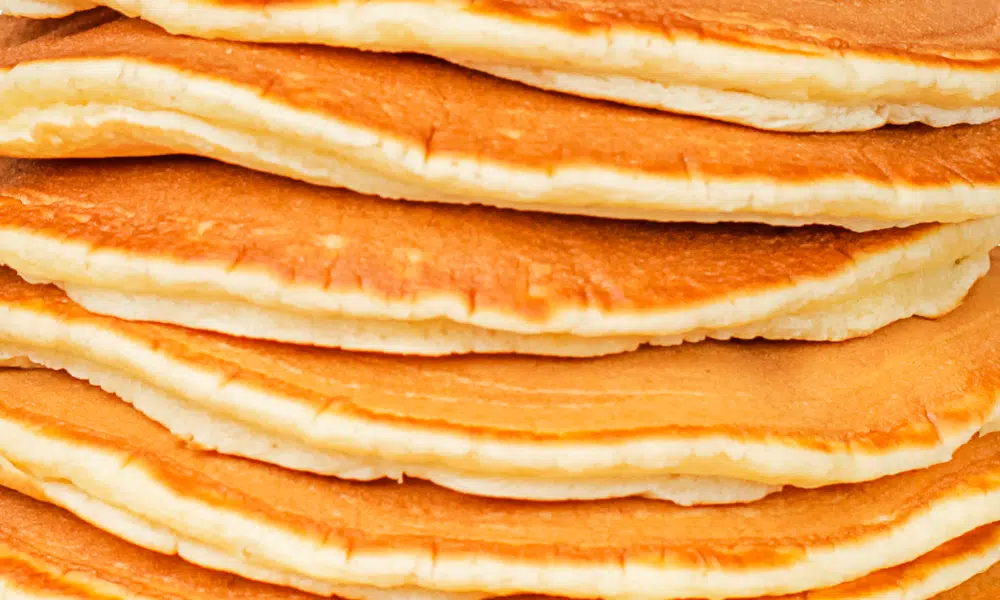
It is the frying aspect of cooking pancakes on a stove that helps the batter develop that delicious and appetizing golden colour.
No matter how you cook pancakes in a microwave, you will not be able to achieve the same golden colour without burning the pancakes themselves.
Waste Of Parchment Paper
Keeping your kitchen stocked with everything you could possibly need is never as cheap as it is easy.
Parchment paper can be a costly payout on a tight budget, and cooking your pancakes in the microwave requires an excessive amount of parchment paper to prevent the pancakes from sticking together.
Lack Of Consistency
To make cooking pancakes in your microwave worth the effort, you need to layer the batter with parchment paper. However, this will lead to uneven heat distribution and a lack of consistency in how the different pancake layers cook.
Microwaving Pancakes FAQs
Do you have further questions about cooking pancakes in the microwave? Then have a look at these FAQs:
Although it is possible to microwave crepes, if you’re making them fresh, then you’ll find you cannot get them as thin as you would like. You will also find that they become pretty soggy in the microwave.
Yes, you can cook pancake batter in a mug in the microwave, but it will be far from a pancake in appearance. It will taste like a pancake, however!

Acacia may be a freelance writer by day, but they are a food fanatic by night. They are always trying out new recipes or finding different ways to elevate classical dishes. But their biggest culinary aim is to educate others on the basics of the kitchen so that they too can enjoy delicious food.