Key Takeaways
- Muenster is an American cow's-milk cheese with an orange, annatto-dyed rind; mozzarella is Italian and traditionally made from buffalo or cow's milk using the pasta filata method.
- Both melt beautifully and give you that stretchy cheese pull, but muenster tastes saltier and slightly nuttier while mozzarella is milkier and more neutral.
- Ounce for ounce, muenster and mozzarella have very similar protein — part-skim mozzarella actually edges muenster out slightly, while whole-milk mozzarella has a bit less.
- Fresh mozzarella has a much shorter shelf life than muenster because of its high moisture content.
- They're not truly interchangeable — muenster leans savory and salty, mozzarella leans mild and works better in dishes that need a neutral backdrop.
What Is Muenster Cheese?
I’ll be honest — the first time I saw ‘muenster’ on a deli label, I assumed it was just a spelling of the French Munster cheese.
It’s actually its own thing. American muenster is a domestic riff on wash-rind Munster, brought over by German immigrants and softened up for American tastes.
The flavor has been dialed way down. Where European Munster can be pungent and funky, American muenster tastes closer to a mild deli cheese.
That mildness comes from a short age — most muenster is aged no more than a few weeks, which keeps the flavor gentle and the texture soft.

It’s made from pasteurized cow’s milk, and the signature orange rind comes from annatto, a natural seed-based coloring also used in orange cheddar.
Most brands salt the cheese a bit more assertively than you’d expect from something this mild, which gives muenster its familiar savory edge.
If you’re weighing melty cheese options beyond this pair, our fontina vs mozzarella comparison covers another popular stretch-and-melt option worth knowing.
Because it’s aged so little, muenster is soft and melts with very little heat — that’s why it shows up so often on burgers, in grilled cheese, and melted over casseroles.
What Is Mozzarella Cheese?
Mozzarella has deep roots in southern Italy, traditionally made from water buffalo milk, though most mozzarella sold in the US today is made from cow’s milk.
It’s made using a technique called pasta filata, where curds are heated, stretched, and kneaded almost like bread dough.
That stretching is exactly what gives mozzarella its famous elasticity and that dramatic cheese pull everyone chases on pizza.
Fresh mozzarella has a high moisture content, which is part of why it tastes so delicate and milky.
In my experience, fresh mozzarella barely needs seasoning — it’s meant to taste like clean, slightly sweet milk, not like a ‘strong’ cheese.
Because there’s little to no aging involved, mozzarella doesn’t develop the sharper, funkier notes you get from longer-aged cheeses.
For a completely different milk-based comparison, take a look at paneer vs mozzarella — paneer doesn’t melt at all, which makes the contrast pretty striking.
Lower-moisture, part-skim mozzarella is the block-style version most home cooks buy for everyday cooking; it lasts longer and shreds more easily than fresh mozzarella.
Muenster vs Mozzarella: Protein and Nutrition Compared
This is the question I get asked most, so let’s settle it plainly.
The short answer is they’re close, and which one ‘wins’ depends on which mozzarella you’re comparing.
According to USDA FoodData Central, a 1-ounce serving of muenster has about 104 calories and roughly 6.6 grams of protein.
Whole-milk mozzarella comes in a bit lower on protein, at around 6.2 grams per ounce, with about 85 calories.
Part-skim mozzarella — the block kind most people shred for pizza — actually has slightly more protein than muenster, around 6.8 to 6.9 grams per ounce, with fewer calories and less fat.
So technically, part-skim mozzarella can beat muenster on protein per ounce, while whole-milk mozzarella comes in just under it.
If you look at protein density instead — protein per 100 calories, rather than per ounce — the gap gets more interesting. Part-skim mozzarella delivers roughly 9.5 grams of protein per 100 calories, muenster comes in around 6.3 grams, and whole-milk mozzarella lands around 7.3 grams.
That means part-skim mozzarella is genuinely the more protein-efficient choice of the three, even though the per-ounce numbers look close on paper.
The differences are small enough that neither cheese should be your main protein source — they’re both better thought of as flavor and texture additions than protein powerhouses.
Sodium is where muenster tends to pull ahead, since it’s typically salted more heavily than fresh or part-skim mozzarella.
If you’re managing sodium intake, that’s worth more attention than the small protein gap between these two cheeses.
Calcium is roughly comparable between the two, since both are cow’s-milk cheeses made in a similar fat range — neither one is a clear calcium winner over the other.
| Cheese | Calories | Protein | Fat | Sodium (approx.) |
|---|---|---|---|---|
| Muenster | ~104 | ~6.6g | ~8.5g | ~180mg |
| Mozzarella, whole milk | ~85 | ~6.2g | ~6.3g | ~175mg |
| Mozzarella, part-skim | ~72 | ~6.9g | ~4.5g | ~150mg |
Similarities Between Muenster and Mozzarella
Despite coming from completely different countries and cheesemaking traditions, these two overlap in a few real ways.
Meltability. Both are built for melting — low aging means both stay soft and stretch nicely under heat.
I’ve combined muenster and mozzarella on the same pizza more than once specifically for that reason; they melt at nearly the same rate.
Mildness. Neither cheese is going to overpower a dish the way an aged cheddar or blue cheese would.
Soft texture. Both are genuinely soft cheeses even before melting, which is part of why they slice and shred so easily.
Key Differences Between Muenster and Mozzarella
Here’s where the two cheeses really part ways.
Origin. Mozzarella is Italian through and through; muenster is an American cheese with German roots, made specifically to suit a milder American palate.
Milk source. Muenster is made from cow’s milk. Traditional mozzarella uses water buffalo milk, though most US mozzarella is made from cow’s milk too.
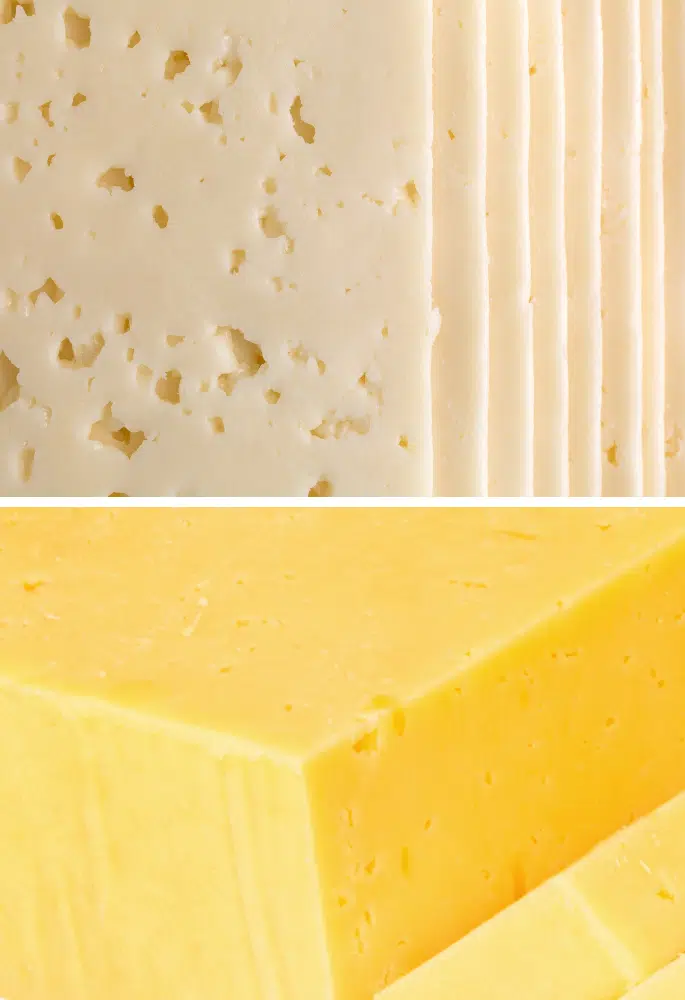
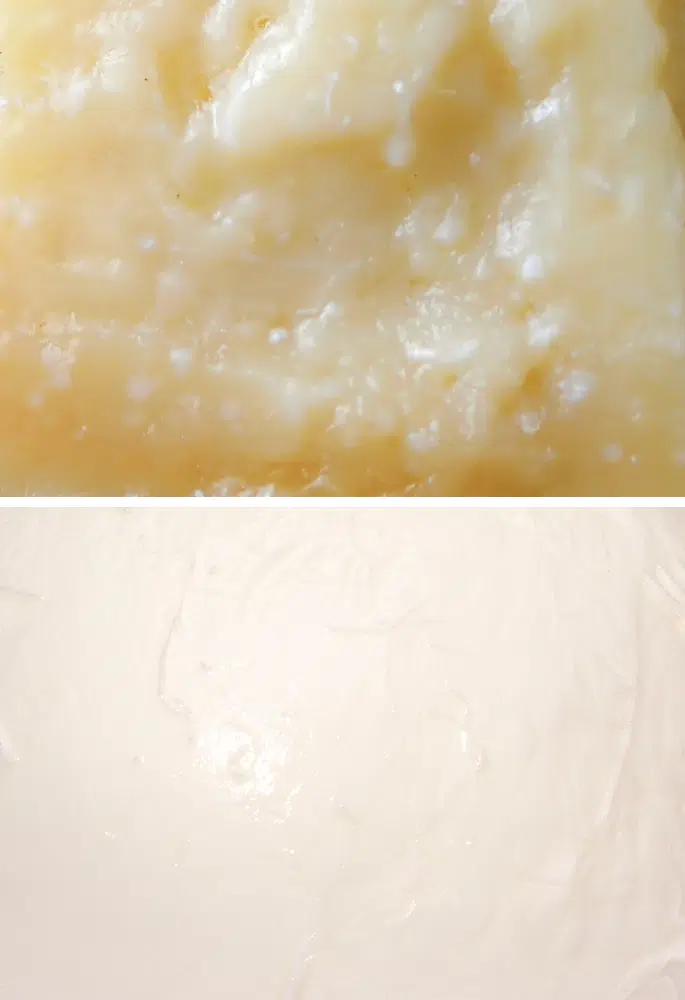
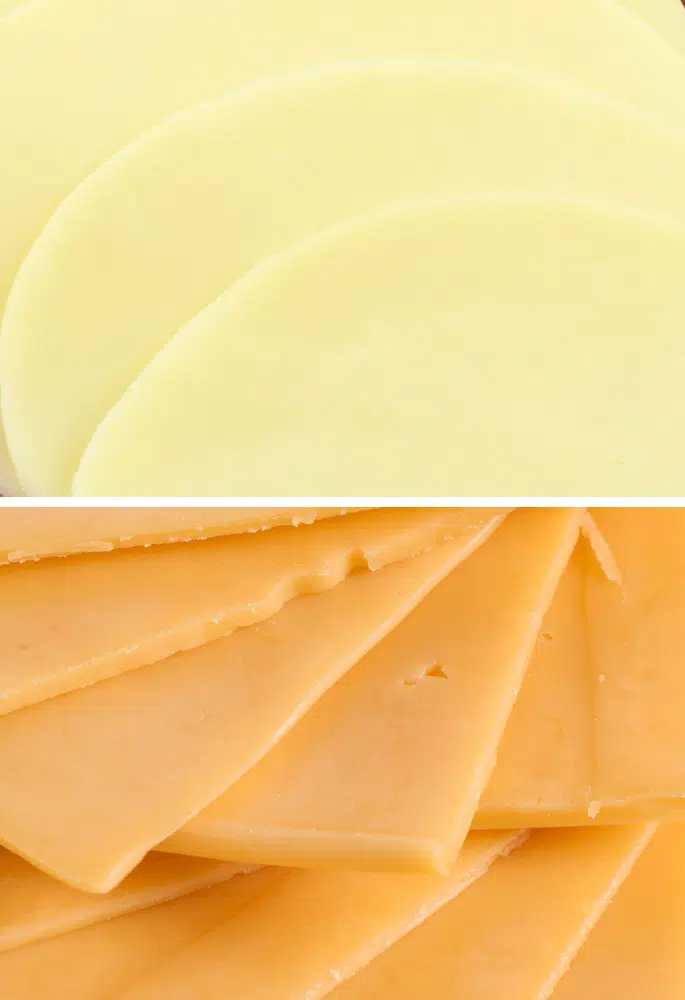
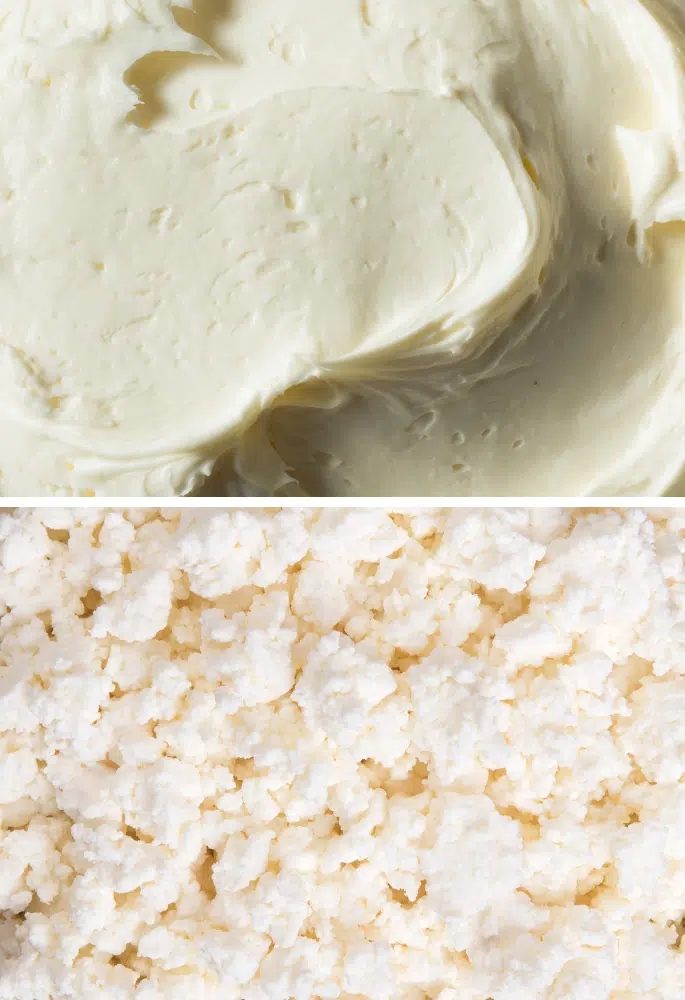
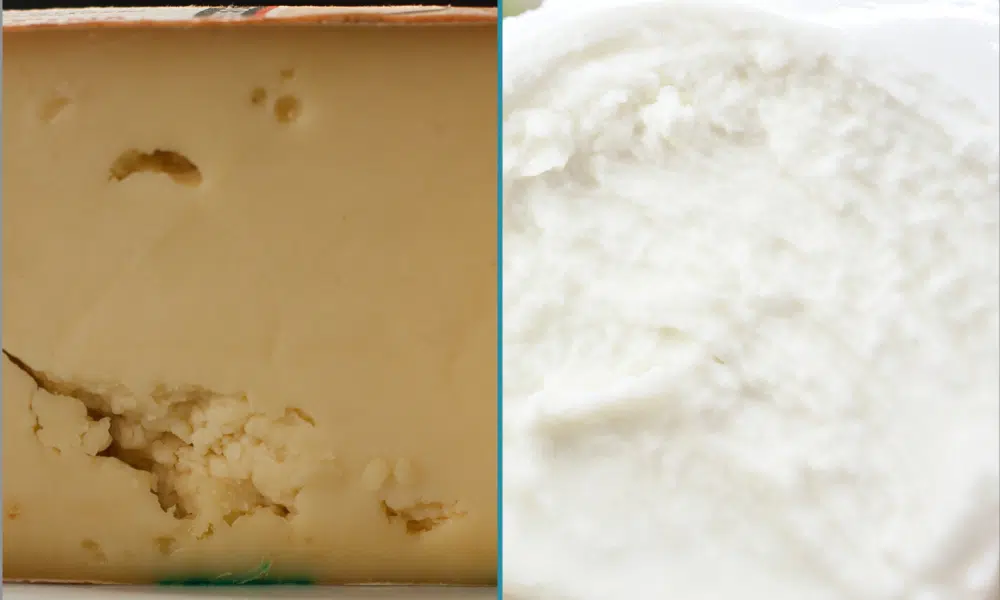
Appearance. Muenster has that telltale orange, annatto-dyed rind around a pale interior. Mozzarella is uniformly white, whether it’s a fresh ball or a shredded block.
Moisture and shelf life. Fresh mozzarella is packed with moisture and should be eaten within a few days; muenster’s short aging still gives it a longer fridge life than fresh mozzarella.
According to the USDA Food Safety and Inspection Service, soft, high-moisture cheeses like fresh mozzarella spoil faster and need closer attention to storage temperature and use-by dates.
Flavor direction. Muenster leans savory and salty thanks to its seasoning and slight aging; mozzarella leans mild and faintly sweet from the milk itself.

One thing that trips people up: because both melt into that same gooey, stringy texture, it’s easy to assume they’ll taste the same once cooked. They don’t — muenster still carries a saltier backbone underneath the melt.
Which Cheese Should You Use?
I don’t think of these as true substitutes for each other — they’re suited to different jobs.
Reach for mozzarella when you want a neutral, milky backdrop that lets other flavors — tomato sauce, basil, olive oil — do the talking.
That’s exactly why mozzarella dominates pizza, caprese salads, and baked pasta dishes; it disappears into the dish rather than competing with it.
Reach for muenster when you actually want the cheese to contribute flavor — on burgers, in grilled cheese, or melted over roasted vegetables.
If you’re building a Mexican-style melt, it’s worth knowing the difference in how melting cheeses behave; our quesadilla vs enchilada guide breaks down how cheese and sauce interact in each dish.
And if you’re topping a pasta bake, the sauce underneath matters as much as the cheese on top — see our ragu vs marinara comparison if you’re deciding which one to use.
In my kitchen, I’ll sometimes blend the two on a pizza specifically for the flavor contrast — mozzarella for stretch, muenster for a salty, savory note underneath.
They melt at similar rates, so combining them doesn’t create texture problems, just a more layered flavor.
How to Store Muenster and Mozzarella Properly
Storage is where these two cheeses really diverge, mostly because of how much moisture they hold.
Muenster keeps reasonably well. Wrap it in wax or cheese paper first, then loosen it inside a plastic bag or container — this lets the cheese breathe a little instead of sweating.
Stored this way in the crisper drawer, an unopened block will hold for two to three weeks, and an opened one for about a week to ten days.
Fresh mozzarella is a different story. It’s usually sold sitting in its own liquid or brine, and it should stay there until you’re ready to use it.
Once opened, plan to use it within five to seven days — the high moisture content makes it spoil faster than firmer cheeses.
Part-skim, low-moisture mozzarella (the shredded or block kind) is much more forgiving. It keeps for a few weeks in the fridge and actually freezes well, which fresh mozzarella does not do gracefully — freezing breaks down its delicate texture and leaves it grainy and watery once thawed.
My rule of thumb: if a cheese is sold swimming in liquid, treat it like a perishable, use-it-soon item. If it’s shrink-wrapped and firm, it has more staying power.
Common Mistakes People Make With These Cheeses
A few small missteps come up again and again in my kitchen and in questions I get from readers.
Not draining fresh mozzarella before using it. Straight out of the brine, fresh mozzarella carries a lot of extra water. Slice it and let it sit on a paper towel for a few minutes before it goes on pizza or into a caprese salad, or you’ll end up with a soggy crust or a watery plate.
Assuming pre-shredded mozzarella is the same as fresh. Bagged, shredded mozzarella is almost always the low-moisture, part-skim style — it’s coated in anti-caking starch, which is great for melting evenly on pizza but wrong for a caprese salad that wants that soft, milky bite.
Over-salting a dish that already has muenster in it. Because muenster brings its own salt to the table, dishes like grilled cheese or burgers often need less added salt than you’d think.
Broiling mozzarella too close to the heat. It browns fast and can scorch before it’s fully melted through. A middle oven rack with a short broil at the end gives more even results than blasting it right under high heat.
Expecting muenster to stretch like mozzarella. It melts into a smooth, soft pool rather than pulling into long strings, so it’s not the right pick if a dramatic cheese pull is the whole point of the dish.
Worthwhile Variations of Each Cheese
Once you know the basics, it’s worth knowing there’s more than one version of each cheese sitting on the shelf.
Muenster variations include smoked muenster, which adds a deeper, campfire-style flavor that’s excellent on burgers, and low-sodium muenster, which is worth seeking out if the saltiness is your main hesitation with this cheese. The original French Munster (sometimes spelled Munster-Géromé) is a stronger, funkier washed-rind cheese — worth trying if you want to see where the American version came from.
Mozzarella variations are even more varied. Fior di latte is fresh mozzarella made from cow’s milk, while mozzarella di bufala is the traditional water-buffalo version with a richer, tangier flavor.
Smoked mozzarella (affumicata) picks up a savory, smoky note that works well in sandwiches. And burrata, technically a cousin rather than a true mozzarella, is a mozzarella shell filled with soft curd and cream — worth trying if you love mozzarella’s flavor but want something even richer.
Trying a couple of these variations is a good way to figure out which direction — richer, smokier, saltier, milder — actually suits your cooking best.
Frequently Asked Questions
Does muenster cheese have more protein than mozzarella cheese?
It depends which mozzarella you compare. Part-skim mozzarella has slightly more protein per ounce than muenster, while whole-milk mozzarella has a bit less. Part-skim mozzarella is also the most protein-dense of the three when you compare protein per calorie rather than per ounce. Either way, the gap is small, so neither is a significant protein source on its own.
Can I substitute muenster for mozzarella in a recipe?
You can, but expect a flavor shift. Muenster is saltier and more savory than mozzarella's mild, milky taste, so dishes built around mozzarella's neutrality will taste noticeably different.
Which cheese melts better, muenster or mozzarella?
Both melt very well because neither is aged very long. Mozzarella gives the more dramatic stretchy cheese pull, while muenster melts into a smoother, softer puddle.
Is muenster or mozzarella healthier?
Nutritionally they're similar, though part-skim mozzarella tends to be lower in calories, fat, and sodium than muenster. Neither should be relied on as a primary source of protein.
Which cheese is better for pizza, muenster or mozzarella?
Mozzarella is the classic choice because its mild flavor lets the sauce and toppings stand out while still delivering that signature stretch. Some cooks blend in a little muenster for extra savory depth.
Can you freeze muenster or mozzarella cheese?
Muenster and low-moisture part-skim mozzarella both freeze reasonably well, especially if shredded first. Fresh mozzarella doesn't freeze well — the high moisture content breaks down during thawing and leaves the texture grainy and watery.
Is muenster or mozzarella better for a high-protein diet?
Neither cheese contributes enough protein per serving to build a diet around, but if you're comparing purely on protein efficiency, part-skim mozzarella edges out both muenster and whole-milk mozzarella when you look at protein per calorie rather than protein per ounce.