View All Posts American Cheese Italian

Provolone vs American Cheese: What’s the Real Difference?

Ollie Cartwright
Updated:
Provolone vs American Cheese: What's the Real Difference?

Walk into any deli and you’ll see provolone and American cheese sitting side by side, both promising the same thing: a good melt on a good sandwich. But they’re not interchangeable, and once you know why, you’ll pick the right one every time.

The short answer is provolone is a real, aged Italian cheese with a tangy bite, while American cheese is a processed blend engineered for that ultra-smooth, ultra-reliable melt.

Key Takeaways

  • Provolone is a naturally aged Italian cheese; American cheese is a processed blend of cheese, milk fats, and emulsifiers.
  • American cheese melts more smoothly and predictably, while provolone can turn stringy or oily if overheated.
  • Mixing provolone and American cheese is a real, popular move (think Philly cheesesteaks) and melts beautifully together.
  • Neither is a 'health food' — American cheese tends to run higher in sodium, provolone higher in sharper flavor per bite.
  • You can substitute one for the other in most recipes, but expect a difference in tang and melt texture.

What Is Provolone Cheese?

Provolone is a semi-hard Italian cheese made from cow’s milk. It belongs to the pasta filata family, meaning the curds are stretched and kneaded while warm, the same technique used for mozzarella.

That stretching is what gives provolone its smooth, slightly stringy interior and its shiny, waxed rind once it’s aged and dried.

Cross-section of aged Provolone cheese wheel displayed on rustic wood

In my experience, the aging is what really separates one provolone from another. Provolone Dolce is aged just 2 to 3 months and tastes mild, buttery, and a little sweet.

Provolone Piccante is aged 4 months or longer, and it gets noticeably sharper, tangier, and firmer the longer it sits.

Under U.S. federal standards, provolone must be made from pasteurized cow’s milk and meet specific moisture and fat requirements to legally carry the name, according to the FDA’s standard of identity for provolone cheese.

If you’re a fan of Italian table cheeses, it’s worth also reading up on asiago vs provolone — they’re often confused for each other but age very differently.

What Is American Cheese, Really?

American cheese isn’t a single cheese at all — it’s a processed cheese product, usually a blend of cheddar and Colby, combined with milk, milk fat, whey protein concentrate, and emulsifying salts.

Those emulsifiers are the whole trick. They keep the fat and protein from separating when the cheese hits heat, which is exactly why American cheese never breaks or turns greasy.

Kraft Deli Deluxe American cheese slices package showing individual wrapped slices

Federal rules actually distinguish between a few tiers here: ‘pasteurized process cheese’ has to be mostly real cheese, while ‘cheese product’ or ‘cheese food’ can legally contain less cheese and more added ingredients, per the FDA’s standard for pasteurized process cheese.

That label distinction matters if you’re comparing deli-counter American cheese (usually the real process cheese) to individually wrapped grocery-store slices, which often skew toward the ‘cheese product’ category.

It shows up constantly in American comfort food — cheeseburgers, grilled cheese, and even melted into a quesadilla vs burrito-style filling when a kitchen wants a guaranteed smooth melt.

Provolone vs American Cheese: The Key Differences

Once you line them up side by side, the differences are pretty stark — not just in flavor, but in how each one is actually made.

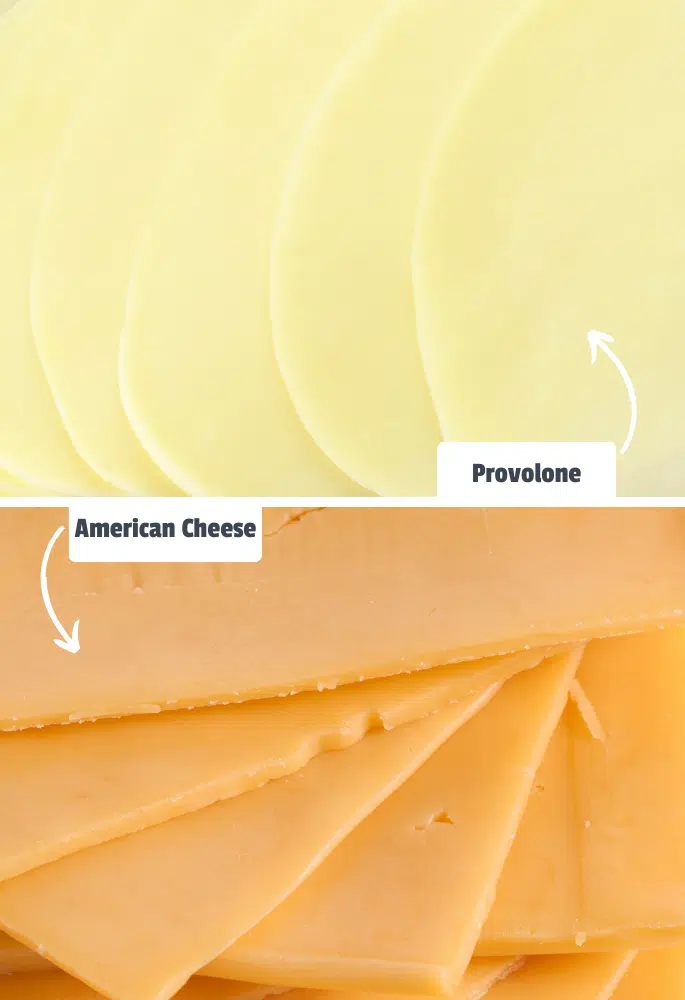
Texture is the first tell: provolone is semi-hard and can be sliced thin or thick, while American cheese is uniformly soft and pliable straight out of the wrapper.

Flavor is the second. Provolone ranges from mild and buttery to sharp and tangy depending on age, while American cheese stays consistently mild and a little salty, batch after batch.

Production is the biggest gap of all: provolone is a naturally cultured and aged cheese, while American cheese is engineered from a blend of cheeses and stabilizers specifically for consistency.

Provolone vs American cheese at a glance
Feature Provolone American Cheese
Type Natural, aged cow's milk cheese Processed cheese blend
Texture Semi-hard, slightly stringy Smooth, soft, uniform
Flavor Mild to sharp, tangy with age Consistently mild and salty
Melting behavior Good, but can turn stringy or oily if overheated Very smooth and predictable
Best uses Sandwiches, pizza, antipasto Burgers, grilled cheese, cheese sauces
Origin Southern Italy United States

Which One Melts Better?

This is the question I get asked most, and it has a clear answer: American cheese melts more smoothly and consistently than provolone.

Those emulsifying salts in American cheese are doing real work — they keep the fat and protein bound together so it melts into a silky, even layer instead of separating.

Hand holding a grilled cheese sandwich with melted cheese visibly stretching

Provolone melts well too, especially Provolone Dolce, but push it too hot for too long and it can turn stringy, or worse, weep oil onto the pan.

One thing that trips people up: pre-sliced deli provolone melts differently than a block you shred yourself, because the moisture content and thickness change how evenly the heat gets through.

If you’re building a hot sandwich where meltability is everything — think a fajita vs quesadilla whats the difference-style melted filling — American cheese is the safer bet. If you want flavor with your melt, provolone is worth the slightly fussier technique.

What Happens When You Mix Provolone and American Cheese?

This is a real, well-loved move, not a gimmick — plenty of Philly cheesesteak shops melt provolone and American cheese together right on the griddle.

Philly cheesesteak sandwich on wooden board with melted cheese and tomato

Yes, a provolone and American cheese mixture melts beautifully. The American cheese smooths everything out while the provolone adds sharpness and a little chew.

In my experience, a roughly 50/50 mix gives you the best of both: it melts as evenly as straight American cheese but tastes noticeably more interesting.

To melt them together well, shred or thinly slice both, layer them on the meat or bread while it’s still hot, and cover briefly so the steam finishes the job instead of overcooking the top layer.

Some cooks skew the ratio toward two-thirds American cheese if they want maximum meltability with just a hint of provolone’s tang — either way, this blend works fine for burgers, cheesesteaks, and grilled sandwiches.

It’s a genuinely practical trick if you only have half a block of each cheese left in the fridge and don’t want to run to the store.

Provolone vs American Cheese: What's the Real Difference? infographic

Is Provolone or American Cheese Healthier?

Neither cheese is a health food, and I want to be upfront about that instead of pretending one is a diet win.

Provolone, as a natural aged cheese, tends to be higher in protein and calcium per ounce, since it isn’t diluted with water, whey, and emulsifiers the way processed cheese is.

American cheese, because of how it’s manufactured with added salts, generally runs higher in sodium than a similar serving of provolone — worth knowing if you’re watching your sodium intake, per general guidance from MedlinePlus’s overview of sodium in the diet.

Professional cheese platter with provolone, crackers, and accompaniments on black slate

Both are still cow’s milk cheeses, and both carry a meaningful amount of saturated fat — something worth moderating for heart health, according to the Mayo Clinic’s guidance on saturated fats.

If you’re comparing cheeses for a lighter diet overall, it’s also worth reading up on cottage cheese vs cream cheese, since neither provolone nor American cheese is the lower-calorie option in most fridges.

My honest take: pick based on flavor and how you’re using it, and just be mindful of portion size with either one, especially if sodium is a personal concern.

Can You Substitute Provolone for American Cheese (or Vice Versa)?

Yes, you can swap one for the other in most recipes — just adjust your expectations a little.

Swap provolone in for American cheese and you’ll get more flavor and a slightly firmer bite, but a less uniform melt.

Swap American cheese in for provolone and you’ll get a smoother, glossier melt, but you’ll lose that tangy, aged edge provolone brings to antipasto boards and pizza.

Cheeseburger with melted cheese on toasted bun, plated presentation

I’ve found provolone works especially well in place of American cheese on burgers when I want something that tastes a little more grown-up.

On the flip side, American cheese is the better call anytime you need a foolproof melt, like in a cheese sauce or a quesadilla vs enchilada-style filling where texture matters more than complexity.

Similarities Worth Knowing

For all their differences, these two cheeses do overlap in a few genuinely useful ways.

Both are fundamentally cow’s milk cheeses, and both are workhorses that melt well enough for everyday cooking.

Both show up constantly in sandwiches, both are widely available presliced for convenience, and both play well with cured meats, tomato, and bread.

That overlap is exactly why the two get compared so often — they’re solving the same problem, just with very different methods.

Frequently Asked Questions

Is a provolone and American cheese mixture good for melting?

Yes. American cheese keeps the mixture smooth and glossy, while provolone adds flavor and a little chew, and together they melt evenly for cheesesteaks, burgers, and grilled sandwiches.

Is American cheese or provolone healthier?

Neither is a health food. Provolone tends to offer more protein and calcium per ounce as a natural cheese, while American cheese generally runs higher in sodium due to its processing, so the better choice depends on what you're watching in your diet.

Can I use provolone instead of American cheese on a burger?

Absolutely. You'll get more tang and a firmer bite, though the melt will be a little less uniform than American cheese gives you.

Why does American cheese melt so much smoother than provolone?

American cheese contains emulsifying salts added specifically to keep its fat and protein from separating under heat, which is why it stays silky instead of turning oily or stringy.

Does mixing provolone with American cheese change the flavor a lot?

It rounds things out rather than overwhelming either flavor. You still get the smooth melt of American cheese, but with a noticeably tangier, more savory finish from the provolone.

Leave a Comment