

Key Takeaways
- Fajitas are Tex-Mex, invented by ranch workers in Texas in the 1930s-40s; quesadillas are authentically Mexican and centuries older.
- Fajitas are grilled meat and vegetables you build into a tortilla yourself; quesadillas are sealed shut and cooked with the filling already inside.
- Fajitas typically use flour tortillas; quesadillas traditionally use corn, especially in southern Mexico.
- Cheese defines a quesadilla's flavor, while seasoned, charred meat drives a fajita's.
- Both dishes share a similar spice cabinet and rely on a tortilla as the vehicle for the filling.
Fajita vs Quesadilla: The Quick Answer
I’ve lost count of how many times someone has asked me to just settle this once and for all.
Fajitas and quesadillas both live in the Tex-Mex and Mexican food world, and both usually involve a tortilla, so it’s easy to see why people mix them up.
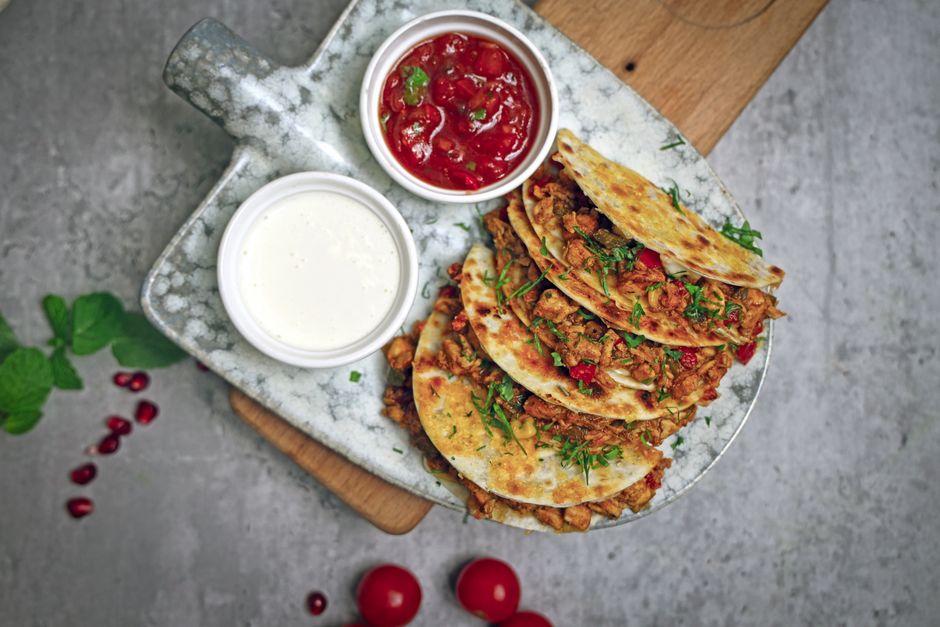
The short answer is that a fajita is grilled meat and vegetables you build yourself into a tortilla, while a quesadilla is a folded, cheese-filled tortilla cooked until it’s crisp and melty.
One’s a Tex-Mex plate you assemble at the table, the other’s a Mexican street-food classic that’s already sealed shut before it reaches you.
If you’re also curious how tortilla dishes compare to each other, I’ve broken down quesadilla vs burrito differences elsewhere on the site.
What Is a Fajita?
Fajitas are Tex-Mex, not traditional Mexican food, and that surprises a lot of people the first time they hear it.
Where Fajitas Came From
The dish traces back to Mexican ranch hands, called vaqueros, working cattle ranches in the Rio Grande Valley of Texas during the 1930s and 40s.
Cowhands were often paid in part with cheaper cuts of beef, including the skirt steak, or ‘faja’ in Spanish, which literally means belt or strip.
They’d grill that tough cut over an open fire, slice it thin against the grain, and wrap it in a warm tortilla.
Houston restaurateur Ninfa Rodriguez Laurenzo gets a lot of credit for putting fajitas on restaurant menus in the 1970s, turning a ranch-hand meal into the sizzling platter we know today.
How I Make Fajitas at Home
My go-to method starts with thinly sliced skirt steak or chicken breast marinated in olive oil, lime juice, cumin, garlic, and a pinch of chili flakes.
I let that sit for at least 30 minutes, though I’ve found a few hours in the fridge gives you a deeper flavor.
One thing that trips people up: marinade that’s touched raw meat should never be reused as a sauce unless it’s boiled first, according to USDA guidance on marinating and food safety.
Once marinated, I sear everything in a screaming-hot skillet or cast-iron pan alongside sliced bell peppers and onions until they’ve got real char on the edges.
I always confirm chicken hits 165°F and steak reaches at least 145°F with a rest, following the FDA’s safe minimum internal temperature chart.
Then it’s straight to the table with warm flour tortillas, so everyone builds their own plate.
What Is a Quesadilla?
A quesadilla is authentically Mexican, and at its simplest it’s just a tortilla folded over melted cheese.
The name comes from Spanish: ‘queso’ means cheese, and ‘-dilla’ is a diminutive suffix, so it roughly translates to ‘little cheesy thing.’
Historians trace the dish back to Mexico’s colonial period, when Indigenous cooks filled tortillas with squash and pumpkin, and Spanish settlers introduced cheese into the mix.
In southern Mexico, quesadillas are traditionally made with corn tortillas and can be stuffed with squash blossoms, mushrooms, or huitlacoche.
Head north into Mexico’s border states, and the tortilla shifts to flour, while the filling narrows down mostly to cheese by default.
If you’ve ever wondered how this compares to another rolled tortilla dish, I’ve also covered quesadilla vs enchilada in detail.
My Favorite Quesadilla Filling
I like a mix of Monterey Jack and sharp cheddar for the filling, since Jack melts beautifully and cheddar brings the flavor.
Cheese is a solid source of calcium and protein, though like most cheeses it’s also fairly high in saturated fat, and Mayo Clinic notes that moderation is worth keeping in mind if you eat it often.
I’ll toss in sauteed onions and peppers for texture, and sometimes a spoonful of leftover fajita filling, which might be my favorite shortcut in this whole comparison.
Cook it low and slow in a dry skillet so the tortilla toasts evenly before the cheese scorches.

Key Differences Between Fajitas and Quesadillas
Once you line them up side by side, the differences are pretty clear-cut, and the table below sums up the biggest ones.
Tortilla Type
Fajitas almost always use flour tortillas, since they’re soft and stretchy enough to wrap around chunky fillings.
Quesadillas traditionally lean on corn tortillas, especially in southern Mexico, giving them an earthier, slightly nutty base.
That said, I’ve made both dishes with either tortilla and they turn out great, so don’t stress too much over this rule.
Cooking Order
With a quesadilla, you build it first, then heat the whole thing so the cheese melts and glues it shut.
A fajita works the opposite way: you cook the filling separately in a pan, then everyone loads their own tortilla at the table.
Flavor Focus
Cheese carries the flavor in a quesadilla, plain and simple.
A fajita’s flavor comes from seasoned, charred meat and vegetables, with cheese playing at most a supporting role as a topping.
Origins and Age
Quesadillas date back centuries, at least to Mexico’s 16th-century colonial period.
Fajitas are a relative newcomer, only becoming popular in Texas in the 1930s and 40s and hitting mainstream menus in the 1970s.
| Feature | Fajita | Quesadilla |
|---|---|---|
| Origin | Texas (Tex-Mex) | Mexico |
| Tortilla | Flour, usually | Corn, traditionally |
| Main filling | Grilled meat and peppers | Melted cheese |
| Assembly | Built at the table | Sealed before serving |
| Typical age | Popularized 1930s-40s | Traces to the 1500s |
Nutrition: Which One Is Lighter?
Neither dish is exactly diet food, but there are real differences worth knowing.
A fajita loaded with grilled protein and vegetables tends to bring more protein and fiber to the plate, especially if you go light on cheese and sour cream.
A cheese-heavy quesadilla concentrates more saturated fat and sodium into a smaller package, since cheese is doing most of the work.
I’ve found that swapping in a corn tortilla and going easy on the cheese keeps a quesadilla from feeling like a heavy meal.
For fajitas, piling on extra peppers and onions is an easy way to add volume and nutrients without much extra effort.
If you’re watching sodium or saturated fat for health reasons, it’s worth checking labels on store-bought tortillas and cheese, since amounts vary widely between brands.
What Fajitas and Quesadillas Have in Common
For as different as they are, both dishes share a few real similarities.
Both start with a tortilla acting as the vehicle for the filling, whether it’s built at the table or sealed shut on the stove.
Both also lean on a similar spice cabinet: cumin, paprika, chili powder, and garlic show up in nearly every version I’ve made.
And both are endlessly adaptable, since you can swap proteins, cheeses, or vegetables depending on what’s in the fridge.
If you like experimenting with the sauces that go alongside either dish, it’s worth comparing burrito sauce vs enchilada sauce or trying a salsa verde vs salsa roja on top.
Which One Should You Make Tonight?
If you’re craving something smoky and meaty that lets everyone customize their own plate, make fajitas.
If you want a fast, cheesy, crispy snack that’s ready in under 10 minutes, a quesadilla wins every time.
In my house, fajitas are the weekend dinner where everyone gathers around a sizzling platter.
Quesadillas are the weeknight fix I throw together when I’m hungry and don’t want to think too hard.
Either way, you really can’t go wrong, both dishes prove how far a simple tortilla can stretch.
Frequently Asked Questions
Can a quesadilla have meat in it?
Yes, plenty of modern quesadillas include shredded chicken, beef, or even leftover fajita filling alongside the cheese, especially in the US.
Are fajitas always made with steak?
No, chicken fajitas are just as common, and shrimp or portobello mushroom versions are popular too.
Why does my quesadilla turn out soggy instead of crisp?
It's usually too much filling or a wet pan. I stick to a light layer of cheese and cook on medium-low heat in a dry or lightly oiled skillet.
What's a healthier way to make either dish?
Load up on vegetables, use a modest amount of cheese, and choose leaner proteins like chicken breast to keep saturated fat in check.
Is it safe to eat fajita meat if it's still pink in the middle?
No. Beef and chicken should reach the internal temperatures listed on the FDA's safe minimum temperature chart before eating, regardless of color.