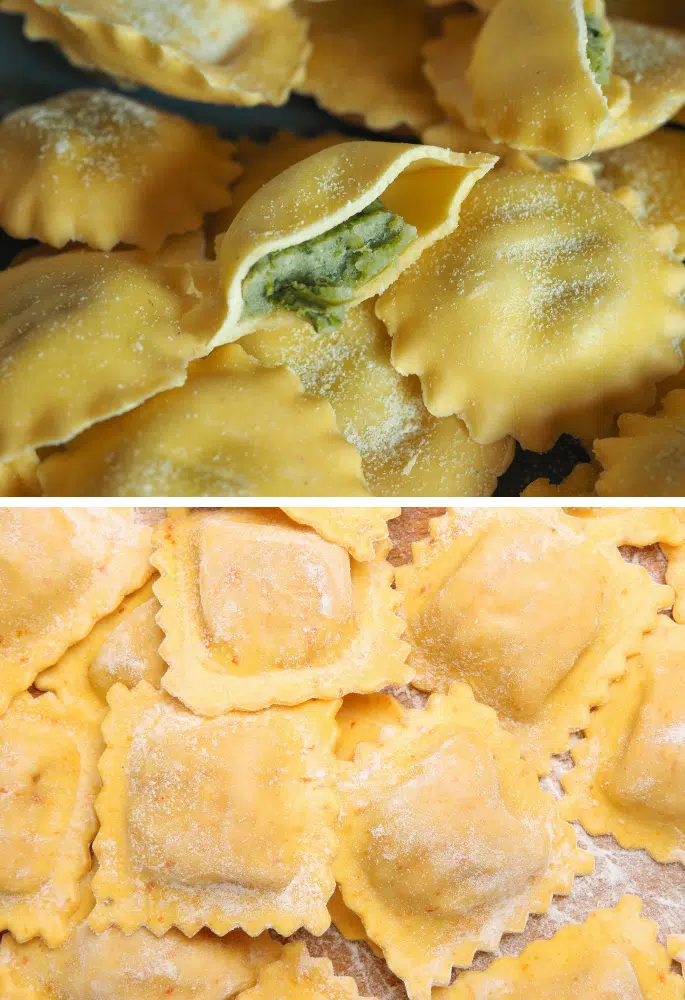

Pierogies are made using a tough-ish noodle dough that can be filled with a range of sweet and savoury treats. From pureed fruit to cured meat, pierogies are a treat for everyone.
Traditionally, making pierogies can be a mammoth task. From prepping the filling to making the dough and cooking the dumpling, pierogies can be time-consuming for a busy weeknight.
Is it possible to skip out on the deep frying or grilling and use your microwave to cook pierogies instead?
To microwave pierogies, you must first begin with cooked piergoeis. You cannot cook raw dough in the microwave. Cover the pierogies with water, cover the dish and then blast for 2 minutes.
How to Microwave Frozen Pierogies
Before we get into how you microwave pierogies, please note that you cannot microwave pierogies if they are raw. The microwave will not cook the dough properly and will ruin the dumplings.
However, you can use your microwave for cooking frozen pierogies. The method below will work for both store-bought frozen pierogies and homemade frozen pierogies:
- Add Your Pierogies
Pick out a microwavable bowl and empty your frozen pierogies of choice directly into the bowl. - Cover With Water
Now fill the bowl with water until all of the dumplings are covered. How much water you add will vary on how many dumplings you are cooking. - Cover With Plastic Wrap
Use some plastic wrap to cover the top of your bowl completely. Pull the plastic tight and secure the sides by folding them over the bowl. - Microwave
Set your microwave to its highest setting and cook for 2 minutes. - Rest
You don’t need to remove the bowl altogether but open the microwave door and let the pierogies rest for around 30 seconds. - Microwave Again
Set your microwave for another 2 – 3 minutes and cook them again at high heat. - Check
Uncover the pierogies and use a fork to check that they are piping hot to the centre. Your fork should come away hot to the touch. - Microwave Again
If your pierogies are still cold in the centre, give them for a further 1-2 minutes. - Drain
Drain the cooking water when the dumplings and fillings are adequately cooked. - Serve
Plate up your pierogies as soon as they are cooked, and enjoy!
How to Microwave Pierogies Successfully
Using a microwave to cook any dumpling can be tricky, even if you just use the microwave to boil water like the method above. Here are a few tips you can refer to when microwaving your pierogies to ensure a successful result:
- Don’t Overcrowd The Bowl – You may be tempted to try and microwave a big batch of pierogies at once. But stuffing too many pierogies in your microwaveable bowl at one time will ruin the dumpling’s shape and prevent them all from cooking evenly.
- More Water, No Problem – Because microwaving your pierogies is similar to boiling them, you don’t need to worry about a pierogi-to-water ratio. So long as you don’t fill your microwavable bowl to the very top, your pierogies won’t be affected.
- Thaw For Less Cooking – Remove your frozen pierogies from the freezer and let them defrost before microwaving them if you want to cut down their cooking time.
- Try Steaming – If you prefer steamed perogies, replace the water above with a damp cloth covering your microwavable bowl to create a steaming effect in your microwave. Then continue following the method above. The result may not be as effective as submerging your pierogies in water and then microwaving them. However, the dumplings will still taste good.
Why You Should Microwave Pierogies
If you have grown up with pierogies, you may be sceptical about cooking them in a microwave. But there are some noteworthy advantages to using it to cook your pierogies:
Quick and Easy
Even boiling frozen pierogies takes longer than cooking them in the microwave. Thawed frozen pierogies cooked in the microwave can take less than 5 minutes to get piping hot and ready to eat.
Better yet, microwaving perogies is a very easy task compared to other cooking methods like deep frying or grilling. The hardest part is ensuring you don’t burn your fingers when checking that they are cooked.
Full of Flavour
You will not have to worry about any flavour escaping your pierogies if you microwave them.
The prominent flavour of pierogi comes from its filling. So long as you ensure that the filling is thoroughly cooked, you will still have a delicious treat when cooking them in your microwave.
Why You Shouldn’t Microwave Pierogies
Pierogies may be a basic kind of dumpling, but there are some disadvantages to microwaving perogies that you should keep in mind:
Only Works for Reheating…
Some people think they can microwave fresh, raw pierogies as long as the filling is cooked correctly. However, it is the raw pierogi dough that proves problematic when microwaved.
Dumpling dough does not cook well in a microwave. You will first need to traditionally cook your raw pierogies and then use a microwave to reheat them, not saving you much time in the long run.
Unusual Texture
Microwaving raw pierogies may give the pierogies a bad texture. The filling can remain damp or uncooked, while the dough can become soggy and fall apart.
Frozen pierogies may also remain soggy when microwaved, but they will at least still be edible.
Microwaving Pierogies FAQs
Do you still have a question or two about microwaving pierogies? Then perhaps these will help you out:
No, raw pierogies cannot be cooked in the microwave, unfortunately. The dough will not cook thoroughly. Instead, the microwave can only be used for reheating already-cooked pierogies.
Providing that you heat them for long enough, microwaving meat-filled pierogies is perfectly safe. They must be piping hot in the centre.

Acacia may be a freelance writer by day, but they are a food fanatic by night. They are always trying out new recipes or finding different ways to elevate classical dishes. But their biggest culinary aim is to educate others on the basics of the kitchen so that they too can enjoy delicious food.