View All Posts Alcohol

Can You Cook With Prosecco Instead of White Wine?

Lewis Crutch
Updated:
Can You Cook With Prosecco Instead of White Wine?

Key Takeaways

  • Prosecco swaps 1:1 for white wine in almost any savory or sweet recipe.
  • Heat knocks out the bubbles almost instantly, but the acidity and fruit flavor carry through into the dish.
  • Cooking never removes all the alcohol, so skip it for anyone pregnant, sober, or avoiding alcohol.
  • Stick to dry (brut) prosecco for savory cooking; save sweeter styles for poached fruit and desserts.
  • Flat prosecco still works fine in the kitchen, just with a milder flavor payoff.

Can You Use Prosecco Instead of White Wine?

You are halfway through a recipe that calls for a splash of white wine, and the only bottle chilling in your fridge is prosecco.

The short answer is yes – prosecco makes a great stand-in for white wine in most savory and sweet recipes.

I have swapped one for the other more times than I can count, and the results are almost always just as good, sometimes better.

Prosecco brings the same acidity and fruit-forward character white wine adds to a dish, plus a touch more aromatic lift from the bubbles.

Use it in the exact same quantity the recipe calls for – a 1:1 swap works in nearly every case, whether you are deglazing a pan or building a pot of risotto.

Got extra prosecco left after cooking? Don’t let it go flat on the counter – check out what to do with leftover prosecco for ideas on using up the rest of the bottle.

Cavicchioli Lambrusco Bianco bottle illuminated against dark forest background`

Image 1 is the only photo that makes prosecco bottle (or in this case, a similar sparkling wine bottle) the clear, primary subject. It's centered, well-lit, professionally photographed, and directly relevant to a cooking article about wine substitutes.

Image 2: Woman in kitchen with bottle is too busy/background-focused
Image 3: Multiple beer/dark bottles with glasses - wrong beverage type and ambiguous
Image 4: Bottle in background, blurred - not the primary subject

What Happens to the Bubbles, Alcohol, and Flavor When You Cook It

The bubbles are the first thing people worry about, and honestly, they’re a non-issue.

Heat knocks the carbonation out of prosecco almost instantly, so by the time it hits a simmering sauce or a hot pan, the fizz is long gone.

What stays behind is the wine’s acidity and fruity, slightly floral flavor – exactly what you want white wine to contribute in the first place.

One thing worth knowing: cooking does not remove all the alcohol, no matter how long you simmer.

Nutrient retention research compiled by the USDA Agricultural Research Service shows that even dishes simmered or baked for 30 minutes or more can retain a meaningful percentage of the original alcohol.

That matters if you’re cooking for someone who is pregnant, in recovery, giving food to children, or avoiding alcohol for religious or medical reasons – in those cases, it’s best to leave the wine out entirely rather than assume the heat took care of it.

For more background on alcohol and health, see MedlinePlus: Alcohol.

Prosecco is also lower in sugar than many white wines commonly used in cooking, especially dry (brut) styles, so it won’t make a savory sauce taste sweet.

Can You Cook With Prosecco Instead of White Wine? infographic

Best Dishes to Swap Prosecco for White Wine In

As a rule, anywhere a recipe calls for white wine, you can reach for prosecco instead.

Here are the dishes where I use this swap most often, plus a few notes on what makes each one work.

Risotto

White wine deglazes the pan early in a risotto and gives the rice something acidic to soak up as it cooks.

Prosecco does the exact same job, and I actually prefer it here – the slight effervescence seems to help the wine reduce evenly and coat the rice.

Stick with a dry (brut or extra dry) prosecco so the risotto doesn’t turn cloyingly sweet.

Fish Pie

A good fish pie sauce starts with sauteed onion, a splash of wine to deglaze, then cream and stock.

Prosecco works well here, especially a dry bottle that won’t compete with delicate white fish.

If salmon is going into the mix, it’s worth knowing do you wash salmon before cooking before you start building the sauce.

Roast Chicken

Pour a glass or two of prosecco into the roasting pan once the skin has crisped, then tent the bird with foil.

The wine steams gently underneath, keeping the meat moist while the pan drippings turn into an easy sauce.

If you’re scaling the recipe up for a crowd, remember that liquid and cook time don’t always double evenly – see double cooking time when double recipe for how to adjust.

Sabayon

Sabayon (zabaglione) is traditionally made with Champagne, but prosecco is a natural, less expensive substitute.

Whisk egg yolks, sugar, and prosecco over a gentle double boiler until pale, thick, and doubled in volume.

The result is airy and just as elegant as the Champagne version.

Steamed Mussels

Mussels and clams steam beautifully in a splash of white wine with garlic and herbs, and prosecco does the job just as well.

The gentle acidity cuts through the richness of the butter or cream often stirred in at the end.

I like to save a splash of the same bottle to drink alongside the finished dish.

Steamed mussels with lemon wedges on a white plate, paired with rosé wine`

Image 2 is the only photo where steamed mussels are the clear, primary subject of the shot. The mussels are prominently displayed in the foreground on a plate with lemon garnish, directly relevant to the Prosecco cooking article context. The accompanying wine glass reinforces the article's theme.

Image 1: Mussels are in a wooden bowl but significantly out of focus; the wine glass in the background is sharper, making the composition ambiguous about the primary subject.

Image 3: Mussels are shown from directly above in a bowl, but the angle and presentation lack professional food photography quality for a high-quality blog.

Image 4: Mussels appear to be only partially visible in a dark pot with greens, making them not the clear primary subject

Bean Soups and Stews

Bean-based soups often start the same way – onions and garlic sweated down, then a wine deglaze before the stock goes in.

This Tuscan white bean soup recipe is a good example of a dish where a dry prosecco slots right into the wine’s usual spot.

Prosecco swap guide by dish
Dish White Wine Called For Prosecco Swap Ratio Best Style to Use
Risotto 1/2 cup to deglaze 1:1 Dry (Brut)
Fish Pie Sauce 1/4 cup 1:1 Dry (Brut or Extra Dry)
Roast Chicken 1 cup in the pan 1:1 Dry to off-dry
Sabayon 1/4 cup 1:1 Dry (Brut), or swap Champagne directly
Steamed Mussels 1/2 cup 1:1 Dry (Brut)
Poached Pears 2 cups (half a bottle) 1:1 Off-dry to sweet (Demi-Sec)

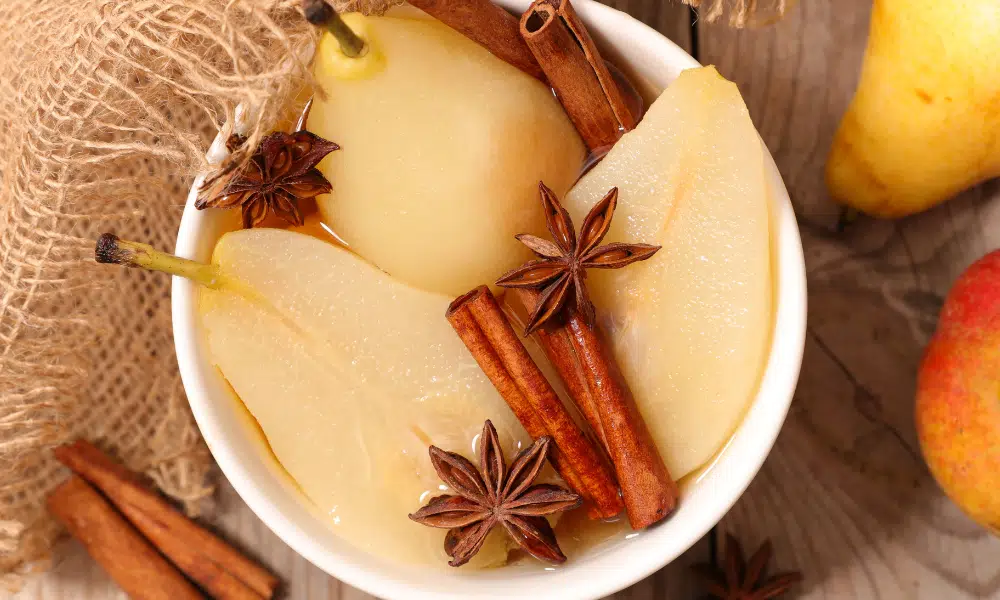
Can You Poach Pears in Prosecco?

Yes – pears take beautifully to a prosecco bath, and it’s one of my favorite low-effort desserts.

Bring about half a bottle of prosecco to a boil with sugar, a cinnamon stick, and a strip of lemon peel.

Add peeled, halved pears, reduce to a simmer, and cook for 35 to 40 minutes until a knife slides in easily.

Let the pears cool in the poaching liquid so they soak up more color and flavor as they sit.

A slightly sweeter, demi-sec prosecco works especially well for poaching, since you want a little sweetness to balance the fruit.

Poached pears in creamy sauce served in a dark ceramic bowl with spoon

What About Other Sparkling Wines – Cava, Champagne, and Beyond

Prosecco isn’t the only bubbly that can stand in for white wine – cava, Champagne, and other sparkling wines will all work in a pinch.

That said, each has its own personality, and it’s worth matching the wine to the dish rather than grabbing whatever’s open.

Save the pricier bottles for dishes where the flavor actually shines through, like a delicate sauce or a poached fruit dessert, rather than a long-simmered stew where the nuance gets lost.

Champagne, prosecco, and cava are all sparkling, but they’re produced differently – Champagne and cava go through a second fermentation in the bottle, while prosecco is fermented in large tanks, which is part of why prosecco tends to be more affordable.

A dry, crisp cava behaves a lot like a dry prosecco in the kitchen, so the two are usually interchangeable.

Sweeter sparkling wines, like a fruity Moscato-style sparkler, suit fruit desserts better than savory sauces or stews.

Multiple champagne flutes filled with sparkling wine, close-up view`

Mistakes That Trip People Up When Cooking with Prosecco

The biggest mistake I see is using a sweet prosecco in a savory dish that needs acidity, not sugar – always check the label for brut, extra dry, or dry before you cook with it.

Confusingly, extra dry prosecco is actually slightly sweeter than brut – it’s one of the wine world’s odder labeling quirks.

Another one: reducing the wine too far and too fast, which can turn a sauce bitter instead of concentrated.

If you’ve ended up with a harsh, bitter sauce after a wine reduction, the troubleshooting in why is my red wine sauce bitter applies just as much to white and sparkling wine sauces.

Cooking with a wine that’s gone truly rancid, not just flat but vinegary and off-smelling, is also a mistake – flat is fine, spoiled is not.

Sulfites are another consideration for anyone sulfite-sensitive: prosecco, like most wines, contains sulfites, and cooking doesn’t remove them. If that’s a concern for you, the Mayo Clinic’s guidance on sulfites in wine is worth a read.

Lastly, don’t forget you can use flat prosecco – an opened bottle that’s lost its fizz still has plenty of flavor to give a sauce, even if it won’t taste as vibrant as a freshly opened one.

Check FoodSafety.gov’s FoodKeeper guidance for how long opened wine keeps in the fridge before it’s past its best for cooking.

Frequently Asked Questions

Can I use prosecco to cook with?

Yes. Prosecco is a reliable 1:1 substitute for white wine in savory dishes like risotto, sauces, and steamed shellfish, as well as sweet applications like poached fruit and sabayon.

Can you use prosecco instead of white wine in risotto?

Yes, and it's one of the best places to make the swap. Use a dry (brut) prosecco in the same quantity the recipe calls for to deglaze the pan before adding stock.

Does the alcohol cook out of prosecco?

Not completely. Research on alcohol retention shows that simmering or baking for 30 minutes or more still leaves some alcohol in the dish, so it's not a safe substitute for someone avoiding alcohol entirely.

Can you cook with flat prosecco?

Yes. Flat prosecco still adds acidity and flavor to a dish, though the taste will be somewhat milder than a freshly opened bottle.

Can you use Champagne instead of white wine in cooking?

Yes, Champagne can replace white wine the same way prosecco can, though it will add a slightly different, more mineral flavor and is a pricier way to do it.

Leave a Comment