If you’ve stood in the international aisle wondering whether that bag of Korean red pepper flakes can sub for the little bottle of Japanese seven-spice, you’re not alone.
The short answer is no, not really — Gochugaru is pure dried chili, while Togarashi is a whole spice blend, and swapping one for the other changes both the heat and the flavor of your dish.
I keep both in my pantry for completely different reasons, and once you know what each one actually does, you’ll never mix them up again.
Key Takeaways
- Gochugaru is pure sun-dried Korean chili flakes; Togarashi is a seven-ingredient Japanese spice blend.
- Gochugaru brings smoky, moderate heat; Togarashi is milder but layered with citrus, sesame, and umami.
- They're not true substitutes for each other — swapping changes both flavor and heat level.
- Gochugaru belongs in kimchi and stews; Togarashi is a finishing sprinkle for noodles, rice, and grilled meats.
- In a pinch, you can swap one for the other, but expect a noticeably different result.
What Is Gochugaru?
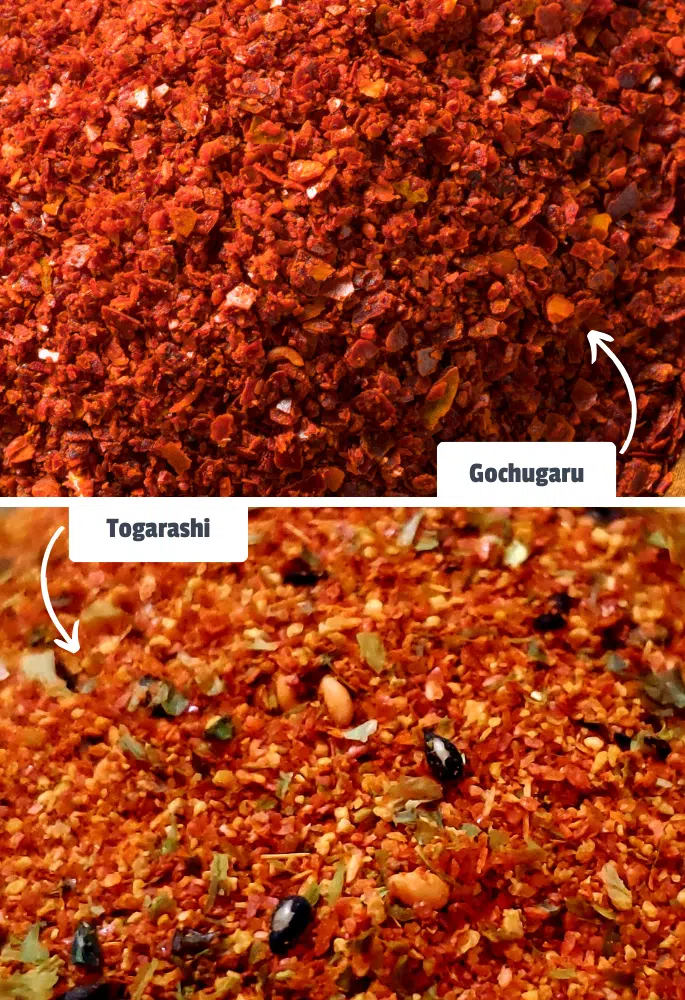
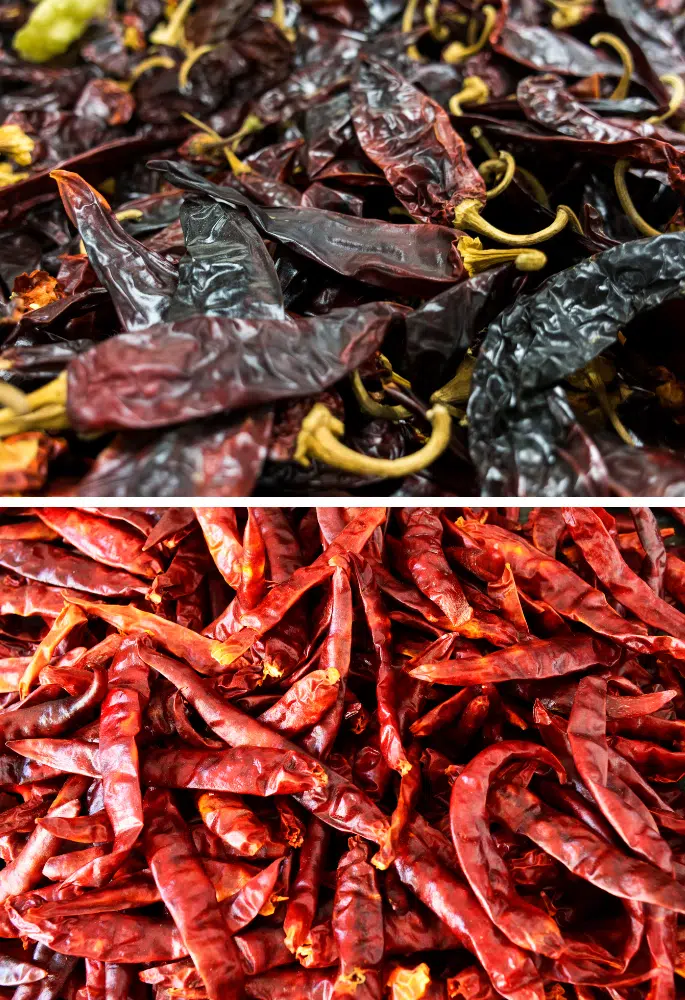
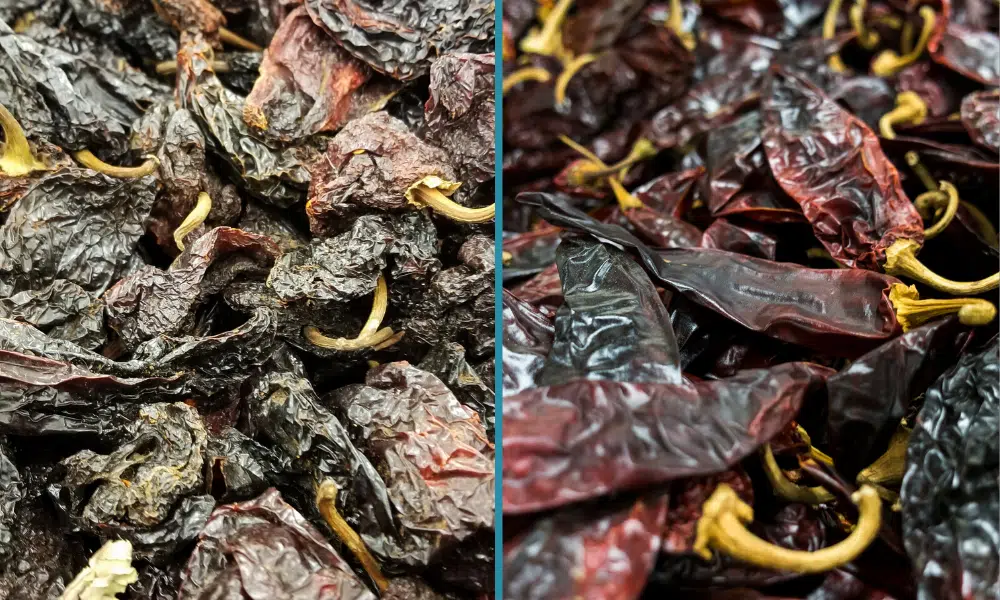
Gochugaru is Korea’s signature red pepper flake, made from chili peppers that are sun-dried, deseeded, and ground into coarse or fine flakes.
I’ve found the color alone tells you a lot — good Gochugaru is a deep, almost brick-red, with a bit of shine from natural oils in the pepper skin.

Flavor-wise, it’s smoky and slightly sweet, with a moderate heat that builds slowly instead of hitting all at once.
That’s exactly why it works so well in Korean radish vs daikon kimchi, where the pepper needs to season the vegetable without overwhelming it.
Gochugaru also shows up in stews like kimchi jjigae, in marinades for bulgogi, and stirred into dipping sauces alongside soy and sesame oil.
One thing that trips people up: not all Gochugaru is the same heat level.
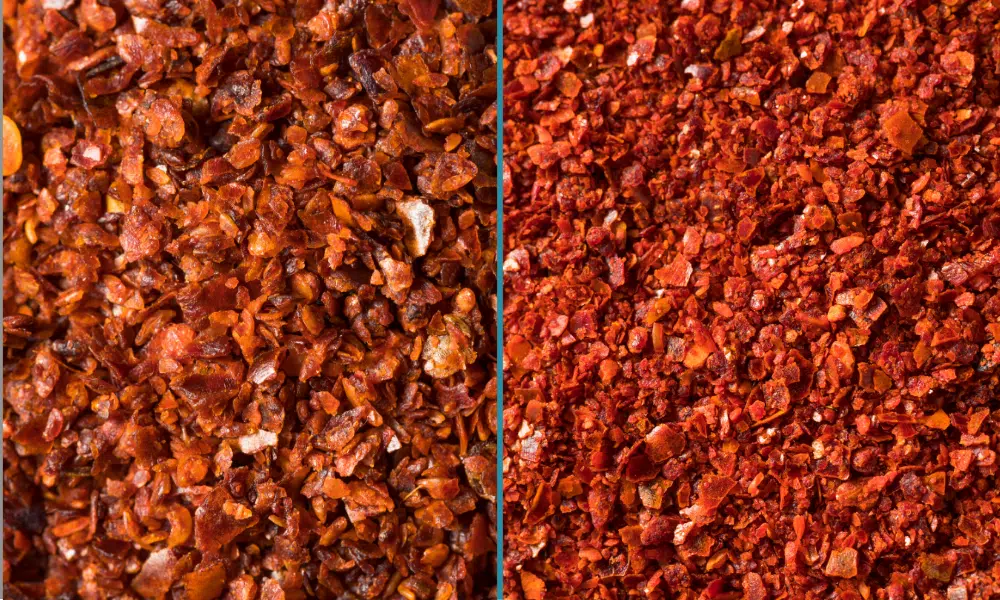
Coarser flakes tend to be milder and are meant for kimchi, while finer, brighter red powder is often hotter and used in sauces where you want the heat to distribute evenly.
What Is Togarashi?
Togarashi, more precisely Shichimi Togarashi, is a Japanese seven-spice blend with roots going back to the 17th century.
Unlike Gochugaru, it’s never just one ingredient — it’s a mix built for complexity, not raw heat.

In my experience, the citrusy orange peel is what makes Togarashi instantly recognizable the moment you taste it.
That brightness, plus toasted sesame and a faint numbing tingle from sansho pepper, is what separates it from any single-chili spice.
It’s almost always used as a finishing touch rather than a cooking ingredient — sprinkled over ramen, udon, grilled yakitori skewers, or a bowl of steamed rice.
If you enjoy the way it plays against savory, brothy dishes, it’s worth comparing it directly to its cousin blend in togarashi vs furikake, since the two are easy to confuse on a Japanese pantry shelf.
What's Actually in a Traditional Togarashi Blend?
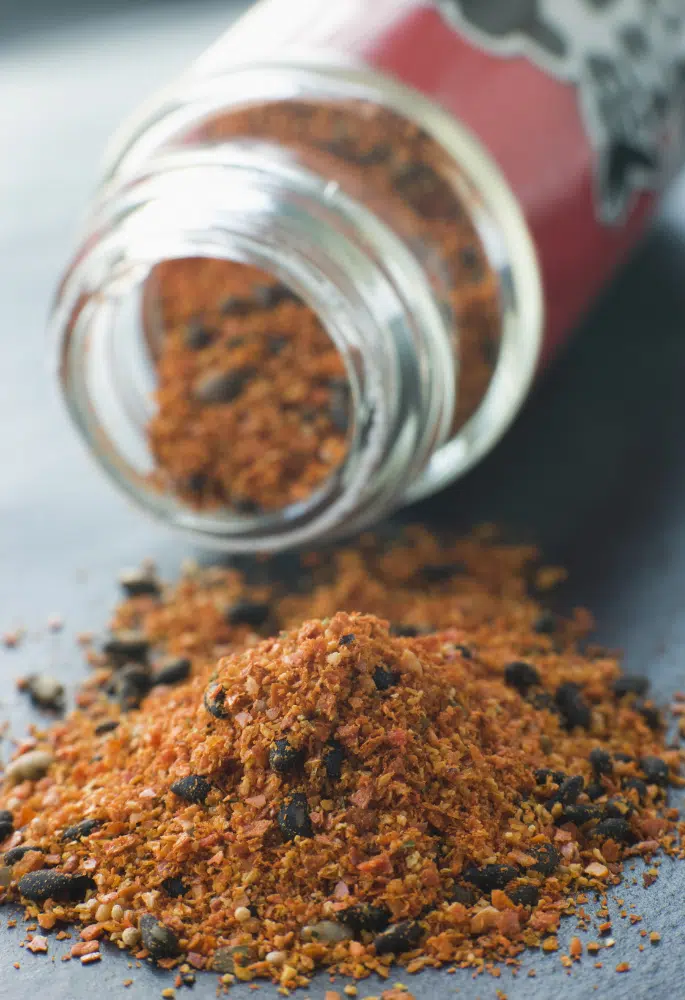
Classic Shichimi Togarashi means ‘seven-flavor chili pepper,’ and the name is literal — there are traditionally seven ingredients.
Those are dried red chili pepper, sansho pepper, roasted orange or tangerine peel, black sesame seeds, white sesame seeds, hemp seeds, and ground ginger.
Some commercial blends swap in dried seaweed (nori) or poppy seeds, so labels can vary a bit from brand to brand.
This is the detail people searching for Gochugaru and Togarashi together most often miss: Togarashi is a recipe, while Gochugaru is a single raw ingredient.
That’s the core reason the two aren’t interchangeable, even though both land on the table as a red-flecked chili condiment.
Ichimi Togarashi vs Shichimi: Don't Mix Them Up
Here’s a wrinkle that catches a lot of shoppers off guard: there’s also an ‘Ichimi Togarashi,’ which means ‘one-flavor chili pepper.’
Ichimi is just straight ground Japanese chili, no sesame, no citrus, no filler — which actually makes it the closer cousin to Gochugaru, not Shichimi.
If a recipe calls for Togarashi and only lists chili heat with no mention of citrus or sesame notes, double-check whether it means Ichimi rather than the seven-spice Shichimi blend most people picture.
I’ve grabbed the wrong jar at Asian markets more than once because the packaging looks nearly identical apart from one small kanji character.
When in doubt, read the ingredient list on the back — if it’s one item, it’s Ichimi; if it’s a colorful flecked mix, it’s Shichimi.
Gochugaru vs Togarashi: Key Differences at a Glance
Once you set the two side by side, the differences are obvious — but it helps to see them laid out plainly.
| Feature | Gochugaru | Togarashi |
|---|---|---|
| Origin | Korea | Japan |
| Made from | Sun-dried red chili peppers only | Chili, sansho pepper, orange peel, sesame, hemp seed, ginger |
| Flavor | Smoky, slightly sweet, moderately spicy | Citrusy, nutty, umami, mild-to-moderate heat |
| Texture | Coarse or fine flakes, uniform | Varied, flecked mix of seeds and peel |
| Best used | During cooking (kimchi, stews, marinades) | As a finishing sprinkle (noodles, rice, grilled foods) |
| Shelf life | About 6–12 months | About 6 months |
Heat Level Compared
Gochugaru’s heat is fairly consistent and moderate, generally landing in a similar range to a mild-to-medium chili flake — noticeable, but rarely mouth-numbing.
Togarashi’s heat is usually gentler on its own, since the chili content is diluted by sesame seeds, citrus peel, and other non-spicy ingredients.
Capsaicin, the compound responsible for a chili’s burn, behaves the same way in both peppers chemically — it’s really the ratio of pure chili to other ingredients that changes how hot each spice tastes on the tongue, according to Mayo Clinic’s overview of capsaicin.
If you’re sensitive to spice, I’d start with Togarashi on eggs or avocado toast before working up to a full spoonful of Gochugaru in a stew.
Can You Substitute Gochugaru for Togarashi (or the Reverse)?
Yes, you can swap one for the other, but go in knowing the dish will taste different, not just spicier or milder.
Gochugaru instead of Togarashi will give you smokier, more straightforward heat, but you’ll lose the citrus and sesame notes that make Togarashi distinctive on a bowl of noodles.
Togarashi instead of Gochugaru works fine as a topping, but it’s a poor stand-in for kimchi or Korean stews, since it doesn’t have the volume of pure chili flavor those recipes are built around.
I’ve tested this myself in kimchi: Togarashi-seasoned cabbage ferments fine, but it tastes more like a Japanese pickle than traditional kimchi.
If you’re chasing a specific chili flavor rather than just heat, it’s worth comparing Gochugaru against other red pepper options, like in Aleppo pepper vs Gochugaru, before you settle on a substitute.
And if the recipe actually calls for a fermented Korean chili paste rather than flakes, that’s a different swap entirely — see doubanjiang vs gochujang and harissa vs gochujang for how those pastes compare.
How to Use Each One in Everyday Cooking
I treat Gochugaru as a cooking ingredient — it goes into the pot, the marinade, or the paste, and it has time to bloom and soften.
Togarashi, on the other hand, almost never gets cooked; it’s added at the very end so the sesame and citrus stay bright instead of turning bitter over heat.

A few of my go-to pairings: Gochugaru whisked into a soy-based marinade for grilled short ribs, or stirred into gochujang for a quick dipping sauce.
For Togarashi, I reach for it on popcorn, scrambled eggs, grilled fish, or a bowl of dashi vs bonito-based miso soup right before serving.
It’s also a natural match for glazed skewers — try it over yakitori vs teriyaki-style chicken for an extra layer of citrusy heat.
One habit I’ve picked up over the years: keep both spices near the stove, not in a cabinet, because you’ll actually use them if they’re visible and within reach.
Buying and Storing Tips
Look for Gochugaru labeled ‘gochugaru’ in Hangul or clearly marked ‘Korean red pepper flakes’ — plain ‘chili flakes’ at a regular grocery store is usually a different pepper entirely, often hotter and less sweet.
Buy Togarashi from a brand that lists all seven ingredients rather than a vague ‘chili pepper blend,’ since quality varies a lot between cheap and traditional versions.
Both spices lose potency with light and heat exposure, so I store mine in airtight jars away from the stove’s direct heat, not in a spice rack bolted to the backsplash.
Gochugaru keeps well for about six months to a year at peak flavor; Togarashi is best used within about six months since the sesame oils can turn rancid.
The Different Grades of Gochugaru Explained
Not every bag labeled Gochugaru behaves the same way, and this is where a lot of home cooks get tripped up.
Korean markets typically sort it into a few grades: gochugaru for kimchi (coarse, moderate heat), gochugaru for soup or stew (a finer texture that dissolves into broth), and a very fine powder meant for sauces where you don’t want visible flecks.

Coarse kimchi-grade flakes are what you want if you’re making cabbage or radish kimchi, since the larger pieces cling to the vegetable without turning the brine muddy.
The finer stew-grade powder dissolves more evenly into liquid, which is exactly what you want in jjigae or a quick soy-based dipping sauce.
Region matters too — peppers grown around Cheongyang, Korea are noticeably hotter than the standard sun-dried variety, and some brands will label this explicitly as ‘hot’ or ‘extra spicy’ Gochugaru.
My advice: buy the mild, coarse version for kimchi first, since it’s the most forgiving, and graduate to the hotter, finer grades once you know how much heat you actually like in a finished dish.
Also check whether the bag says ‘sun-dried’ (taeyangcho) or ‘machine-dried’ — sun-dried tends to have a deeper, more complex smokiness, though it usually costs a bit more.
Common Mistakes to Avoid With Both Spices
The biggest mistake I see is grabbing plain American-style crushed red pepper flakes and calling it a Gochugaru substitute — the flavor profile is sharper and more one-note, without the sweetness or smokiness.
Another common slip is cooking Togarashi like a spice you’d bloom in oil; toss it into a hot pan and the sesame seeds scorch fast, turning bitter instead of nutty.
People also tend to overuse Togarashi because it looks mild, then wonder why the dish tastes muddled — a light pinch goes further than you’d expect once the citrus and sansho kick in.
On the Gochugaru side, using the wrong grade is a quiet dealbreaker: fine, hot powder in a kimchi recipe that calls for coarse flakes can make the finished batch far spicier and less balanced than intended.
Lastly, storing either spice above the stove seems convenient, but the heat and steam speed up flavor loss — I learned this the hard way after a jar of Togarashi went flat within a couple of months.
Troubleshooting: When Your Dish Doesn't Taste Right
If your kimchi tastes flat instead of vibrant, the Gochugaru is probably stale — good flakes should smell faintly smoky and fruity even before they hit liquid.
If a stew turns out oddly bitter, check whether you added Gochugaru too early over very high heat; like most ground chilies, it can scorch and turn acrid if it sits directly against a hot dry pan.
If your Togarashi tastes like plain chili with no citrus or nuttiness, the blend may be a cheaper version light on orange peel and sesame — it happens more often with bulk grocery-store jars than with brands that list all seven ingredients.
And if a dish tastes hotter than expected after adding Togarashi, double-check the label isn’t actually Ichimi Togarashi, since that pure-chili version carries a bigger punch than the traditional seven-spice blend.
Frequently Asked Questions
Is Gochugaru the same as Togarashi?
No. Gochugaru is a single-ingredient Korean chili flake, while Togarashi is a seven-ingredient Japanese spice blend that includes chili along with citrus peel, sesame seeds, and sansho pepper.
Can I use Togarashi instead of Gochugaru in kimchi?
You can, but it will change the flavor and heat significantly. Togarashi's citrus, sesame, and ginger notes make the kimchi taste closer to a Japanese-style pickle than traditional Korean kimchi.
Which is spicier, Gochugaru or Togarashi?
Gochugaru is generally spicier since it's pure chili, while Togarashi's heat is diluted by non-spicy ingredients like sesame seeds and orange peel.
What gives Togarashi its citrus flavor?
Traditional Shichimi Togarashi includes roasted orange or tangerine peel, which is where its signature citrusy note comes from.
Can I substitute Gochugaru for Togarashi in a recipe?
Yes, but expect smokier, more straightforward heat and no citrus or sesame notes, so the finished dish will taste noticeably different from one made with real Togarashi.
What's the difference between Ichimi and Shichimi Togarashi?
Ichimi Togarashi is just ground chili pepper with no other ingredients, making it closer to Gochugaru in profile. Shichimi Togarashi is the more common seven-ingredient blend with sesame, citrus peel, and sansho pepper added.
Why does my Gochugaru kimchi taste different from a restaurant's?
It's often down to grade and freshness. Coarse, sun-dried kimchi-grade Gochugaru gives a rounder, sweeter result, while stale or wrong-grade flakes can taste flat or overly sharp.
Does Togarashi need to be cooked to release its flavor?
No, and it's actually better added raw at the end of cooking. Heat can scorch the sesame seeds and mute the citrus notes, so it's meant as a finishing spice rather than a base seasoning.