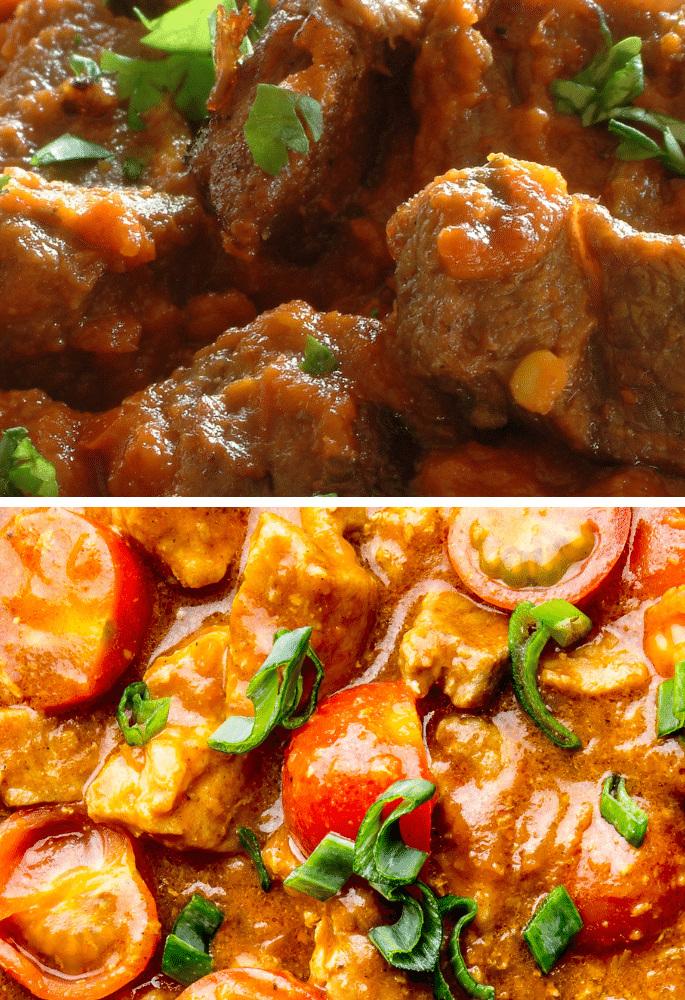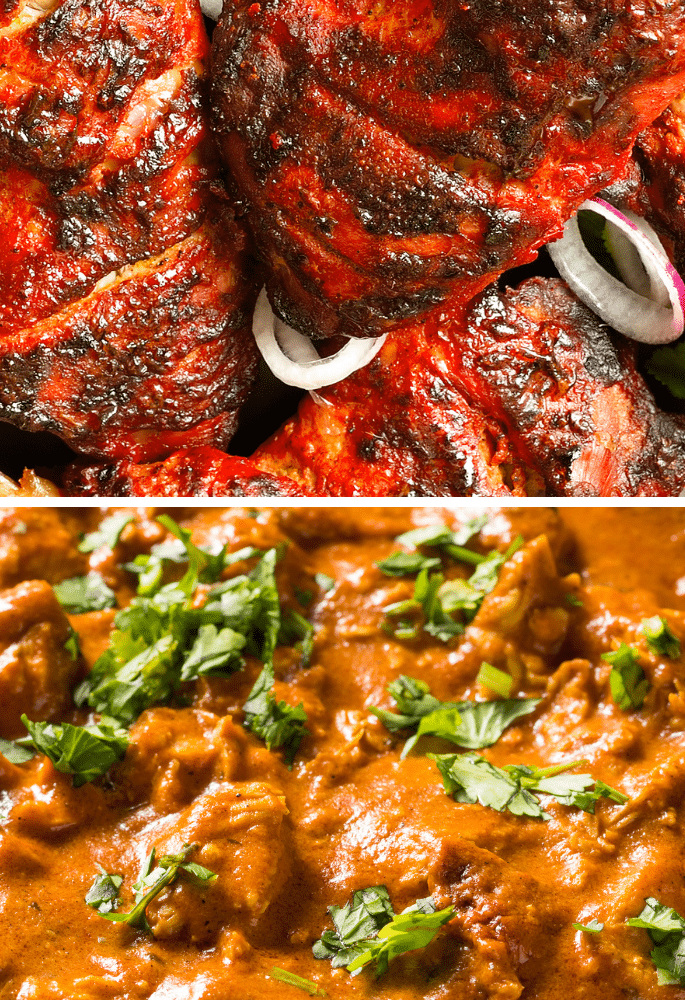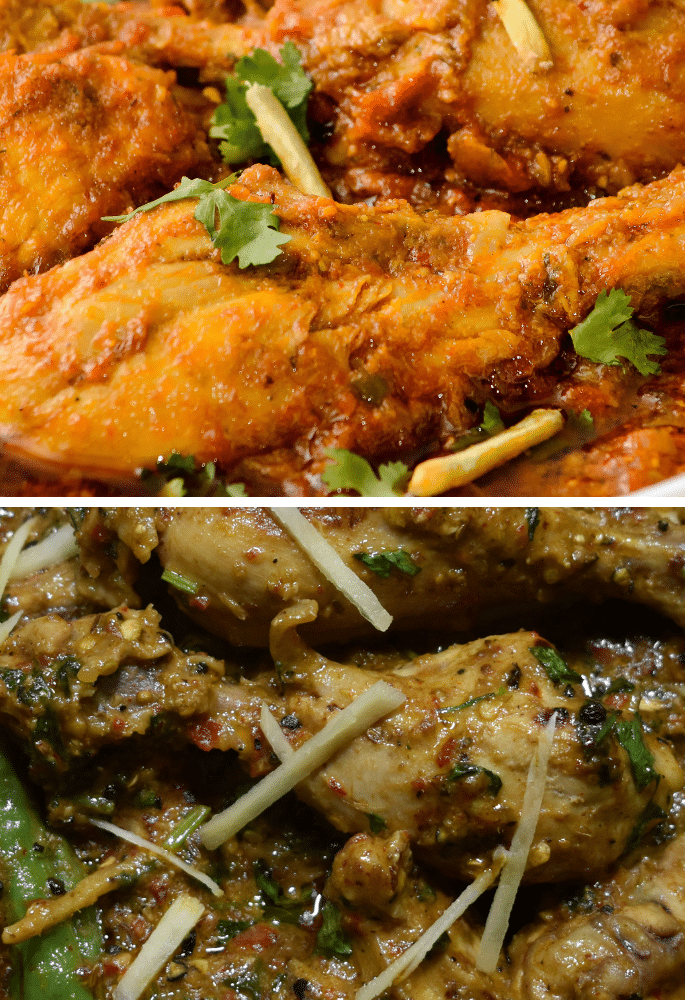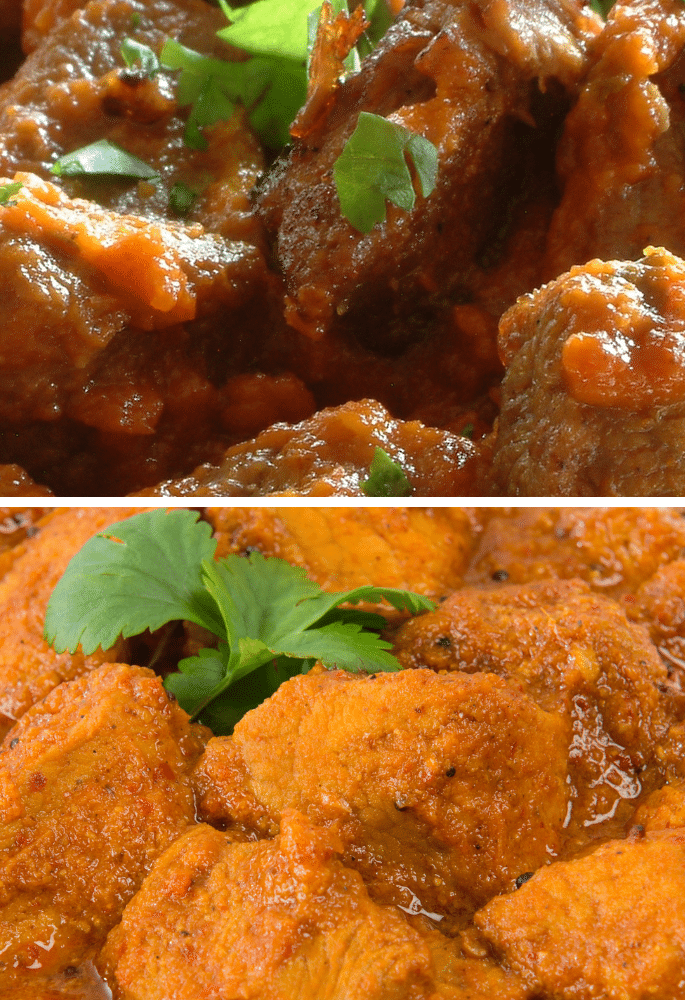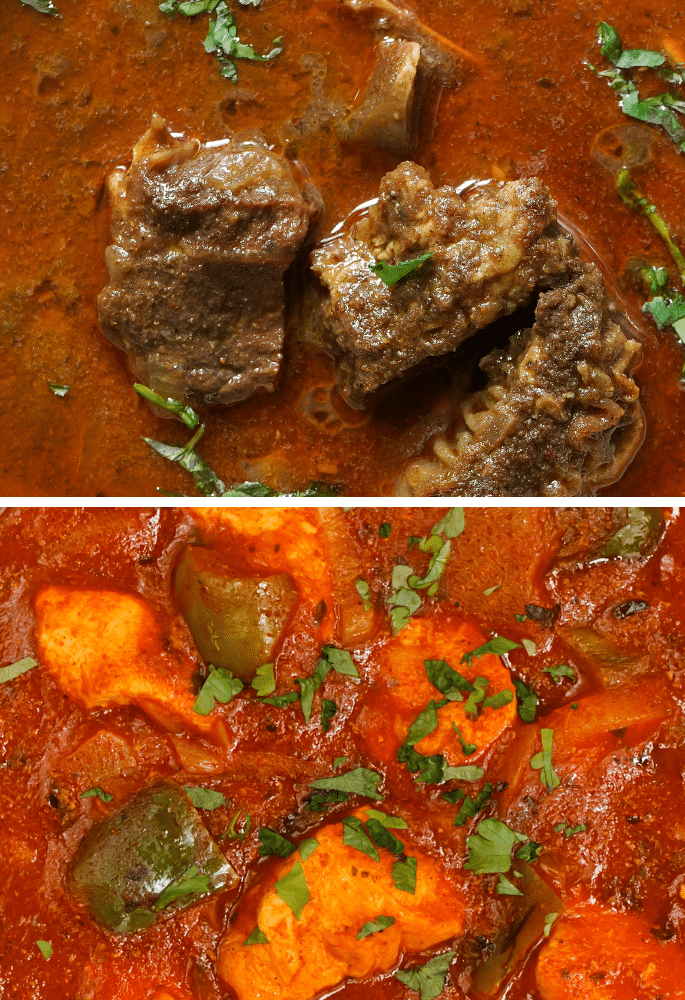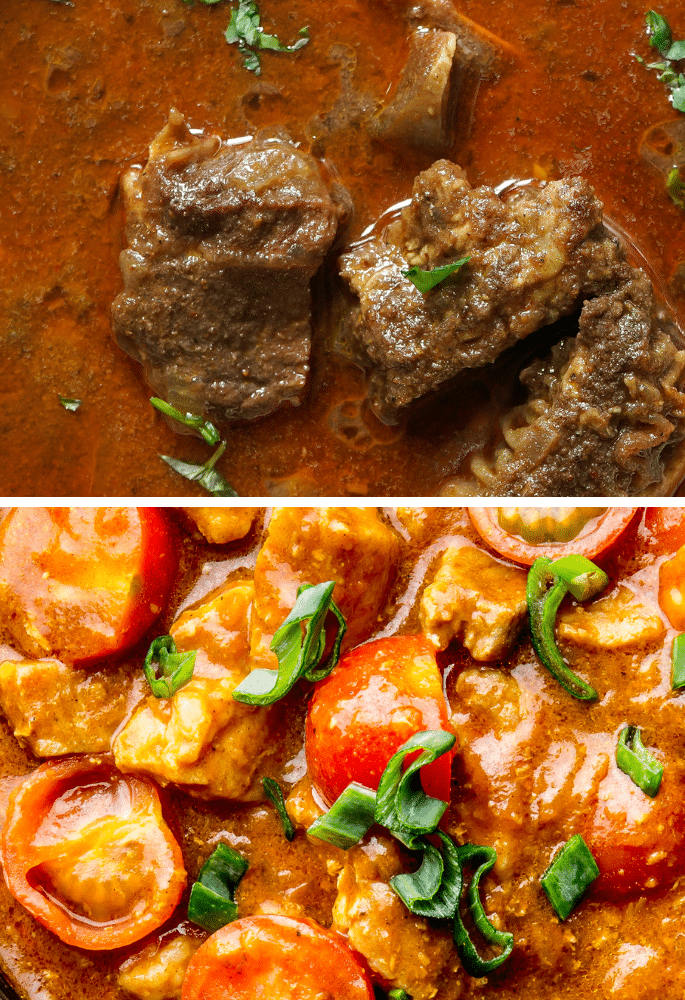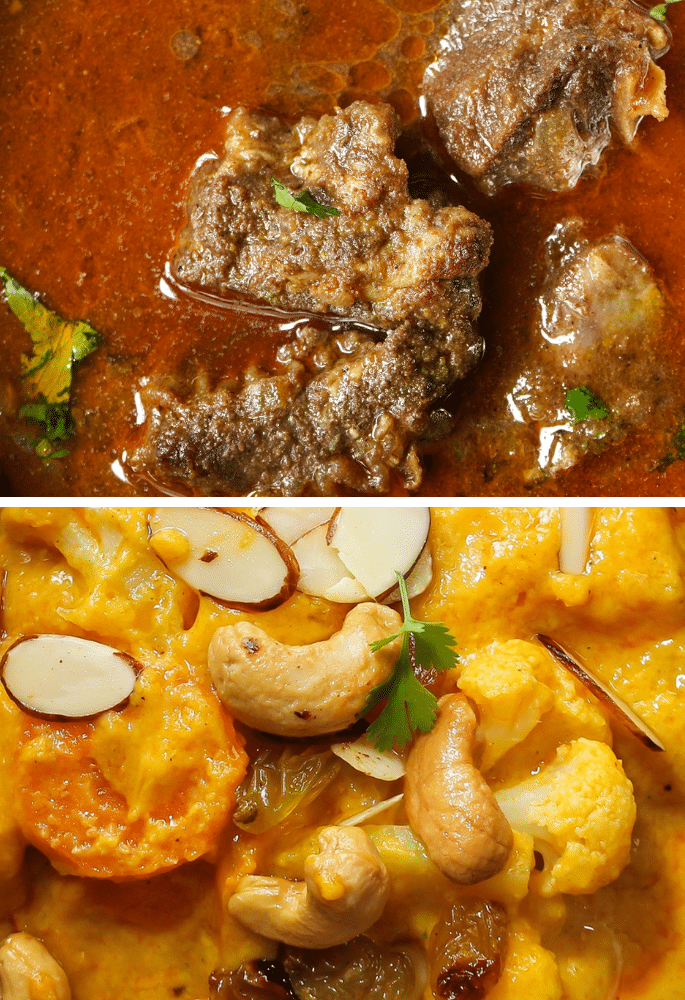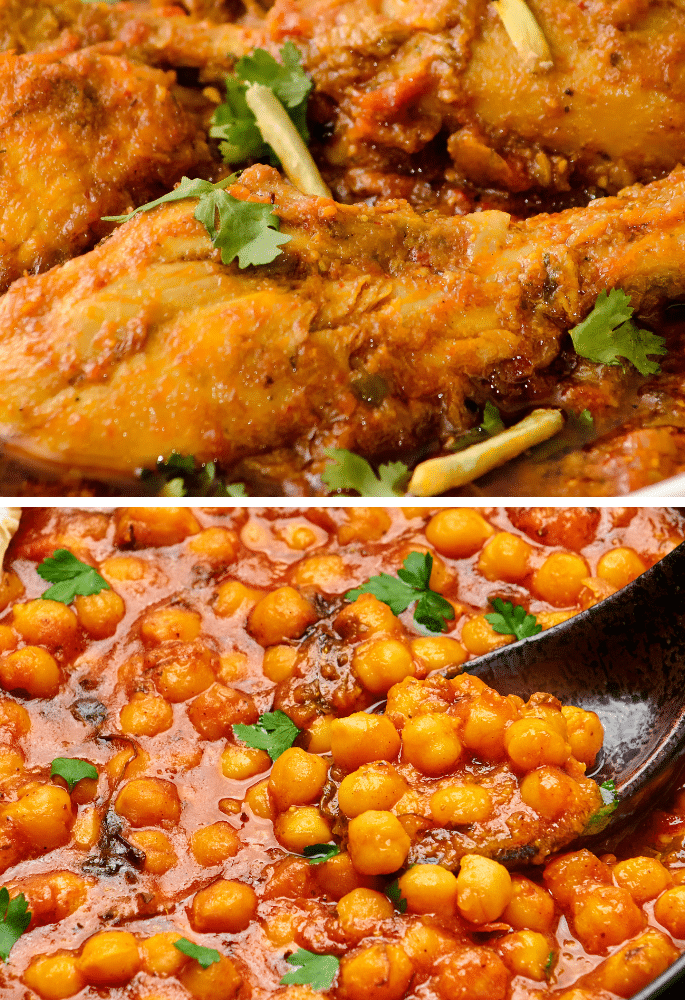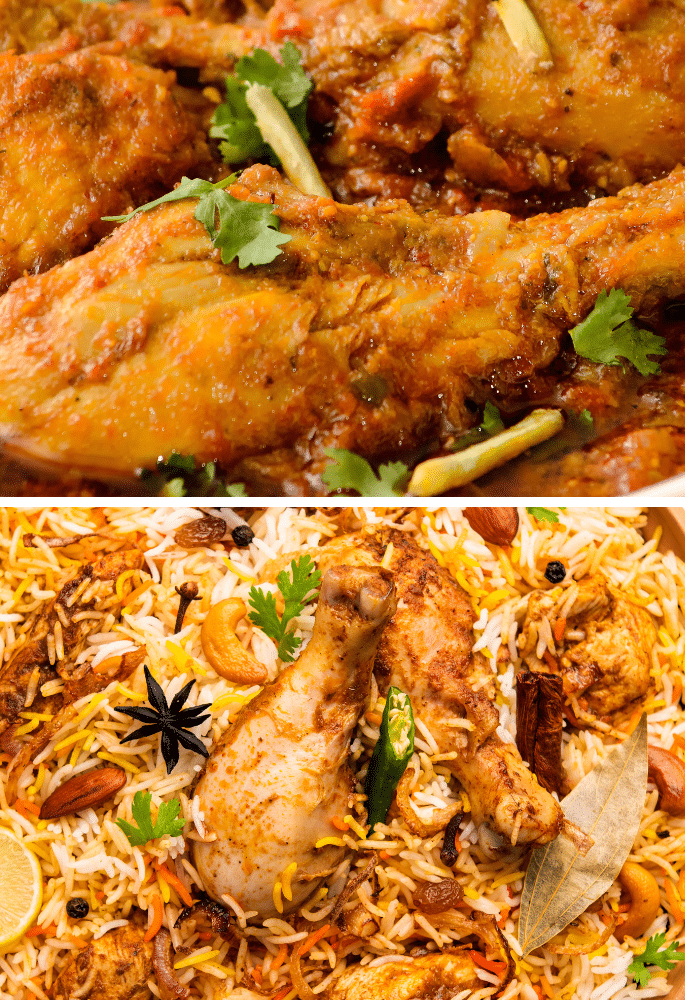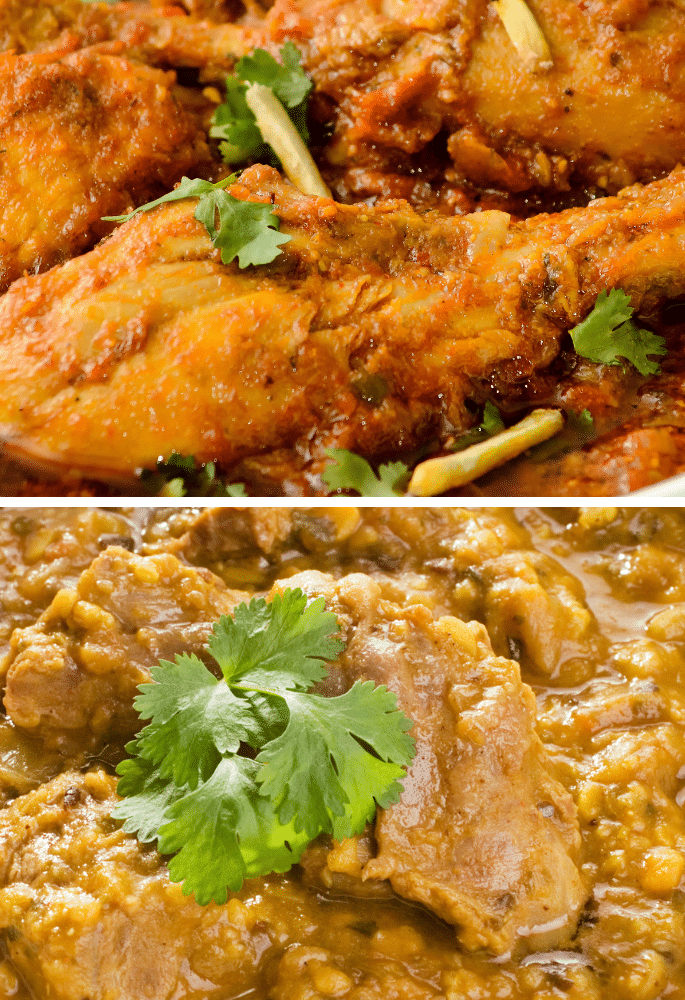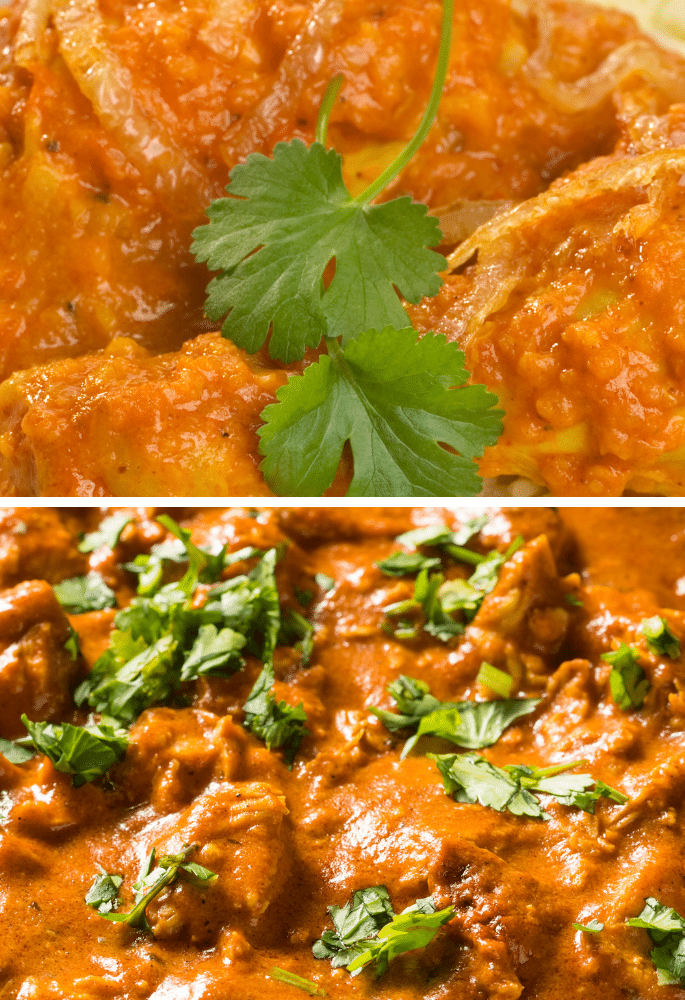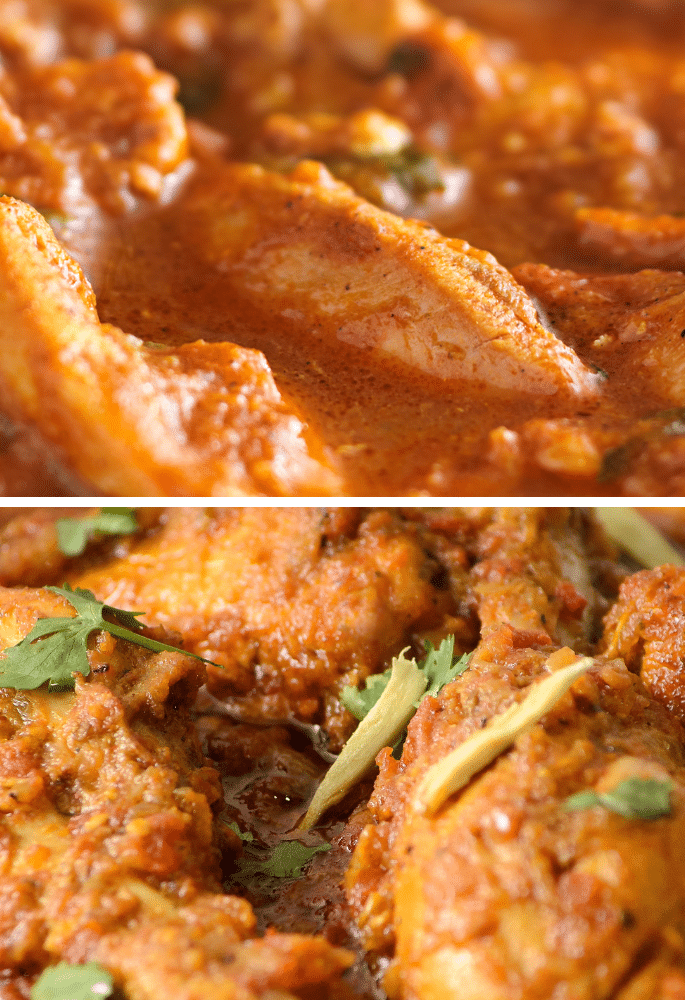
Walk into any Indian restaurant in the US and you’ll almost always see both of these on the menu, sitting a few lines apart like they’re strangers. They’re not.
The short answer is Madras is the fiery, tomato-and-chile driven curry from South India, while tikka masala is the mild, cream-and-tomato dish invented in Britain.
I’ve ordered both more times than I can count, and once you know what’s actually going on in each pot, choosing between them gets a lot easier.
Key Takeaways
- Madras is a hot, chile-forward curry with roots in South India, especially Chennai (formerly Madras).
- Tikka masala is a mild, cream-and-tomato dish invented in Britain, not traditional Indian cuisine.
- Heat is the single biggest difference: Madras leans on dried red chiles, tikka masala leans on aromatics like garam masala and ginger.
- Both dishes work with chicken, lamb, or paneer, and the protein swap changes richness more than it changes the base flavor.
- Calorie counts depend more on cream and oil than on which curry you pick, so portion size matters as much as the name.
What Is Madras Curry?
Madras curry takes its name from Chennai, the South Indian city that was called Madras until 1996.
In my experience, the dishes that carry this name in US and UK restaurants are a curry house interpretation rather than a direct copy of home cooking from that region, but the DNA is real.
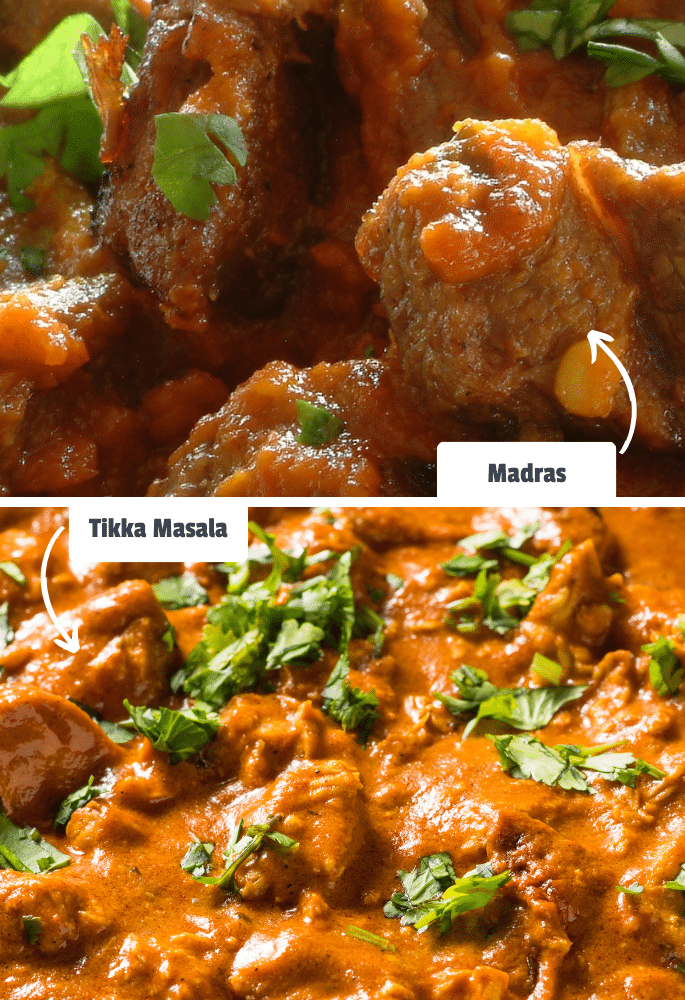
A proper Madras leans on dried red chiles, mustard seed, and a good hit of ground coriander and cumin, simmered down into a thick, brick-red sauce.
Tomato and a splash of vinegar or tamarind give it a tangy backbone that cuts through the heat.
You can read more about Chennai’s culinary history if you want the full backstory on where this name comes from.
If Madras still isn’t hot enough for you, it’s worth reading how madras vs vindaloo stack up, since vindaloo turns the dial up even further.
Is Madras Curry Spicy?
Yes — Madras sits firmly in the hot category on most curry house menus, usually a couple of notches above a standard curry powder blend.
The heat comes almost entirely from dried red chiles, sometimes backed up with fresh green chile or a shot of chile powder added right before serving.
One thing that trips people up: ‘Madras’ isn’t a fixed heat level with a legal definition, so one restaurant’s Madras can run noticeably hotter or milder than the next one’s.

The burning sensation itself comes from capsaicin, the compound in chile peppers that triggers heat receptors in your mouth; you can see how it’s studied medically on MedlinePlus’s capsaicin topical page, which explains how the compound interacts with nerve endings.
If you’re trying to rank curry house heat levels before you order, jalfrezi vs madrass is a useful comparison, since jalfrezi is often pitched as the milder, more tomato-forward alternative.
My rule of thumb after years of ordering: if a menu lists Madras below vindaloo but above jalfrezi, that ranking is usually accurate.

What Is Chicken Tikka Masala?
Chicken tikka masala is chunks of marinated, char-grilled chicken (the ‘tikka’ part) simmered in a creamy, tomato-based sauce (the ‘masala’).
Despite feeling like a classic Indian dish, most food historians point to Britain as its actual birthplace, likely invented by a South Asian chef adapting dry tikka for customers who wanted gravy with their rice.
Britannica’s entry on chicken tikka masala covers this origin story in more detail if you want the deeper dive.
The sauce itself is built on tomato, cream or yogurt, and warm spices like garam masala, ginger, and garlic, with far less chile than Madras.
In my experience it’s the single most reliable order for anyone at the table who says they ‘don’t do spicy,’ and it almost never misses.
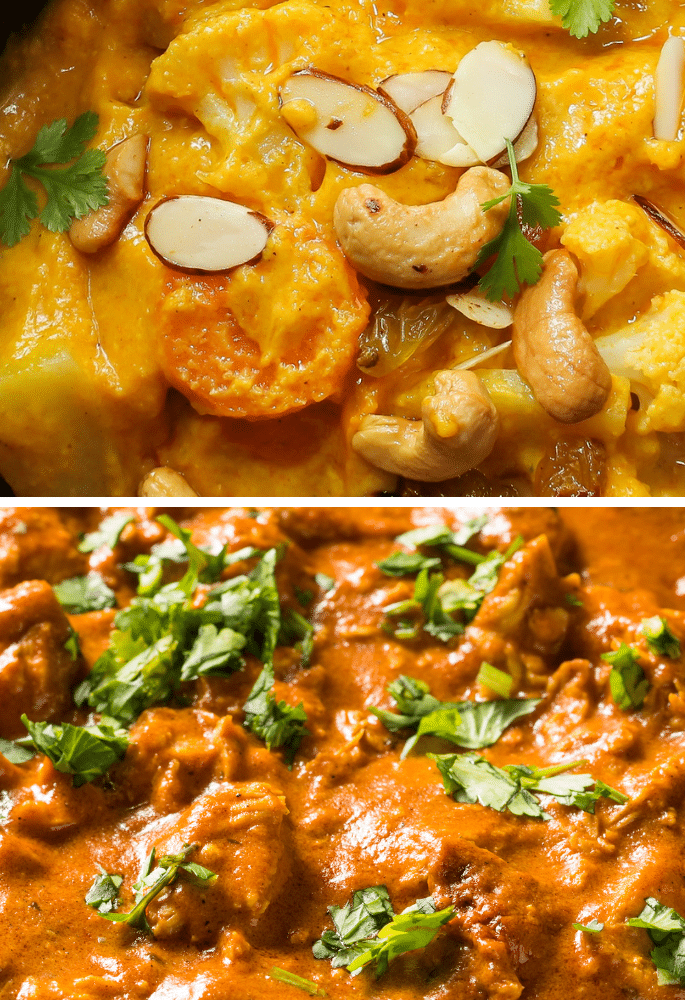
If you want to go even milder, korma vs tikka masala breaks down how korma dials the sweetness and cream up further while backing spice off even more.
Madras vs Tikka Masala: Key Differences
Once you line them up side by side, the differences stop being subtle.
Spice level is the headline difference, but sauce texture and color tell you almost as much at a glance.
Madras arrives thin-ish, oily, and deep red; tikka masala arrives thick, glossy, and orange from the cream and tomato combination.
| Feature | Madras | Tikka Masala |
|---|---|---|
| Origin | South India (Chennai) | Britain, with Indian influences |
| Spice level | Hot, chile-forward | Mild to medium, aromatic rather than fiery |
| Sauce base | Tomato, chile, sometimes vinegar or tamarind | Tomato with cream or yogurt |
| Texture | Thinner, oilier | Thick, smooth, glossy |
| Color | Deep brick-red | Orange to light red |
| Typical protein options | Chicken, lamb, beef, paneer | Chicken, lamb, paneer, shrimp |
Similarities Between Madras and Tikka Masala
For all their differences, these two dishes share more DNA than people expect.
Both start from the same spice cabinet: turmeric, cumin, coriander, and garam masala show up in nearly every version of each dish.
Both are curry house inventions in the sense that the versions Americans and Brits know were shaped for restaurant menus, not lifted straight from a home kitchen.
Both are also endlessly adaptable — chicken is the default, but lamb, shrimp, and paneer versions are common, and neither dish requires a specific protein to work.
If you’re curious how a closer relative compares, bhuna vs masala looks at another pair that gets mixed up for similar reasons — thicker sauce versus saucier gravy.
Chicken Madras vs Lamb Madras (and Tikka Masala Protein Swaps)
Swapping the protein changes more than you’d think, in both dishes.

Lamb madras, in my experience, tastes noticeably richer and slightly gamier, and the fattier meat holds up better against the heavy chile hit than chicken does.
Chicken madras stays a bit brighter and lets the chile and tamarind tang come through more clearly, since the meat itself is milder.
The same pattern holds for tikka masala: lamb tikka masala turns heavier and more savory, while chicken tikka masala keeps that classic light, creamy balance most people expect.
Neither swap changes the base sauce recipe — it’s really about how much richness the protein itself brings to the bowl.
If you’re ordering for a group, chicken is the safer bet in both dishes; lamb rewards people who already like bolder, fattier flavors.
Calories: Chicken Tikka Masala vs Chicken Madras
People assume the milder dish is automatically the lighter one, and that’s not always true.
Tikka masala’s cream and butter base tends to push its calorie count up, even though it tastes gentler on the palate.
Madras uses less dairy but often more oil to bloom the chiles and spices, so the gap between the two is usually smaller than you’d expect.
Restaurant portions vary so widely that a single ‘correct’ number isn’t realistic — a takeout tikka masala loaded with cream can easily run heavier than a Madras built mostly on tomato and chile.
If calories matter to you, the protein, rice portion, and how much sauce gets ladled on are bigger factors than which curry name is on the menu.
What's the US Equivalent of Chicken Tikka Masala on Indian Menus?
There isn’t really a different name for it — chicken tikka masala travels under the same name on nearly every Indian menu in the US, UK, and elsewhere, which is part of why it became so globally recognizable in the first place.
What does vary is which dish gets served as the ‘safe, mild default’ on a given menu.

In some restaurants that role goes to butter chicken instead, since the two dishes are close cousins with a similar creamy, tomato-forward profile.
If you’ve ever wondered why they get confused for each other, butter chicken vs tikka masala lays out the small but real differences in how each sauce is built.
So if you’re looking for ‘what chicken tikka masala is called’ somewhere else, the honest answer is: it’s usually just called chicken tikka masala, wherever you are.
Frequently Asked Questions
Is Madras spicy?
Yes, Madras is one of the hotter standard curries on a typical menu, built around dried red chiles. Exact heat varies by kitchen, so it's worth asking your server how their version compares to vindaloo if you're heat-sensitive.
What is Madras curry made of?
A classic Madras starts with onion, garlic, and ginger, then builds heat and color from dried red chiles, chile powder, turmeric, cumin, and coriander, finished with tomato and sometimes a splash of vinegar or tamarind for tang.
What Indian food is similar to chicken Madras?
Vindaloo is the closest hot, tangy relative, while jalfrezi offers a similar tomato-and-chile profile with somewhat less heat. Both make good next orders if you like Madras.
Is chicken tikka masala called something different in other countries?
Not really — it keeps its name almost everywhere it's served. Some menus offer butter chicken as a similar creamy, mild alternative if tikka masala isn't available.
Which has more calories, chicken tikka masala or Madras?
It depends on the kitchen. Tikka masala's cream base often adds calories, but a well-oiled Madras can end up similar or higher, so portion size and how much sauce you get matter more than the dish name.