View All Posts Pasta

Cannelloni vs Mostaccioli: What’s the Difference?

Ollie Cartwright
Updated:
Cannelloni vs Mostaccioli: What's the Difference?

Stand in the pasta aisle long enough and cannelloni and mostaccioli start to look like distant cousins — both tubes, both Italian, both boxed up next to the rigatoni.

But once you’ve cooked with them, you realize they’re built for totally different meals.

The short answer is that cannelloni is a giant, stuffable tube meant for baking, while mostaccioli is a smaller, smooth-cut tube meant to be tossed with sauce.

I’ve ruined a pan of lasagna-style bake by grabbing the wrong box, so let’s sort out exactly where these two part ways.

Key Takeaways

  • Cannelloni is a large cylindrical tube meant to be stuffed with filling and baked in sauce.
  • Mostaccioli is a medium, smooth tube (like penne without the angle cut or ridges) meant to be boiled and tossed with sauce.
  • Cannelloni gives you a soft, yielding bite; mostaccioli holds a firmer, al dente texture.
  • You can substitute one for the other in a pinch, but the dish's texture and presentation will change noticeably.
  • Both are wheat-and-water pasta with deep Italian roots, but they're built for opposite cooking methods.

What Is Cannelloni?

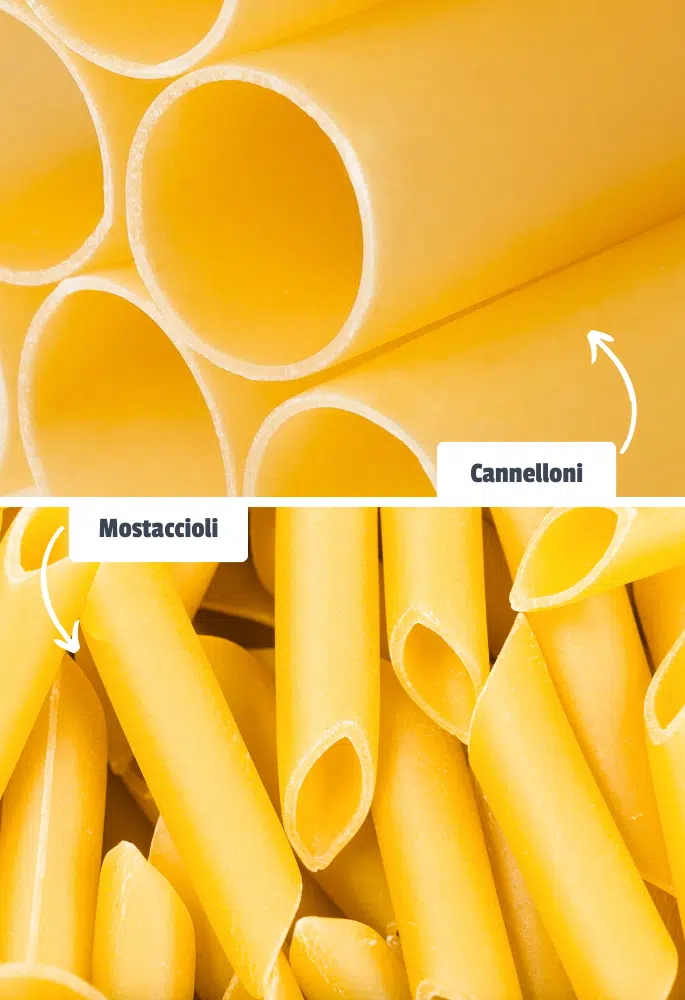
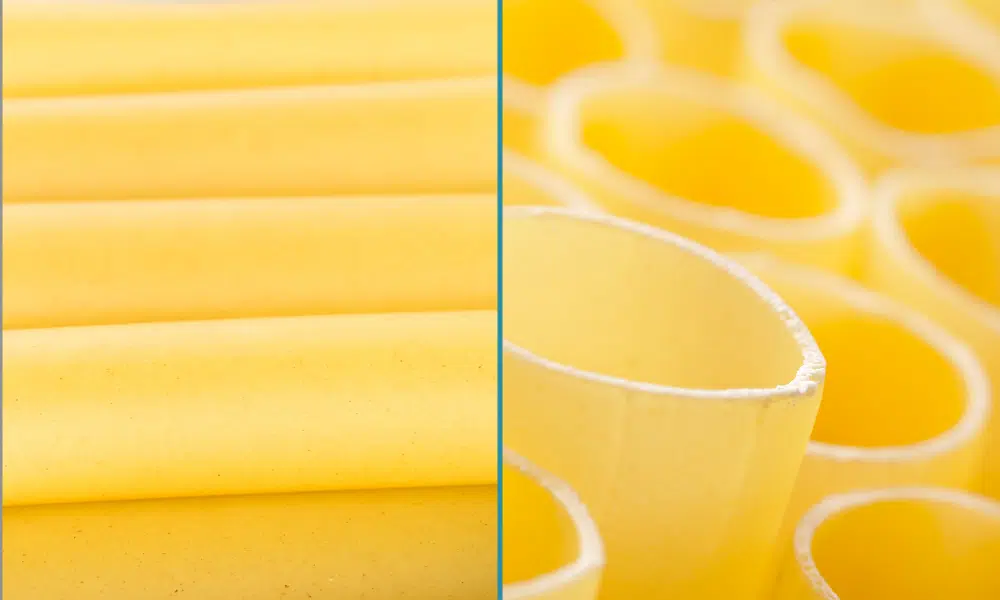
Cannelloni are wide, hollow pasta tubes, usually about 3 to 4 inches long and nearly an inch across.

They’re designed to be filled, not just sauced.

In my kitchen, cannelloni almost always means a Sunday project: I pipe a ricotta-and-spinach or ground beef filling into each tube, nestle them into a baking dish, and blanket them in marinara or bechamel before baking.

Yellow cannelloni pasta tubes stacked closely together in organized rows

Because the pasta bakes surrounded by sauce, it doesn’t need to be boiled to al dente first — it softens as it cooks in the oven, usually 25 to 35 minutes at 375°F.

That’s actually the trick I always come back to when a recipe calls for pre-boiling: skip it if the sauce is thin enough to hydrate the tubes, and add a splash of broth or extra sauce to be safe.

If you’ve ever compared cannelloni to its close relative, it helps to know how cannelloni vs manicotti actually differ, since the two get confused constantly and are sometimes swapped in recipes.

The result is a dish where the pasta itself is the star — soft, almost custardy at the edges, with a filling that stays put inside each tube.

What Is Mostaccioli?

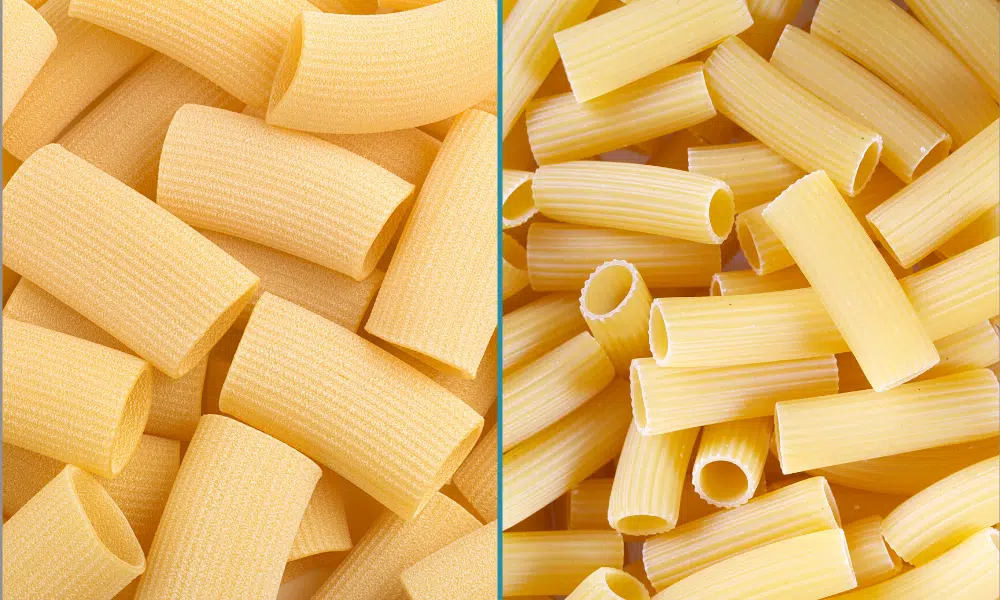
Mostaccioli is a medium tube pasta, roughly 2 inches long, with a smooth surface and ends cut straight across rather than on an angle.

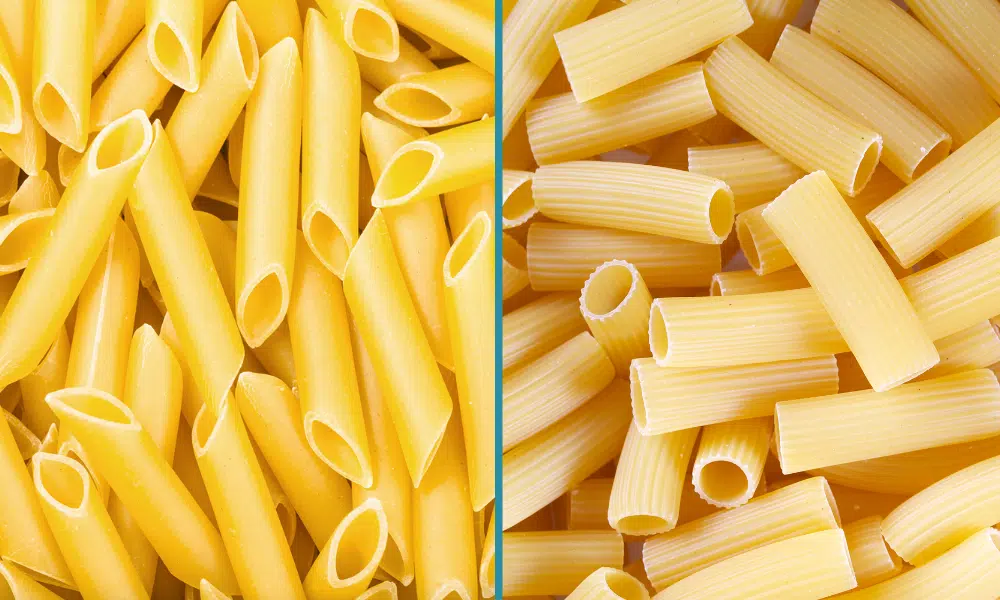
Visually, it’s easy to mistake for penne — until you notice there are no ridges and the cut isn’t diagonal.

In Italy, this exact shape is often labeled penne lisce, which literally means smooth penne.

Three pasta shapes displayed on beige surface: angel hair, penne, and elbow macaroni

I reach for mostaccioli when I want something sturdy enough to boil, drain, and toss straight into a sauce without falling apart.

It holds its shape well in baked casseroles too, which is why you’ll see it in classic Midwestern baked mostaccioli — a cousin of baked ziti made with ground beef or Italian sausage and plenty of melted mozzarella.

One thing that trips people up is assuming mostaccioli and rigatoni are interchangeable just because they’re both tubes; if you want the specifics, mostaccioli vs rigatoni breaks down why rigatoni’s ridges and larger size change how sauce clings to it.

Is mostaccioli the same as penne lisce? Yes — the shapes are essentially identical, and the two names get used interchangeably in most American recipes.

Cannelloni vs Mostaccioli: Key Differences at a Glance

Once you line them up, the differences aren’t subtle — they’re built for opposite jobs in the kitchen.

Cannelloni is about size and structure; mostaccioli is about surface and bite.

Here’s how they stack up side by side.

Cannelloni vs Mostaccioli at a glance
Feature Cannelloni Mostaccioli
Shape Large hollow cylinder Medium smooth tube
Typical length 3-4 inches About 2 inches
Surface Smooth Smooth (no ridges)
Cut style Straight Straight (unlike angled penne)
Cooking method Stuffed and baked Boiled, then sauced or baked
Texture when done Soft and tender Firm, al dente
Best for Stuffed baked dishes Sauced pasta, casseroles, pasta salad

How Cannelloni and Mostaccioli Are Similar

For as different as they behave on the plate, cannelloni and mostaccioli do share real DNA.

Both trace back to Italian regional cooking, and both are traditionally made from durum wheat semolina and water, the same base as most dry pasta sold in the US, according to the FDA’s standards for macaroni and noodle products.

Both are also genuinely versatile once you know their strengths — cannelloni turns up in stuffed vegetarian bakes, mostaccioli in everything from cold pasta salads to hearty weeknight skillets.

And both hold cultural weight: cannelloni is tied to elaborate Sunday dinners, while mostaccioli, especially the baked version, became a fixture at Midwestern potlucks and church suppers.

Neither shape is inherently ‘better’ — they just solve different problems on the stove.

Which Pasta Should You Reach For?

If your recipe calls for stuffing, layering, or a dish where the pasta needs to hold a filling in place, cannelloni is the only real choice.

If you’re making anything you’ll boil, drain, and sauce — a quick weeknight bake, a pasta salad, a skillet dinner — mostaccioli does the job better.

Baked pasta casserole with melted cheese and golden brown top in aluminum pan

Sauce matters here too. Thin, brothy sauces soak into mostaccioli’s hollow center and cling to its smooth walls, while thick, chunky sauces are better suited to cannelloni’s baked, saturated texture.

If you’re not sure whether your sauce is more of a quick tomato base or a long-simmered one, it’s worth understanding the difference between ragu vs marinara, since that choice changes how each pasta shape performs.

Texture and Bite

Cannelloni, baked low and slow inside sauce, comes out soft and tender, almost like a savory crepe by the time it’s done.

Mostaccioli, cooked al dente per the package (usually 11 to 13 minutes at a rolling boil), keeps a firm, slightly chewy bite even after it’s tossed with sauce.

In my experience, overcooking mostaccioli by even two extra minutes turns it mushy and less able to hold sauce — so I always test a piece a minute before the package time is up.

Portion Size and Presentation

Cannelloni is naturally a plated, portioned dish — two or three stuffed tubes per serving looks intentional and restaurant-style.

Mostaccioli is a scoop-and-serve pasta, better suited to family-style bowls or a casserole dish passed around the table.

Can You Substitute One for the Other?

Yes, you can substitute cannelloni for mostaccioli or vice versa, but you should expect the finished dish to look and eat differently.

Swap mostaccioli into a cannelloni recipe and you’ll lose the stuffed, sliceable presentation — you’ll basically end up with a chunky baked pasta instead.

Swap cannelloni into a mostaccioli recipe and you’ll need to cut the tubes into smaller pieces or reduce boiling time drastically, since cannelloni’s walls are thicker and cook slower.

I’ve done this swap when I was out of one shape mid-recipe, and honestly, it can be a fun twist — just don’t expect it to look like the photo in your cookbook.

If neither shape is quite right for what you’re making, it’s worth checking how other tube pastas compare; for example, seeing how cannelloni vs manicotti differ can help you pick a closer stand-in for a stuffed bake specifically.

Common Mistakes to Avoid

The biggest mistake I see is boiling cannelloni before baking when the recipe already accounts for it softening in the oven — this usually ends in torn, mushy tubes that are impossible to stuff.

Another common one: undercooking mostaccioli, then baking it further in a casserole, which leaves you with pasta that’s tough at the very center.

Cook mostaccioli to al dente, not less, before it goes into a bake — it will keep cooking in the oven.

Finally, don’t skip greasing or sauce-lining the baking dish for cannelloni; the tubes can stick and tear when you try to serve them.

Pasta is largely a carbohydrate food, and how it’s cooked affects both texture and how quickly it digests — the Mayo Clinic’s explanation of carbohydrates is a good primer if you’re curious how al dente versus soft-cooked pasta compares nutritionally.

Frequently Asked Questions

Is mostaccioli the same as penne?

Almost — mostaccioli is essentially penne lisce, meaning penne without ridges and with a straight rather than angled cut. It behaves very similarly to regular penne in sauces.

Can I use cannelloni instead of manicotti?

Yes, cannelloni and manicotti are close enough in size and shape to swap in most stuffed pasta recipes, though manicotti tubes are typically slightly wider and pre-ridged in some brands.

What sauce works best with mostaccioli?

Mostaccioli holds up well with both light tomato sauces and heartier meat or cream sauces, thanks to its smooth, sturdy walls.

Do I need to boil cannelloni before baking?

Not usually. Most cannelloni recipes let the raw tubes soften in the oven as they absorb sauce, as long as they're fully submerged in liquid while baking.

Which holds up better as leftovers?

Mostaccioli generally reheats better since it was cooked al dente to begin with; cannelloni can turn softer and lose some structure after a second bake.

Leave a Comment