Key Takeaways
- Firm, tart-leaning apples like Granny Smith, Braeburn, and Honeycrisp hold their shape best in the oven.
- Balanced sugar and acid matters more than raw sweetness — an apple with no tartness can taste flat once baked.
- Softer, watery apples such as Red Delicious, McIntosh, Gala, and Fuji tend to collapse into mush.
- For apple cake, diced apples are more forgiving than whole baked apples, so a wider range of varieties works.
- Mushy baked apples usually mean the wrong variety; dry ones usually mean too much heat or too little added moisture.
What Makes an Apple Great for Baking
I’ve baked hundreds of apples over the years, and the ones that disappoint almost always have the same problem.
They looked perfect raw, but they had no backbone once the heat hit them.
The apples that bake best are firm-fleshed and have real acidity to balance their sugar — not just sweetness alone.
Firmness comes down to cell structure and pectin content, which is why some apples turn to sauce and others keep their shape. Apples with skin also carry fiber and vitamin C, though baking can reduce some of these heat-sensitive nutrients, according to the USDA FoodData Central record for raw apples with skin.
Acidity is just as important as firmness. A one-note sweet apple turns cloying once it’s surrounded by sugar, butter, and spice.
The same logic applies whether you’re baking apples whole, dicing them into a cake, or making a what are the best apples for crumble style topping — structure first, sweetness second.
If you actually want the fruit to go soft and silky rather than hold a shape, that’s a different goal entirely, and you’re better off learning how to steam apples instead of baking them.

Our Favorite Apples for Baking
There’s no single correct answer here — it depends on whether you want tart and bright, sweet and mellow, or something in between.
Below are the varieties I reach for most often, plus the specific trade-offs of each one.
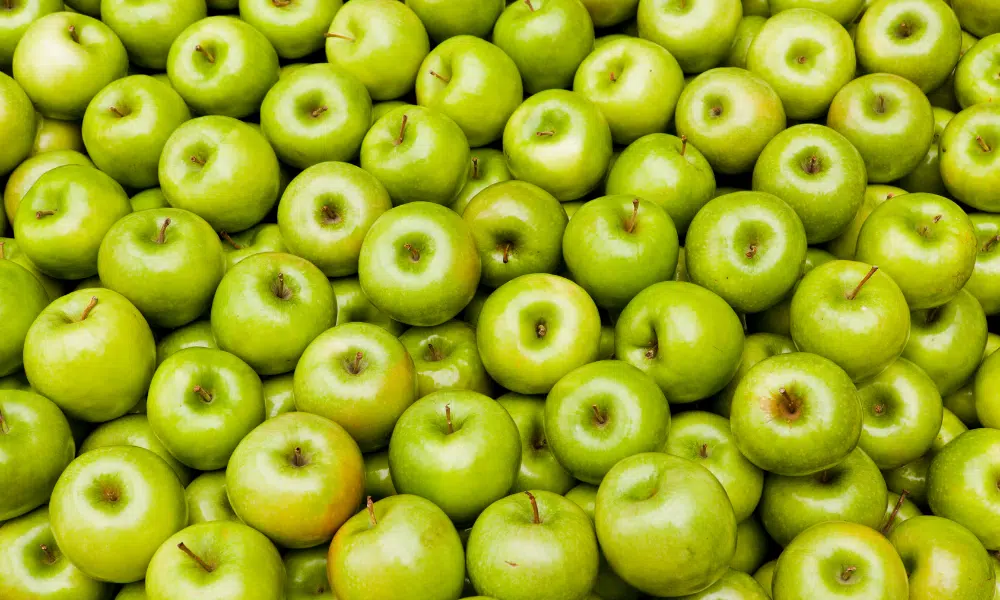
Granny Smith
Granny Smith is the workhorse of baking apples, and for good reason.
It’s tart, firm, and practically indestructible in the oven, which is why so many pie and crumble recipes default to it.

The tartness can be a lot for some palates, so I’ll often blend it with a sweeter apple or add a touch more sugar to the filling.
Taste a slice before you commit — Granny Smiths vary more in sharpness than you’d expect batch to batch.
Braeburn
Braeburn hits a genuinely nice middle ground between sweet and tart, and it holds its structure well under heat.
The skin can toughen slightly as it bakes, so I usually peel Braeburns for anything where texture matters, like a tart.
Because the flavor is already well-rounded, I pull back the sugar in the recipe to let the apple do the talking.
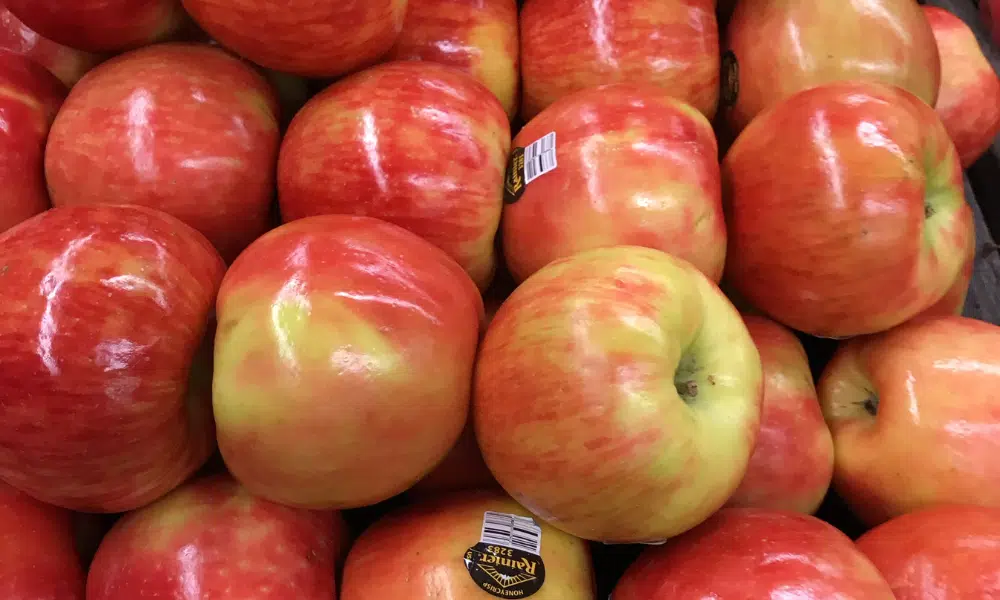
Honeycrisp
Honeycrisp brings incredible juiciness and a sweet-tart snap that translates well into baked dishes.
The catch: all that juice has to go somewhere, and it often means a wetter dish than you planned for.
I compensate by baking a few minutes longer, uncovered, so excess liquid can evaporate. Honeycrisp was developed by the University of Minnesota, and the University of Minnesota Extension page on growing Honeycrisp apple trees is a good read if you’re curious about the variety’s background.
Northern Spy
This is an old-school pie apple, prized for its sweet-tart balance and firm bite even after a long bake.
The downside is availability — Northern Spy isn’t grown as widely as the newer commercial varieties, so it can be hit or miss at the grocery store.
If you spot a bag at a farmers market or a fall orchard stand, it’s worth grabbing.
Golden Delicious
Golden Delicious is sweet, mellow, and holds its shape reasonably well, though the skin can go a little chewy in the oven.
I peel it for anything delicate, but leave the skin on for rustic baked apples.
Its sweetness is a great counterbalance when you’re mixing apple varieties — I love pairing it with Granny Smith so neither flavor dominates. The Penn State Extension guide to apple varieties lists Golden Delicious among the more baking-friendly sweet apples for exactly this reason.
Rome
Rome apples are mildly tart, sturdy, and keep a defined shape better than almost any other variety.
What they lack is intensity of flavor, so I never use Rome on its own — it needs a more flavorful partner apple in the mix.
For a baked apple where you want a clean, whole shape on the plate, Rome is a smart pick.
Pink Lady
Pink Lady is firm, sweet-tart, and holds its structure well through a long bake.
It can lean tart, so pair it with something sweeter or bump up the sugar if that’s not your preference.
It also happens to be one of the prettiest apples once baked, with a rosy blush that shows even after cooking.
Cortland
Cortland is a New York-bred apple, a cross of McIntosh and Ben Davis, and it’s a staple at orchards across the state.
It’s mildly tart, holds up decently to heat, and resists browning better than most, which makes it forgiving to prep ahead.
If you’re shopping New York-grown apples specifically for baking, Cortland, Empire, and Northern Spy are all common orchard picks worth trying.
What About Starking Apples?
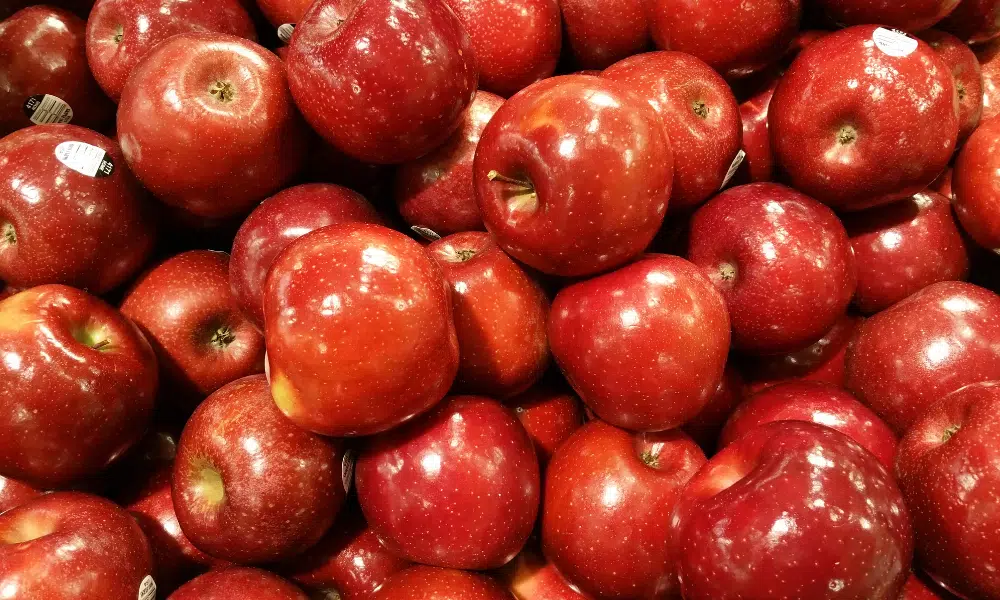
Starking, also called Stark’s Delicious, is the original strain that Red Delicious apples were bred from.
It shares the same basic profile: sweet, low in acid, and soft-fleshed.
That combination is exactly what tends to fall apart in the oven, so Starking isn’t a variety I’d choose for a whole baked apple or a pie.
It can work in small, diced amounts mixed with a firmer, tarter apple, but on its own it will likely bake down softer and sweeter than most people want.
| Apple Variety | Flavor Profile | Texture When Baked | Best For |
|---|---|---|---|
| Granny Smith | Tart, bright | Very firm, holds shape | Pies, crumbles, mixed-apple bakes |
| Braeburn | Balanced sweet-tart | Firm, skin can toughen | Tarts, whole baked apples (peeled) |
| Honeycrisp | Sweet-tart, juicy | Firm but releases liquid | Cakes (pat dry first), baked apples |
| Northern Spy | Sweet-tart | Firm, classic pie texture | Traditional pies |
| Golden Delicious | Sweet, mellow | Holds shape, skin softens | Sweetening tart apple blends |
| Rome | Mildly tart | Excellent shape retention | Whole baked apples, low-key flavor |
| Pink Lady | Firm, sweet-tart | Holds shape well | Whole baked apples, presentation |
| Cortland | Mildly tart | Decent shape retention | New York-style baking, cakes |
Best Apples for Apple Cake
Apple cake plays by slightly different rules than a whole baked apple.
Because the fruit is diced or grated and baked inside batter, it doesn’t need to hold a dramatic whole shape — it just needs to avoid turning to mush and disappearing entirely.
My go-to for apple cake is a mix of Granny Smith for tartness and Honeycrisp or Braeburn for sweetness and juiciness.
Golden Delicious also works nicely here since its sweetness holds up well against warm spices like cinnamon and nutmeg.
One thing that trips people up: some of the apples on the avoid list for whole baking, like Gala, can actually be fine finely diced into a cake, since a little softening isn’t as noticeable in small pieces folded into batter.
What you never want in a cake is an apple that releases a lot of liquid, since it can leave you with a soggy crumb — that’s the main reason I’m cautious with Honeycrisp in cake unless I pat the diced pieces dry first.
Which Apples to Avoid for Baking
Just as important as knowing what to use is knowing what tends to disappoint once it hits the oven.

Red Delicious is crisp and sweet raw, but it turns overly soft when baked and has almost no tartness to balance the dish.
McIntosh has decent flavor but breaks down fast under heat, which makes it better suited to applesauce or stewed apples than a pie.
Empire, a McIntosh and Red Delicious cross, inherits both of those weaknesses — it softens quickly and leans one-note sweet.
Gala is a lovely eating apple but turns mushy and loses structure in the oven.
Fuji is sweet and juicy but tends to go soft and overly sweet when baked; if you do use it, cut back on added sugar.
Golden Supreme, like Fuji, is juicy and sweet, and it softens in much the same disappointing way.
Ida Red can turn mushy in pies and tarts, without enough robust flavor to make up for the lost texture.
Cameo is crisp and pleasant fresh, but it loses that texture in the oven and doesn’t have a strong enough flavor to carry a baked dish on its own.
Troubleshooting Common Baked Apple Problems
Even with the right apple, baked apples can still go sideways. Here’s what’s usually happening.
Why did my baked apples turn out mushy? Nine times out of ten, it’s the variety — McIntosh, Red Delicious, Gala, and Fuji all soften too much under sustained heat.
Switch to a firmer variety like Granny Smith, Braeburn, or Rome next time, and you’ll notice the difference immediately.
Why are my baked apples dry? This is usually a matter of too much time, too much heat, or not enough added moisture.
Butter, syrup, apple juice, or even a splash of water in the baking dish all help keep things from drying out.
Covering the dish loosely with foil for the first half of baking also traps steam and keeps the fruit tender.
If you’re reheating leftovers the next day, low and slow is the way to go — the same principles for how to reheat baked goods without drying them out apply just as well to baked apples as they do to muffins or cake.
A Simple Baked Apples Recipe to Try
This is the version I make most often when I want something reliable and fast.
Core 4 Granny Smith apples and set them in a baking dish.
Fill each one with a mixture of 1/2 cup packed brown sugar (about 100g), 1 teaspoon cinnamon, and 1/3 cup chopped pecans (about 50g).
Top each apple with a small pat of butter, then bake at 375°F (190°C) for 30 to 40 minutes, until they’re tender but still holding their shape.
If you like spoonable, comforting baked desserts as much as I do, it’s also worth trying a baked rice pudding recipe, or the fruitier baked raisin rice pudding recipe for something in the same cozy, oven-baked family.
Frequently Asked Questions
What are the best apples for baking?
Granny Smith, Braeburn, Honeycrisp, Northern Spy, Golden Delicious, Rome, Pink Lady, and Cortland are consistently the most reliable choices because they hold their shape and have enough acidity to balance added sugar.
Is Starking a good apple to bake with?
Not really. Starking, the original strain behind Red Delicious, is soft-fleshed and low in acid, so it tends to turn overly soft and one-dimensionally sweet in the oven rather than holding its shape.
What's the best apple for an apple cake?
A mix of Granny Smith for tartness and Honeycrisp or Braeburn for sweetness works well, since diced apples in cake batter are more forgiving of texture than a whole baked apple.
Why did my baked apples turn out mushy?
It's almost always the variety. Softer apples like McIntosh, Red Delicious, Gala, and Fuji break down under sustained oven heat, so switching to a firmer variety like Granny Smith or Rome solves it.
Which apples do New Yorkers use for baking?
New York is a major apple-growing state, and orchards there commonly grow Empire, Cortland, and Northern Spy alongside Granny Smith, all of which are well-suited to baking.