

You followed the recipe, but your pound cake came out of the pan like a dense loaf of bread instead of that tender, buttery crumb you were picturing.
The short answer is your pound cake is heavy because not enough air got worked into the batter — usually from cold butter, under-mixing, over-mixing the flour, or too much liquid weighing everything down.
Pound cake has almost no chemical leavening to hide behind, so every step matters more than it does in a boxed cake mix.
Let’s go through exactly what causes a dense pound cake and how to fix your batter before it ever hits the oven.
Key Takeaways
- Cold butter and eggs are the #1 cause of dense pound cake — they won't hold air during creaming.
- Under-creaming the butter and sugar leaves too few air bubbles to lift the batter.
- Overmixing after the flour goes in develops gluten and makes the crumb tight and chewy.
- Too much flour (from scooping instead of spooning) or too much liquid both weigh the batter down.
- An oven that's too cool, or a pan that's too small, can also trap a pound cake in a dense, undercooked middle.
What To Check First
Work through these in order before you blame the recipe.
| Symptom | Most likely cause |
|---|---|
| Dense all the way through, tight crumb | Butter or eggs were too cold when mixed |
| Heavy but not raw, batter looked curdled | Eggs added too fast, mixture broke |
| Dense and gummy near the middle | Underbaked, or oven temp too low |
| Dense and slightly tough or chewy | Flour overmixed after adding, gluten developed |
| Dense but greasy or oily texture | Too much butter or liquid for the flour amount |
| Sunken in the middle, dense underneath | Underbaked, or pan too small for the batter |
Why Is My Pound Cake Heavy?
A heavy pound cake almost always means the batter didn’t trap enough air before it went into the oven.
Pound cake gets its lift almost entirely from mechanical aeration — the tiny air bubbles you beat into the butter and eggs — not from baking powder or baking soda.
A classic pound cake recipe has little to no chemical leavener, so if the creaming step falls short, there’s nothing to fall back on.
The most common culprits are cold ingredients, under-creamed butter, overmixed flour, and too much flour or liquid thrown off by imprecise measuring.
Below, we’ll walk through each one, how to spot it, and how to fix your next bake.
| What you notice | Likely cause | Fix |
|---|---|---|
| Tight, dense crumb throughout | Cold butter or eggs | Bring both to room temperature before mixing |
| Batter looks curdled or grainy | Eggs added too fast | Add eggs one at a time, mix between each |
| Gummy band through the center | Underbaked or oven too cool | Check with oven thermometer, bake fully |
| Chewy, slightly tough texture | Overmixed after adding flour | Mix flour in on low, stop at no dry streaks |
| Heavy and slightly greasy | Too much butter or liquid | Measure liquids exactly as written |
Cold Butter or Eggs
This is the single biggest reason pound cakes turn out dense.
Butter needs to be genuinely soft — around 65-68°F (18-20°C) — to hold air when you cream it with sugar.
Cold butter just gets pushed around by the mixer instead of fluffing up; the sugar crystals can’t cut through it to create those tiny air pockets.
Cold eggs cause a different problem: they can seize the butter mixture, making it look curdled and grainy instead of smooth.
According to Michigan State University Extension, creaming properly incorporates air that expands during baking, which is essential for a cake’s structure and rise.
- Leave butter out for 45-60 minutes at normal room temperature, or slice it thin to speed things up.
- Bring eggs to room temperature by setting them in warm water for 5-10 minutes.
- Butter is ready when a finger leaves a slight indent but the stick still holds its shape.

Under-Creaming the Butter and Sugar
If you rush this step, your cake won’t have enough trapped air to rise properly, even with soft butter.
Properly creamed butter and sugar should look pale, fluffy, and noticeably increased in volume — more like whipped frosting than wet sand.
That usually takes 3 to 5 minutes on medium speed with a stand mixer or hand mixer, not the 30 seconds it’s tempting to stop at.

Stop too early and you’ll see loose, grainy butter that never really lightened in color — that batter is already behind before the flour even goes in.
Overmixing After Adding the Flour
Once flour joins the batter, mixing develops gluten, and too much gluten makes a heavy, tough crumb instead of a tender one.
This is the opposite problem from under-creaming, but it produces a similarly dense result — just with a slightly chewy, elastic texture instead of a tight, flat one.
Mix flour in on low speed, and stop as soon as you no longer see streaks of dry flour.
- Add flour in 2-3 additions, alternating with any milk or liquid if your recipe calls for it.
- Mix on the lowest speed setting your mixer has.
- Fold in the last bit by hand with a spatula to avoid overworking it.
Too Much Flour From Scooping the Measuring Cup
Scooping a measuring cup directly into the flour bag packs in extra flour — sometimes 20-25% more than the recipe intended.
That extra flour soaks up moisture and weighs the batter down before it ever hits the oven.
The fix is to spoon flour into the measuring cup, then level it off with a knife, or better yet, weigh it on a kitchen scale.
The King Arthur Baking Ingredient Weight Chart lists 1 cup of all-purpose flour at 120 grams — a scale is the most reliable way to avoid this mistake altogether.
Too Much Butter or Liquid for the Recipe
A dense, slightly greasy or gummy pound cake can mean the fat-to-flour ratio is off, not just the mixing technique.
Classic pound cake got its name from using a pound each of butter, sugar, eggs, and flour — a ratio that’s already rich, so any extra butter, sour cream, or milk tips it into heavy territory fast.
If you added extra flavoring liquid (like extra vanilla, citrus juice, or a splash more milk) without adjusting the flour, that’s often the reason.
Stick to the recipe’s exact liquid measurements, and if you want to add sour cream or buttermilk for tenderness, look for a recipe built around it rather than adding it on top.
If you’re craving a fruit-forward take on a rich, buttery cake, a fresh strawberry cake recipe uses a similar creaming method but with a lighter batter ratio.
Eggs Added Too Fast
If your batter looked curdled or separated partway through mixing, that’s a sign the eggs went in too quickly.
Butter can only hold so much liquid at once; dump in cold or room-temperature eggs all at once and the emulsion breaks, deflating the air you just worked so hard to cream in.
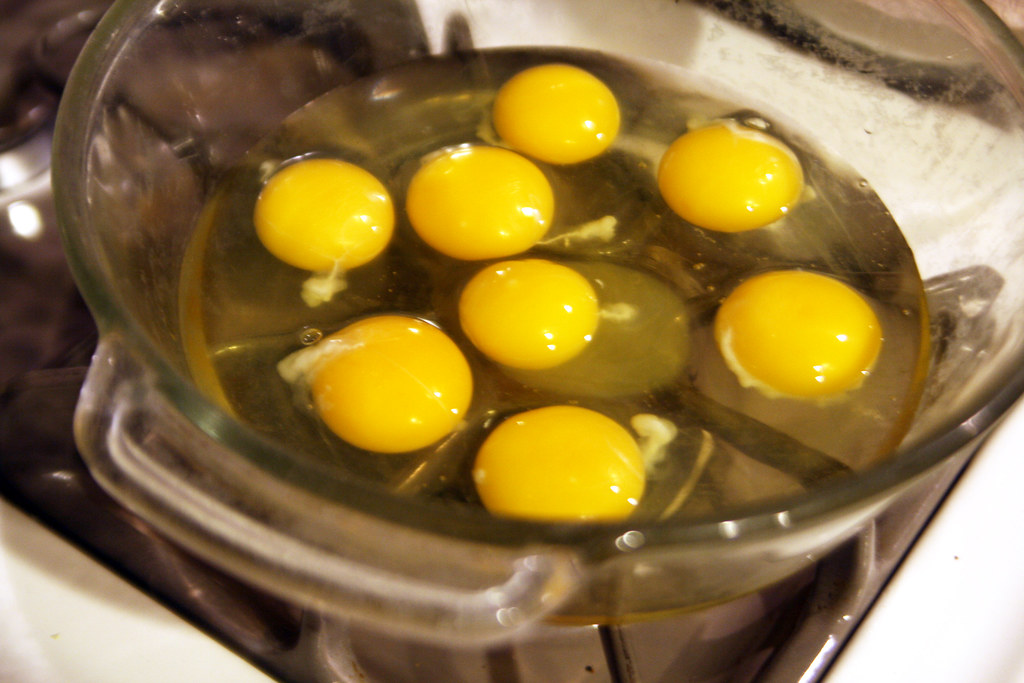
- Add eggs one at a time, beating for 15-20 seconds between each.
- Scrape the bowl between additions so nothing sticks unmixed to the sides.
- If the batter looks curdled, add a spoonful of the measured flour to help it come back together.
Oven Temperature Too Low or Pan Too Small
A heavy, gummy band running through the middle of an otherwise fine-looking pound cake usually points to underbaking, not a mixing mistake.
An oven running cooler than its dial says — common with older ovens — means the batter sets too slowly and the structure never fully firms up.
USDA guidance on kitchen thermometers is a good reminder that an inexpensive oven thermometer is the easiest way to confirm your oven’s real temperature.
A pan that’s too small for the batter volume also causes this: the middle can’t cook through before the edges are already done and starting to over-brown.
- Verify your oven temperature with a separate oven thermometer, not just the dial.
- Use the pan size your recipe specifies — loaf pans and bundt pans hold different volumes.
- Test for doneness with a skewer or toothpick in the center; it should come out clean, not wet or gummy.
How to Prevent a Heavy Pound Cake Next Time
Most of prevention comes down to slowing down at two specific points: the creaming step, and the flour step.
- Set butter and eggs out at least 45 minutes ahead so both are genuinely at room temperature.
- Cream butter and sugar for the full 3-5 minutes, until pale and fluffy.
- Add eggs one at a time, mixing briefly between each.
- Weigh your flour, or spoon-and-level it, rather than scooping.
- Mix in flour on low speed just until the streaks disappear.
- Bake at the exact temperature the recipe states, with an oven thermometer to confirm it.
If you’re baking a lot of cakes for a crowd, the same creaming and measuring rules apply whether you’re making a rich pound cake, a batch of coffee cake muffins recipe, or a layered strawberry birthday cake recipe.

Can You Fix a Heavy Pound Cake After Baking?
Not really — once a pound cake bakes dense, the crumb structure is already set and there’s no way to add air back in.
You can still make it enjoyable, though.
- Slice it thin and toast it lightly — dense pound cake actually holds up well to toasting.
- Layer slices with whipped cream and fruit for a trifle-style dessert instead of serving it plain.
- Cube it and use it the way you’d use leftover cake in a dessert like Easter dirt cake recipe or turn it into cake pops, similar to a Easter cake pops recipe.
For more ways to use up cake that didn’t turn out picture-perfect, see what to do with leftover birthday cake.
The Bottom Line
A heavy pound cake almost always traces back to one of two moments: not enough air worked into cold butter and sugar, or too much flour and mixing weighing the batter down afterward.
Fix the temperature of your butter and eggs, cream them properly, measure flour by weight or spoon-and-level, and stop mixing the moment the flour disappears.
Get those steps right and the dense, gummy texture goes away on its own.
Frequently Asked Questions
Why is my pound cake dense and gummy in the middle?
That texture usually means it’s underbaked. Check your oven temperature with a separate oven thermometer, and test the center with a skewer before pulling it out.
Does overmixing pound cake batter make it heavy?
Yes, but only after the flour goes in. Overmixing at that stage develops gluten and creates a tight, chewy crumb instead of a tender one.
Should pound cake batter be thick or runny?
It should be thick but smooth and easily dropping off a spatula, similar to a soft frosting. If it looks curdled or separated, the eggs went in too fast.
Can too much butter make a pound cake heavy?
Yes. Extra butter or liquid beyond what the recipe calls for throws off the ratio pound cake depends on, making the crumb dense and sometimes greasy.
Why did my pound cake sink and turn dense after baking?
Sinking in the middle usually points to underbaking or a pan that’s too small for the batter volume, both of which leave a heavy, undercooked center.