

You pulled a beautiful, bubbly pie out of the oven and the first bite fought back — more like a bagel than a pizza.
The short answer is your dough built up too much gluten, your oven wasn’t hot enough, or both.
Once you know which one is happening, the fix usually takes five minutes, not a whole new recipe.
Key Takeaways
- Chewy crust almost always comes from too much gluten development, an oven that isn't hot enough, or both together.
- Bread flour and heavy kneading build extra chew — cutting kneading time or switching flour fixes it fast.
- A screaming-hot oven (475–500°F) with a preheated stone or steel crisps the outside before the gluten toughens the inside.
- Cold, underproofed dough bakes into a dense, rubbery disc — let it warm and puff up before shaping.
- Leftover pizza often turns chewy from microwaving, not from the original bake — dry heat fixes that.
What To Check First
Match what you're tasting to the likely cause before you change your whole recipe.
| Situation | Best move |
|---|---|
| Crust feels doughy or gummy in the middle | Bake hotter and longer — your oven or stone probably isn't hot enough. |
| Crust is tough and hard to bite through | Cut kneading time and let the dough rest longer before shaping. |
| Fresh crust was fine, leftovers are chewy | Reheat in a skillet, oven, or air fryer instead of the microwave. |
| Whole crust feels rubbery, not just the edge | Check your flour — bread flour needs less kneading than all-purpose. |
| Chew is only under the toppings | That's excess moisture, not gluten — lighten up on sauce and wet toppings. |
| Dough was cold and stiff when you shaped it | Let it sit at room temp until puffy before stretching it out. |
Why Is My Pizza Crust Chewy?
Chewy pizza crust almost always comes down to two things: how much gluten your dough developed, and how much heat hit it in the oven.
Too much gluten development plus too little heat is the classic combo — you get a dense, elastic bite instead of a crisp shatter with a tender chew inside.
Chewy is not the same problem as a soggy middle, which usually points to excess moisture rather than gluten or heat.

Once you know which of these is going on, the fix is usually a small adjustment, not a whole new recipe.
Oven Temperature Too Low for Pizza
If your crust feels doughy, gummy, or rubbery rather than crisp on the outside, your oven probably isn’t hot enough.
Most home ovens top out around 500°F (260°C), and pizza needs nearly every degree of that to set the crust before the inside turns tough.
Below about 450°F, the surface of the dough steams instead of crisping, so the outer layer stays soft while gluten keeps tightening as it slowly cooks through.
A preheated pizza stone or steel makes the single biggest difference here.
Preheat it for 45 to 60 minutes at your oven’s highest setting — a cold or barely-warm stone won’t give the crust the blast of bottom heat it needs. See how to bake pizza on a pizza stone at home for the full setup.
If you’ve ever compared a dedicated setup to your kitchen oven, the gap in pizza oven vs regular oven results comes down almost entirely to this heat difference.
Did You Over-Knead the Dough?
Kneading builds gluten, and gluten is what gives bread its chew — knead pizza dough like a sandwich loaf and you’ll get sandwich-loaf texture.
Most pizza dough only needs 5 to 8 minutes of hand kneading, or about 3 to 4 minutes on low in a stand mixer, just until it turns smooth and stretchy.
Past that point, you’re overdeveloping strands that tighten up and turn tough instead of tender.

Signs You've Over-Kneaded
Over-kneaded dough feels tight and springs back hard the instant you stretch it, almost like a rubber band snapping back into shape.
Well-kneaded dough should stretch smoothly and hold its shape with just a little resistance — not fight you at every pull.
If your dough is tearing instead of stretching, that’s usually a hydration problem rather than gluten, but if it’s springing back aggressively and refusing to stay stretched, you’ve built too much structure.
Can You Fix Dough You Already Over-Kneaded?
You can’t remove gluten once it’s built, but you can relax it.
Cover the dough and let it rest at room temperature for 20 to 30 minutes before shaping — the gluten network loosens as it rests, which makes the dough easier to stretch and noticeably less tough once baked.
A light drizzle of olive oil worked into the surface before that rest also helps the dough relax and stretch without tearing.
Is Your Dough Cold or Underproofed?
Dough straight out of the fridge is stiff, tight, and hard to stretch — and if you force it into shape and bake it cold, it bakes up dense and chewy instead of light and airy.
Cold dough hasn’t had time to build the air pockets that make a crust tender; instead, all that tight gluten network cooks through as one dense, rubbery disc.
Pull refrigerated dough out 1 to 2 hours before you plan to bake and let it come to room temperature. You’re looking for the dough to visibly puff and loosen — press a finger into it, and the indent should slowly spring back rather than staying sunken (underproofed) or collapsing (overproofed).
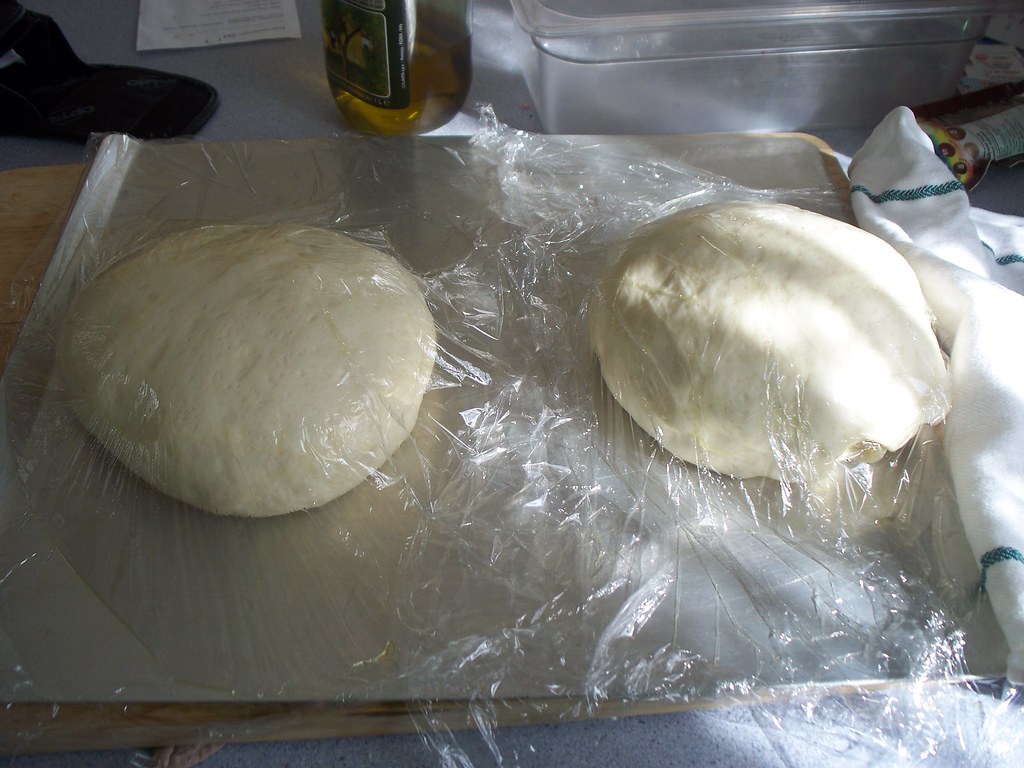
If you’re routinely short on time, make the dough a day ahead and let the long, slow rise happen in the fridge overnight — that actually improves flavor and texture, as long as you still give it that final warm-up before shaping.
Bread Flour vs All-Purpose Flour: Which One Makes Chewier Crust?
Flour protein content controls how much gluten your dough can build, and that directly affects chew.
Bread flour has more protein than all-purpose, so it forms gluten faster and holds onto more chew even with the same kneading time.
Flour Comparison for Pizza Dough
FlourProtein contentChew levelKneading adjustmentAll-purpose flour~10–11%Moderate, tender crustStandard 5–8 minutes by handBread flour~12–14%Higher chew, more structureCut kneading time by 1–2 minutes to avoid overdeveloping00 flour (Italian)~11–12%, finely milledTender with light chewStandard kneading, but needs high heat to crisp properly
If your crust is chewy across the whole slice — not just the edges — and you’ve been using bread flour, that’s your answer. Either switch to all-purpose, or keep the bread flour and shave a minute or two off your kneading time.
Can Too Much Sauce or Wet Toppings Make Pizza Chewy?
Sometimes what feels like chewy crust is actually a gummy layer right under the toppings, and that’s a moisture problem, not a gluten problem.
A heavy layer of sauce, fresh mozzarella, or watery vegetables like spinach or fresh tomatoes releases steam as it bakes. That steam gets trapped against the top of the dough and stops it from crisping, so you end up with a soft, gummy band under the toppings even when the rest of the crust is fine.
The fix is moisture control, not more oven time.
- Use a thin, even layer of sauce — a ladle spread thin, not a puddle.
- Pat fresh mozzarella dry, or use low-moisture mozzarella instead.
- Pre-cook watery vegetables (mushrooms, spinach, fresh tomato) to drive off moisture before they go on the pie.
- Don’t overload toppings — a crowded pizza traps more steam and takes longer to crisp.
This is a different fix from the gluten and heat issues above, but it’s one of the most common reasons a crust that baked hot and wasn’t over-kneaded still comes out soft in spots.
How to Reheat Leftover Pizza Without Making It Chewy
If the crust was crisp and tender fresh out of the oven but turns rubbery as leftovers, the problem is almost always the reheating method — not the original bake.
Microwaves heat unevenly and add moisture, which is exactly the combination that turns a crisp crust into a chewy, damp one.

Best Reheating Methods, Ranked
MethodHow to do itResultSkilletMedium heat, dry pan, 3–5 minutes covered, then uncovered for the last minute to crisp the bottom.Best texture — crisp bottom, tender-not-rubbery top.Oven375°F on a baking sheet or stone, 8–10 minutes.Very good, especially for multiple slices at once.Air fryer350°F for 3–4 minutes.Very good, fast, crisps edges well.Microwave30–60 seconds on high.Fast but reliably chewy and sometimes soggy — last resort.
I usually go with the skillet method for a slice or two straight out of the fridge — it takes about the same time as the microwave and the crust actually crisps back up instead of turning rubbery.
Common Mistakes That Make Pizza Crust Chewy
MistakeFixKneading dough for 10+ minutes by hand “to be safe”Stop at 5–8 minutes — smooth and stretchy is the goal, not maximum development.Shaping dough straight from the fridgeLet it warm and puff at room temperature for 1–2 hours first.Baking on a cold stone or a cold sheet panPreheat the stone or steel for 45–60 minutes at your oven’s highest setting.Piling on sauce and toppingsUse a thin sauce layer and pre-cook watery vegetables.Microwaving leftover slicesReheat in a skillet, oven, or air fryer instead.Using bread flour with a full-length all-purpose kneading routineCut kneading time by 1–2 minutes when using higher-protein flour.
The Bottom Line
Chewy pizza crust comes down to a short list of culprits: too much gluten development, cold or underproofed dough, not enough oven heat, or too much moisture from sauce and toppings. Cut back on kneading time (5 to 8 minutes by hand is plenty), let cold dough warm up and puff before shaping, keep sauce and wet toppings light, and push your oven as hot as it will go — 475–500°F with a stone or steel preheated for a full 45 to 60 minutes. Get those things right, reheat leftovers with dry heat instead of a microwave, and you’ll get a crust that’s crisp outside, tender inside, and nowhere near bagel territory.
Frequently Asked Questions
Why is my homemade pizza crust so chewy and tough?
It’s almost always one of two things: too much gluten development from over-kneading (or using bread flour without adjusting technique), or an oven that isn’t hot enough to crisp the outside before the inside toughens up. Check your kneading time first, then your oven temperature.
What oven temperature stops pizza crust from being chewy?
Aim for 475–500°F, ideally with a pizza stone or steel preheated for 45 to 60 minutes at that temperature. Below about 450°F, the dough’s surface steams instead of crisping, so it stays soft while the gluten inside keeps tightening as it slowly cooks through.
Does over-kneading pizza dough make it chewy?
Yes. Kneading builds gluten, and gluten is what creates chew. Most pizza dough only needs 5 to 8 minutes of hand kneading (or 3 to 4 minutes on low in a stand mixer) until it’s smooth and stretchy — kneading well past that point overdevelops the gluten and turns the crust tough instead of tender.
Why does my leftover pizza turn chewy even though it was fine fresh?
That’s usually the reheating method, not the original bake. Microwaving pizza tends to make the crust rubbery, while reheating in a skillet, oven, or air fryer uses dry heat that keeps the crust closer to its original texture.
Is chewy crust the same problem as a soggy middle?
No. Chewy crust points to too much gluten development or not enough oven heat, while a soggy middle is usually caused by excess moisture from sauce or wet toppings rather than gluten or heat.
Does letting pizza dough rest fix a chewy crust?
Often, yes. If your dough was cold or over-kneaded, letting it rest at room temperature for 20 to 30 minutes (or 1 to 2 hours if it came straight from the fridge) relaxes the gluten and lets air pockets form, both of which cut down on chew.
Can too much sauce or cheese make pizza crust chewy?
It can create a gummy layer right under the toppings, which feels similar to chewy crust but is actually a moisture problem. A thin sauce layer, low-moisture mozzarella, and pre-cooked watery vegetables all help the dough crisp properly instead of steaming.
Is bread flour or all-purpose flour better for a less chewy pizza crust?
All-purpose flour has less protein than bread flour, so it naturally builds less gluten and produces a more tender, less chewy crust with the same kneading time. If you prefer bread flour’s structure, just cut your kneading time by a minute or two to compensate.