

Crumbly pastry isn’t bad luck — it’s math. Somewhere between the flour, the fat, and the water, one of those got out of balance, and the dough never bonded.
The good news is that a crumbly dough is one of the easiest pastry problems to diagnose and fix, as long as you catch it before it goes in the oven.
The short answer is your dough has too much fat, too little water, or fat that got too warm and greasy — so the flour never formed a cohesive dough.
Key Takeaways
- Crumbly pastry almost always means too much fat or too little water relative to the flour.
- Warm or overworked fat coats the flour instead of staying in cold pieces, which blocks the dough from bonding.
- Fix raw dough by adding ice water one tablespoon at a time, then pressing (not kneading) it together.
- Chilling the dough for at least 30 minutes lets the flour hydrate and the fat firm back up before it hits the oven.
- A crust that's already baked crumbly can't be repaired — adjust the ratio for next time instead.
Crumbly Pastry: What to Do First
Match your symptom to the fastest fix.
| Symptom | Likely Fix |
|---|---|
| Dough looks like sand and won't clump | Add ice water, 1 tbsp at a time, then press it together |
| Dough cracks and crumbles when rolling | Let it sit at room temp 5-10 minutes before rolling |
| Crust crumbles apart after baking | Cut the fat back slightly and add 1-2 tbsp more water next batch |
| Baked crust tastes dry and mealy | You likely overbaked it, or used too little fat for the flour |
| Pie slices fall apart on the plate | Let the baked pie cool completely before cutting |
Why Is My Pastry Crumbly?
Pastry dough holds together when fat, flour, and water are in the right proportions. Crumbly dough means that balance tipped too far toward fat and dry flour, and away from water.
There are three usual culprits, and they’re worth checking in order.
Too much fat. Fat coats flour particles and keeps gluten from forming any real structure. A little of that is the whole point of pastry, but too much and there’s nothing left to bind the crumbs into a dough.

Not enough water. Flour needs moisture to hydrate its proteins and starches. Skimp on water and the dough stays powdery and loose, no matter how much you press it.
Fat that got too warm. Cold butter or shortening stays in small, discrete pieces that steam and puff in the oven. Warm, softened fat smears into the flour like a paste, using up moisture without creating any bond. Serious Eats’ breakdown of all-butter pie dough covers why fat temperature matters more than most home bakers expect.

How to Fix Crumbly Pastry Dough Before You Bake
If the dough is still raw, this is fixable in a few minutes. Work through these steps in order.
- Squeeze a small handful of dough in your fist. If it falls apart instead of holding a shape, it needs more moisture.
- Add ice water, one tablespoon at a time, sprinkling it over the driest-looking spots.
- Toss and press with a fork after each addition, don’t stir it into a paste.
- Once it looks shaggy, dump it onto the counter and press it into a ball with the heel of your hand — don’t knead it like bread dough.
- If you still see dry, sandy patches, use the fraisage technique: smear a few tablespoons of dough across the counter with the heel of your hand to spread the fat evenly.
- Wrap the dough in plastic and chill it for at least 30 minutes before rolling.

Resist the urge to add water gradually via a splash straight from the tap. Ice-cold water keeps the fat from softening while you finish mixing.
Why Won't My Pastry Dough Stick Together?
If you’re adding water and the dough still won’t clump, the fat is usually the problem, not the water.
Check that your butter or shortening is genuinely cold — straight from the fridge, cut into small pieces you can still see in the flour. Softened or partially melted fat spreads through the flour instead of staying in distinct pieces, which uses up the flour’s capacity to absorb water.
Flour choice matters too. Low-protein flours, like cake or pastry flour, have less gluten available to help bind the dough.
If a recipe calls for all-purpose flour and you swapped in a lower-protein flour, that’s likely why it won’t come together the same way.
Humidity plays a role as well — on a dry day, you may need an extra tablespoon or two of water compared to a humid one.
Why Is My Pie Crust Crumbly After Baking?
A crust that crumbles after baking usually had the same problem going in — it just wasn’t obvious until the water evaporated in the oven.
Flaky pastry relies on small pockets of fat melting and releasing steam between thin layers of dough. If there was too much fat and too little structure to begin with, those pockets collapse into loose crumbs instead of holding flaky layers.
All-shortening crusts crumble more easily than all-butter ones for a specific reason: shortening is 100% fat, while butter contains roughly 15-20% water that contributes to the dough’s structure and steam. Many bakers split the difference and use both.
Overbaking is the other common cause. Once a crust is fully set, extra minutes in the oven just dry it out further, so pull it as soon as the edges are deep golden brown.
If you’re baking an empty shell, how to blind bake pastry properly walks through timing and weighting the dough so it doesn’t crumble or shrink.
How Much Water Does Pastry Dough Actually Need?
As a starting point, plan on about 1 tablespoon of ice water for every 1/2 cup of flour, then adjust based on how the dough looks and feels.
King Arthur Baking’s classic pie crust ratio is a reliable benchmark if you want exact proportions rather than guessing by feel.
Different styles of pastry call for noticeably different ratios, which is why swapping a technique from one recipe into another often backfires.
| Pastry Type | Flour | Fat | Liquid |
|---|---|---|---|
| Basic pie dough (single crust) | 1 1/4 cups | 1/2 cup cold butter | 3-4 tbsp ice water |
| Shortcrust/tart pastry | 1 1/2 cups | 1/2 cup cold butter | 1 egg yolk + 1-2 tbsp water |
| Rough puff pastry | 2 cups | 1 cup cold butter | 1/2 cup ice water |
| Hot water crust | 3 cups | 3/4 cup fat | 1 cup boiling water |
How to Stop Pastry From Crumbling When You Roll It Out
Crumbling at the rolling stage is almost always a temperature problem, not a recipe problem.
If the dough cracks and breaks as soon as you touch it with the rolling pin, it’s too cold. Let it sit at room temperature for 5 to 10 minutes so the fat softens just slightly.
If the dough was never chilled at all, it will be soft, sticky, and fragile — the opposite issue, but with the same crumbling result once it warms further under your hands.
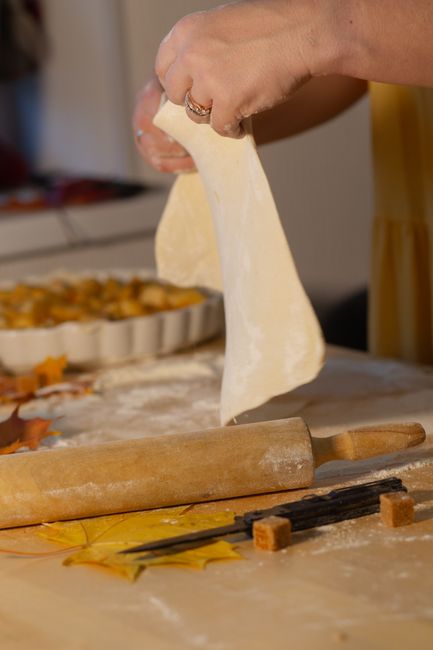
Roll from the center outward, giving the dough a quarter turn between passes so it stays even. If small cracks form at the edges, pinch them together with a wet fingertip rather than adding more water to the whole batch.
Crumbly Pastry by Type: Pie Dough, Shortcrust, and Puff Pastry
The fix is similar across pastry types, but the usual mistake differs slightly by category.
Pie Dough
Most crumbly American pie dough comes down to a too-high butter ratio or under-hydrated flour. Stick close to a tested ratio and resist adding extra fat ‘for flavor’ — it comes at the cost of structure.
Shortcrust Pastry
Shortcrust pastry, also called basic pie or tart dough, leans richer in fat by design, which makes it naturally more delicate. Handle it minimally and chill it twice — once after mixing, once after shaping into the tart pan.
Puff Pastry and Rough Puff
Crumbly puff pastry usually means the butter melted into the dough during folding instead of staying in distinct layers, collapsing the lamination. Keep both the dough and your work surface cold, and chill between folds.
If you’ve wrapped brie in puff pastry for a party and have leftovers, note that reheating won’t fix pastry that was already crumbly going in — but how to reheat baked brie will at least keep the texture from getting worse the second time around.
How to Prevent Crumbly Pastry Next Time
Most crumbly pastry problems disappear once you build a few habits into your routine.
Weigh your flour and fat instead of eyeballing cups — pastry is forgiving on flavor but not on ratios.
Keep everything cold: fridge-cold butter, ice water, even a chilled bowl on a hot day.
Don’t overwork the dough once it’s mixed, and always chill it before rolling and again before baking.
Leftover pastry that started out crumbly rarely improves with age, so it pays to get the ratio right the first time. If you’re reheating pastry from a previous bake, how to reheat pastry so it stays flaky covers the method that keeps it from turning soggy or falling apart further.
The Bottom Line
Crumbly pastry means the fat-to-water ratio is off, usually too much fat or too little ice water, sometimes both at once. Fix raw dough by adding ice water gradually and pressing it together gently, then chill before rolling.
Once a crust is baked, crumbliness can’t be undone, so adjust the ratio for your next batch instead of trying to rescue this one.
Frequently Asked Questions
Can I fix pastry dough after it's already crumbly?
Yes, if it’s still raw. Add ice water a tablespoon at a time and press the dough together gently until it holds. Once baked, you can’t add moisture back in without making the crust soggy.
Is crumbly pastry the same as flaky pastry?
No. Flaky pastry has distinct visible layers created by cold fat melting into steam pockets, while crumbly pastry has no cohesion at all and breaks into loose crumbs rather than flaky sheets.
Why is my gluten-free pastry so crumbly?
Gluten-free flour blends lack the gluten structure that helps conventional pastry hold together, so they typically need an added binder like xanthan gum or egg, plus slightly more fat and liquid than a wheat-flour recipe.
Can too little fat also make pastry crumbly?
Too little fat more often makes pastry tough rather than crumbly, but if both fat and water are on the low side, the dough can still lack enough of either binder to hold together.