

You followed the recipe, baked it the full time, and pulled out a pan of granola that bends instead of snaps.
The short answer is your granola is underbaked, spread too thick, or missing enough oil and sweetener to caramelize properly.
Chewy granola is one of the most common homemade-granola complaints, and it almost always traces back to trapped moisture rather than a ruined recipe.
Here’s how to diagnose exactly what went wrong, fix the batch you already have, and get a crunchy result next time.
Granola usually turns out chewy because it's underbaked, piled too thick on the pan, or short on oil and sweetener needed to caramelize. It also feels soft straight from the oven and needs 20 to 30 minutes to cool before it actually crisps up.
Key Takeaways
- Chewy granola almost always means it wasn't dried out fully in the oven, not that the recipe failed.
- Overcrowding the pan traps steam; spread granola no thicker than 1/2 inch on a rimmed sheet.
- Granola firms up as it cools — give it 20 to 30 minutes undisturbed before judging the texture.
- Already-chewy granola can usually be rescued by rebaking at 300°F in short increments until it's dry.
- Humidity and warm storage can soften even a perfectly crunchy batch within a few days.
Match Your Symptom to the Fix
Find what your granola is doing right now, then jump to the cause.
| What You're Seeing | Likely Cause | Quick Fix |
|---|---|---|
| Soft all over, straight from the oven | Normal — it hasn't finished cooling | Let it sit 20-30 minutes undisturbed before judging |
| Soft in the middle, crisp at the edges | Pan overcrowded or layer too thick | Spread thinner, break into clusters, and rebake at 300°F |
| Chewy but not burnt after a full bake time | Not enough oil or sweetener, or oven ran cool | Rebake 10-15 minutes at 325°F; adjust ratio next batch |
| Chewy patches near dried fruit or chocolate | Add-ins baked in released moisture | Stir mix-ins in after baking, once granola has cooled |
| Crunchy on day one, chewy by day three | Storage humidity or trapped steam in the container | Cool completely before sealing; store airtight at room temperature |
Why Is My Granola Chewy Instead of Crunchy?
Chewy granola almost always comes down to one thing: moisture that never fully evaporated during baking.
Oats absorb liquid from honey, maple syrup, oil, and any wet mix-ins as they bake.
If that liquid doesn’t cook off, the granola stays soft and bendy instead of turning brittle as it cools.

The exact cause depends on the bake time, the pan setup, the oil-to-sweetener ratio, or even what happened to the granola after it left the oven.
Work through the causes below, starting with the most common one: underbaking.
Is Your Granola Underbaked? How to Tell
Underbaking is the single most common reason granola comes out chewy. (Source: Why Your Granola Isn't Crunchy (8 Tips To Fix It!) – Piled Plates)
Granola should bake until it’s golden brown at the edges and smells toasty, not just until it looks done in the middle.
Most recipes need 35 to 45 minutes at 300°F to 325°F (150°C to 165°C), stirred once or twice along the way.
Pull a small spoonful out and let it cool on a plate for two minutes. If it’s still soft and pliable rather than starting to firm up, it needs more oven time.
This same underbaked, trapped-moisture problem is exactly what causes why is my pizza crust chewy instead of crisp — the steam has nowhere to go, so the surface never fully dries out.
Don’t judge doneness by color alone. Pale granola can still be fully dried out, and dark granola can still be damp in the center if the pan was crowded.
Overcrowding the Pan: The Number One Texture Mistake
A crowded pan is the second-biggest cause of chewy granola, right behind underbaking. (Source: The Ultimate Guide to Cooking Granola: Time, Temperature, and Tips – HomeNiches)
When granola is piled more than about 1/2 inch deep, steam gets trapped between the oats instead of escaping into the oven air.
That trapped steam essentially steams the granola instead of roasting it, leaving soft, bendy oats even after a full bake time.
Use a rimmed baking sheet, and if a double batch doesn’t fit in one even layer, split it across two pans rather than piling it higher.
Line the pan with parchment paper so the granola doesn’t stick when you stir it partway through baking.
Not Enough Oil or Sweetener to Caramelize
Granola needs enough fat and sugar to caramelize, not just bake dry.
A standard ratio is about 1/4 cup of oil and 1/4 to 1/3 cup of liquid sweetener (honey or maple syrup) for every 3 cups of rolled oats.
Cut those amounts too far for a lighter batch, and the oats can dry out without ever caramelizing — chewy and dusty at the same time instead of crisp.
Oil coats the oats and helps them toast evenly; the sweetener caramelizes on the surface and creates the shatter you’re after.
If a batch keeps coming out chewy even with a long bake, check the oil-to-oat ratio before blaming the oven.
Best Oven Temperature for Crunchy Granola
300°F to 325°F (150°C to 165°C) is the sweet spot for crunchy granola.
Lower than that, and the granola dries out too slowly, giving moisture time to redistribute and keep the center chewy. (Source: How Long Homemade Granola Lasts And The Best Way To Store It)
Higher than 325°F, and the outside can brown, or burn, before the inside has had time to dry out — leaving a soft, chewy core under a dark crust.
Stir the granola once around the halfway mark, gently, flipping the bottom layer up to the top.
Stirring too often breaks up clusters before they set; stirring too little leaves the bottom layer steaming under the rest.

Why Granola Feels Soft Right Out of the Oven
Granola is supposed to feel soft the moment it comes out of the oven — that’s not a sign of failure.
The caramelized sugars and oils are still hot and liquid at that point, so it won’t feel crisp yet no matter how well it baked.
As it cools on the pan, the sugar hardens and the granola firms up into crunchy clusters.
Give it a full 20 to 30 minutes, undisturbed, directly on the baking sheet before deciding it needs more oven time.
Stirring or moving granola while it’s still hot breaks up the clusters and can make a perfectly baked batch seem chewy when it’s actually just warm.
How Moisture From Add-Ins Causes Chewy Granola
Dried fruit, fresh fruit, and other moist mix-ins can make finished granola chewy even when the oats themselves are fully baked.
Fresh or frozen fruit releases water as it bakes, and that water saturates the surrounding oats.
Even dried fruit like raisins or apricots holds enough residual moisture to soften anything touching it if it’s baked in from the start.
Add dried fruit, chocolate chips, or anything delicate after the granola comes out of the oven and has cooled, not before baking.
Nuts, seeds, and coconut flakes are the exception — they’re dry enough to bake in from the beginning without causing chewiness.
How to Fix Already-Chewy Granola (Rebake Method)
Chewy granola almost always can be rescued — the oats just need more time to dry out.
- Preheat the oven to 300°F (150°C).
- Break the granola into smaller clusters if it clumped into one large slab.
- Spread it back out in a single layer no thicker than 1/2 inch on the same rimmed pan.
- Bake for 10 minutes, then stir and check.
- Keep baking in 5 to 10 minute increments, checking each time, until the edges are deep gold and it smells toasty.
- Pull it out and let it cool completely, untouched, for at least 20 minutes before testing the texture.
If it’s still chewy after cooling, repeat the process — an extra 10 minutes usually finishes the job.
Granola with fruit or chocolate baked in is harder to fully crisp; pick out anything scorchable before the second round if you can.
Why Granola Turns Soft After a Few Days
Granola that was crunchy on day one can turn chewy by day three, and that’s almost always about storage, not the original bake.
Granola is hygroscopic — it pulls moisture out of the air, especially in humid kitchens or during warmer months.
Sealing warm granola into a container traps residual steam, which condenses and softens the oats from the inside of the jar.
A loose or non-airtight lid lets outside humidity in gradually, softening granola over several days even in a fairly dry kitchen.
If granola softens after storage, the fix is usually a quick rebake, then switching to a properly sealed container going forward.
How to Store Granola So It Stays Crunchy
Cool granola completely on the pan before storing it — at least 30 minutes, longer for a full sheet pan.
Store it in an airtight container or a zip-top bag with the air pressed out, not a loosely covered bowl.
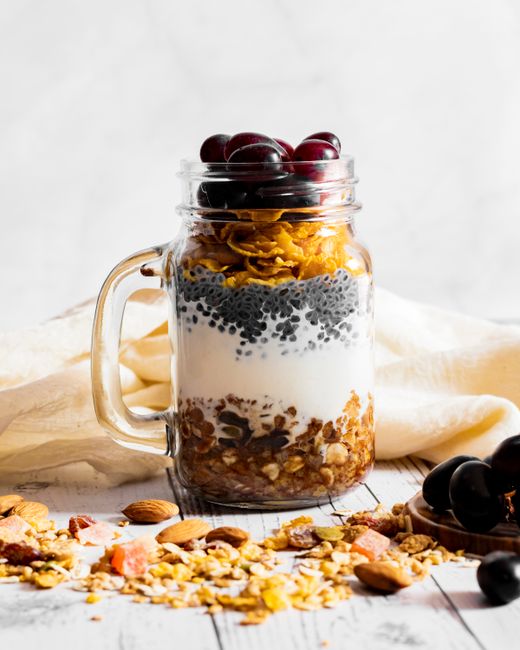
Keep it at room temperature; refrigeration adds condensation and moisture, which softens granola faster, not slower.
Add a food-safe silica packet or a folded paper towel inside the container if the kitchen runs humid.
Properly stored granola stays crunchy for two to three weeks at room temperature.

Chewy vs Crunchy Granola: Which Do You Want?
Not all chewy granola is a mistake — some recipes are built to be soft and bar-like on purpose.
Chewy granola bars use more sweetener and a shorter bake by design, so they hold together like a snack bar instead of shattering into clusters.
Crunchy, cereal-style granola uses a lower sweetener ratio, a longer bake, and a lower oven temperature to fully dry the oats.
The table below compares the two so you can tell whether your batch turned out chewy by accident or matches a chewy-by-design recipe.
| Feature | Chewy Granola Bars | Crunchy Granola |
|---|---|---|
| Sweetener ratio | 1/2 to 3/4 cup per 3 cups oats | 1/4 to 1/3 cup per 3 cups oats |
| Bake time | 20-25 minutes | 35-45 minutes |
| Oven temperature | 325-350°F | 300-325°F |
| Pan setup | Pressed firmly into a lined pan | Loose, even 1/2-inch layer |
| Texture goal | Soft, holds together when sliced | Brittle, breaks into loose clusters |
The Bottom Line
Chewy granola is almost always a moisture problem: underbaking, an overcrowded pan, or too little oil and sweetener to caramelize.
Rebake it in a thin layer at 300°F in short increments, then let it cool fully before judging the texture.
Once you’ve got a crunchy batch, an airtight container at room temperature is what keeps it that way.
Frequently Asked Questions
Why is my granola chewy even though I baked it a long time?
A long bake time doesn’t guarantee crunch if the pan was overcrowded, the oven ran cool, or moisture from fruit was baked in. Check the layer thickness and oven temperature before adding more time.
Can you rebake granola to make it crispy?
Yes. Spread it back out in a thin layer and bake at 300°F in 10-minute increments, checking and stirring each time, until it’s golden and smells toasty.
Why does my granola get soft after a day or two?
This is almost always a storage issue, not the bake. Granola pulls moisture from humid air or gets sealed while still warm, so cool it fully before storing it airtight at room temperature.
Is chewy granola undercooked?
Often, yes. Chewy granola is usually a sign it needs more time or a thinner layer in the oven, unless the recipe was intentionally designed as a chewy bar rather than a crunchy cereal.
Does stirring granola while it bakes ruin the crunch?
Stirring once or twice, gently, helps it dry evenly. Stirring too often breaks up the clusters before the sugar has a chance to set and caramelize.