

You pulled a bubbling crumble out of the oven, cracked into that golden top, and found a soggy, gluey layer underneath instead of crisp crumbs.
The short answer is your topping soaked up too much fruit juice before it had a chance to crisp, usually because there wasn’t enough fat coating the flour or the fruit filling was too wet to begin with.
The good news: this is one of the easiest crumble problems to fix once you know which of a handful of causes is yours.
Key Takeaways
- Soggy crumble topping is almost always caused by excess fruit juice, too little fat, or underbaking.
- The fat-to-flour ratio matters most: aim for about half as much butter as flour by weight, rubbed in until it looks like coarse breadcrumbs.
- Very juicy fruit like berries or ripe peaches needs a thickener (cornstarch, flour, or tapioca) mixed in before baking.
- Bake on a lower oven rack with a baking sheet underneath, and don't cover the dish, so steam can escape instead of soaking back into the crumbs.
- Let the crumble rest 15-20 minutes after baking; the filling keeps thickening as it cools, and cutting in too soon reads as soggy even when it isn't.
What To Do First
Work through these in order before you troubleshoot further.
| Check this | Why it matters |
|---|---|
| Did you toss the fruit with a thickener? | Cornstarch, flour, or tapioca soaks up excess juice before it hits the topping |
| Is your butter cold and evenly rubbed in? | Warm or unevenly mixed butter melts too fast and leaves dry flour that turns pasty |
| Did you bake long enough (45-55 min)? | A pale, short bake never fully crisps or seals the crumb layer |
| Is the dish uncovered on a lower rack? | Trapped steam and a too-high rack keep the top soft instead of browning |
| Did you rest it before serving? | Filling keeps setting for 15-20 minutes out of the oven |
Why Is My Crumble Topping Soggy?
Soggy crumble topping happens when liquid from the fruit filling migrates up into the crumbs faster than the topping can crisp and set.
That liquid can come from the fruit itself, from too little fat in the topping, or from steam that gets trapped instead of escaping in the oven.
Most of the time it’s not one dramatic mistake, it’s two or three small ones stacking up: watery fruit, a skimpy amount of butter, and a bake that got pulled a few minutes too early.
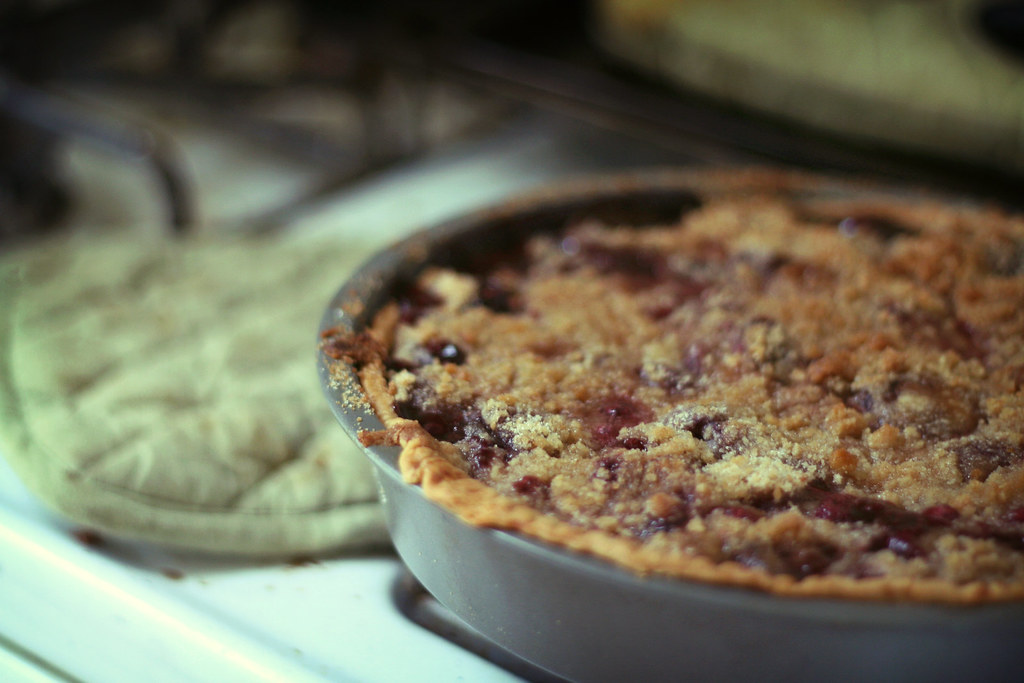
Fix the biggest cause first, then work down the list, since these problems tend to compound each other.

Too Much Liquid in the Fruit Filling
This is the number one cause. Juicy fruit like berries, peaches, plums, and ripe pears release a lot of liquid as they cook, and that liquid has to go somewhere.
If nothing thickens it, it pools under the topping and works its way upward, turning crisp crumbs into wet paste.
Frozen fruit is an even bigger risk, since it releases extra water as it thaws and cooks, on top of what fresh fruit already gives off.
- Toss fruit with a thickener before baking: 1 to 2 tablespoons of cornstarch or 2 to 3 tablespoons of all-purpose flour per 4 cups of fruit is a good starting point.
- Use tapioca starch for very juicy fruit like berries; it thickens well and stays clear rather than cloudy.
- Don’t skip macerating time: letting sugared fruit sit for 15-20 minutes draws out juice you can partially drain off before baking.
- Cut back added sugar slightly on very ripe fruit, since sugar pulls out even more moisture through osmosis.
If you’re working with apples specifically, the variety matters almost as much as the thickener. Firmer, less watery apples hold their shape and release less liquid, so it’s worth checking what are the best apples for crumble before you pick a bag at the store.
Not Enough Fat in the Crumble Topping
A dry, low-fat topping can’t form the crisp, water-resistant crumb structure that keeps juice out.
Butter coats the flour and sugar, and when it melts in the oven it fries the crumbs slightly instead of letting them absorb moisture like a sponge.
A reliable ratio is roughly 1 part cold butter to 2 parts flour by weight, with sugar added at about half the butter amount.
Skimping on butter to make the topping seem healthier is one of the most common reasons home bakers end up with a pasty layer instead of a crumbly one.
Rub the cold butter into the flour with your fingertips or a pastry cutter until the mixture looks like coarse, pea-sized breadcrumbs, not fine sand and not big clumps.
The Butter Was Too Warm or Overmixed
Warm or soft butter blends into the flour instead of coating it in distinct pieces, so you lose the little pockets of fat that create separation and crunch.
Overworking the mixture has the same effect: it turns into a dense, dough-like paste that bakes up heavy and gummy rather than light and crisp.
Keep butter cold straight from the refrigerator, cut it into small cubes first, and stop rubbing it in the moment the mixture looks like coarse crumbs.
If your kitchen runs warm, chill the mixed topping in the freezer for 10 minutes before it goes on the fruit; that head start helps it hold its shape in the oven.
The Crumble Wasn't Baked Long Enough
A crumble that looks done at 30 minutes often isn’t. Most full-size crumbles need 45 to 55 minutes at 350-375°F (175-190°C) to fully crisp the top and cook off excess moisture.
Pulling it early leaves both the topping and the filling underset, which reads as soggy even if the flavor is fine.
Look for these visual cues instead of trusting the clock alone:
- The topping is evenly golden brown, not pale in the center
- Juices are bubbling thickly around the edges, not thin and watery
- A thin skewer inserted into the fruit meets little resistance
If the top is browning too fast before the filling is done, loosely tent it with foil rather than covering the whole dish, which traps steam.
Trapped Steam From Covering or Poor Airflow
Crumble should always bake uncovered. A lid or tight foil cover traps steam directly above the fruit, and that steam condenses back onto the topping instead of escaping into the oven.
Baking on too high a rack can cause the same problem in a smaller way, since heat doesn’t circulate as well and the top browns without the base ever crisping.
Set your oven rack in the lower third, place the dish on a rimmed baking sheet to catch bubbling juices, and leave it uncovered for the entire bake.
This is the same airflow issue behind soggy centers in other baked dishes; the reasoning is the same one covered in why is my homemade pizza soggy in the middle, where trapped moisture, not oven temperature, is usually the real problem.
The Dish Was Cut or Served Too Soon
Crumble keeps setting after it leaves the oven. Cutting into it right away lets hot, still-thin juices flood back over the topping, which can look soggy even when the bake itself was perfect.
Let it rest, uncovered, for 15 to 20 minutes on a wire rack before serving.
That resting time gives the thickener in the filling time to finish setting up, and it firms the topping’s structure as it cools slightly.
How to Prevent Soggy Crumble Topping Next Time
Once you’ve fixed the immediate bake, a few habits keep it from happening again.
- Always thicken juicy fruit fillings with cornstarch, flour, or tapioca starch before they go under the topping.
- Keep your fat-to-flour ratio generous, about 1:2 by weight, and use cold butter.
- Add texture with oats or nuts: a portion of rolled oats or chopped nuts in the topping adds structure that resists moisture better than flour alone.
- Bake uncovered on a lower rack with a baking sheet underneath to catch drips.
- Don’t rush the bake or the rest: give it the full 45-55 minutes, then let it sit before cutting.

These same principles carry over well if you like adding a crumble layer to muffins; the blueberry muffins with crumble topping recipe and coffee cake muffins with crumble topping recipe both rely on the same cold-butter, rubbed-in method.
Can You Fix a Crumble That's Already Soggy?
Yes, in most cases you can rescue it, though it won’t be quite as crisp as one that never went soft.
- Return the uncovered dish to a 375°F (190°C) oven for 10 to 15 minutes.
- If the top still looks pale or wet, run it under the broiler for 1 to 2 minutes, watching closely so it doesn’t burn.
- Let it rest 10 minutes before serving so the extra moisture has time to cook off and settle.
This re-crisping trick also works well on leftovers. For step-by-step timing on bringing a whole dish back to life without drying out the fruit, see how to reheat apple crumble.
Storing and Reheating Crumble Without Sogginess
How you store leftover crumble affects the topping just as much as how you baked it.
Covering a warm crumble tightly traps steam underneath the cover, softening the top overnight even if it was perfectly crisp when you served it.
- Let the crumble cool completely, at least an hour, before covering it.
- Store leftovers in the refrigerator for up to 4 days in a loosely covered container, not a sealed airtight one.
- Reheat in the oven, never the microwave, since microwaving steams the topping instead of crisping it.
The same trapped-steam logic applies to other baked goods you might store the wrong way; it’s worth comparing notes with how to freeze hot dog buns if you’re curious how moisture control plays out in a totally different baked item.
The Bottom Line
Soggy crumble topping almost always comes down to excess fruit liquid, too little fat, or a bake that ended too early. Thicken juicy fruit with cornstarch or flour, use a generous cold-butter-to-flour ratio, bake uncovered until the filling bubbles thickly, and let the dish rest before cutting.
Fix those four things and you’ll get a crisp, crumbly top nearly every time.
Frequently Asked Questions
Why is my crumble topping soggy even after baking it longer?
If it’s still soggy after 50-plus minutes, the fruit filling likely has too much liquid with no thickener. Extending bake time helps some, but a properly thickened filling matters more than extra minutes in the oven.
Should crumble be covered while baking?
No. Crumble should bake uncovered so steam can escape instead of condensing back onto the topping. If the top is browning too fast, loosely tent just the edges with foil instead of covering the whole dish.
Does frozen fruit make crumble soggier than fresh fruit?
Yes, frozen fruit releases extra water as it thaws and cooks. If using frozen fruit, don’t thaw it first, add an extra teaspoon of cornstarch, and expect a slightly longer bake time.
Why is my crumble topping crunchy on top but wet underneath?
This usually means the top browned and set before the filling finished releasing its juice, so moisture is trapped between the two layers. Bake a bit longer at a slightly lower temperature so the top and filling finish closer together.
How long should crumble rest before serving?
Let it rest uncovered for 15 to 20 minutes after baking. The filling continues to thicken as it cools, and cutting in too early can make a properly baked crumble look soggy.