

Store-bought box mixes practically guarantee a moist crumb, so it’s frustrating when a homemade chocolate cake comes out sturdy, crumbly, or downright sawdust-textured.
The short answer: you probably overbaked it, packed in too much flour, or didn’t use enough fat — and all three are easy to fix.
Below is exactly what dries out a chocolate cake, how to salvage one that’s already baked, and how to stop it from happening again.
Key Takeaways
- Overbaking by just a few minutes is the single biggest cause of dry chocolate cake
- Scooping flour straight from the bag can pack in 20 to 25 percent extra flour
- Oil-based batters stay moister longer than butter-based ones because oil doesn't harden when cool
- A warm cake can be rescued with plastic wrap; a cooled dry cake needs a sugar syrup soak
- High altitude, an inaccurate oven, and uncovered storage all dry out cake independently of the recipe
- Natural cocoa powder is more acidic and absorbs less liquid than Dutch-process, which can throw off moisture if you swap one for the other
What To Do First
Match your situation to the fastest fix.
| Situation | Best Fix |
|---|---|
| Cake just came out of the oven and feels dry on top | Wrap it tightly in plastic wrap while still warm to trap steam |
| Cake is fully cooled and crumbly | Brush each layer with simple syrup before frosting |
| You measured flour by scooping the cup into the bag | Switch to spooning flour in and leveling, or weigh it next time |
| You bake above 3,000 feet elevation | Reduce flour slightly and add a bit more liquid |
| Leftover cake sat out uncovered overnight | Store airtight going forward, or repurpose today's cake into cake pops |
Why Is My Chocolate Cake Dry?
The single biggest reason chocolate cake turns out dry is overbaking — even two or three extra minutes in the oven pulls moisture out of the crumb.
After that, measuring mistakes and not enough fat in the batter are the next most common culprits.
Here’s the full list of what typically goes wrong:
- Baking a few minutes past done, or checking too late
- Scooping flour straight from the bag, which packs in extra flour
- Using a lot of cocoa powder without extra fat or liquid to balance it
- Not enough butter, oil, or eggs for the recipe’s flour weight
- An oven that runs hotter than its dial shows
- Baking in a pan that’s the wrong size, so the layer is too thin
- Skipping a soak or glaze, then storing the cake uncovered
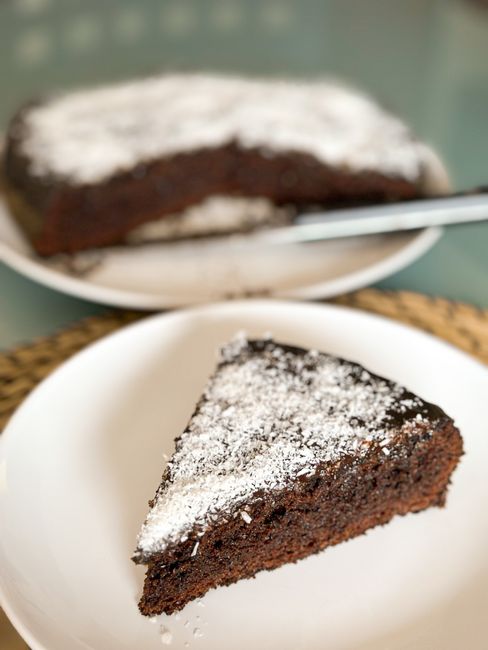
If you’re rebuilding a recipe from scratch, start from a base that’s already tested for moisture rather than guessing ratios — these chocolate cake recipes are a reliable starting point.
How to Tell If You Overbaked the Chocolate Cake
Overbaking is the top cause of a dry chocolate cake, and it usually happens because the toothpick test gets misread.
A cake is done when a toothpick inserted in the center comes out with a few moist crumbs clinging to it — not completely clean.
If you wait for a totally clean toothpick, you’ve likely already gone 2 to 4 minutes too far.
Other tells: the cake pulls away from the pan sides on its own, the top springs back firmly instead of gently, and the edges look noticeably darker than the center.
According to King Arthur Baking’s cake troubleshooting guide, cakes keep baking slightly from residual heat after leaving the oven, so pulling the pan a touch early is usually the safer call.
How to Measure Flour So It Doesn't Dry Out Your Cake
Flour is the second-biggest culprit, and the problem almost always starts with the measuring cup.
Dip a dry measuring cup straight into the flour bag and you compact the flour as you scoop, packing in 20 to 25 percent more than the recipe intended.
That extra flour has nowhere to go but into soaking up moisture, which is exactly what leaves you with a dense, dry crumb.
MethodFlour per Cup (approx.)ResultScoop cup into bag150–160gPacked, dry, dense crumbSpoon into cup, then level120–125gCorrect ratio, tender crumbWeigh on a kitchen scale120g (standard for all-purpose)Most accurate, no guesswork
If you bake often, a $15 kitchen scale is the single cheapest fix on this list — it removes the guesswork completely and takes the same amount of time as scooping.
No scale handy? Spoon the flour into the measuring cup until it mounds above the rim, then level it off with the flat edge of a knife.
Don’t tap or shake the cup — that resettles the flour and packs it right back down.
Butter vs Oil: Which Keeps Chocolate Cake Moister?
Both work, but they behave differently once the cake cools, and that difference matters more than most recipes let on.
ButterOilState at room tempSolid — hardens as cake coolsLiquid — stays soft at any tempFlavorRicher, more traditionalNeutral, lets cocoa flavor leadCrumb textureSlightly firmer, more structuredSofter, moister, stays that way for daysBest forCakes eaten same-dayCakes made ahead or shipped/stored
Because oil never solidifies, it keeps the crumb feeling moist even a day or two after baking — which is why so many bakery-style chocolate cakes use oil instead of butter.
If a recipe calls for butter and you want extra insurance against dryness, swap in a tablespoon or two of oil for a portion of the butter without touching anything else in the recipe. You’ll keep the buttery flavor but pick up some of oil’s staying power.
How to Fix a Dry Chocolate Cake After Baking
Yes — a dry cake is fixable, and the fix depends on whether it’s still warm or already cooled.
If the cake is still warm, wrap it tightly in plastic wrap while it cools.
The trapped steam redistributes back into the crumb instead of evaporating into the air.
If it’s already cool and dry, a sugar syrup soak works best:
- Simmer equal parts sugar and water (about 1/4 cup each) until the sugar dissolves.
- Let the syrup cool slightly, then stir in 1/2 teaspoon vanilla or a splash of coffee liqueur if you like.
- Brush it generously over each cake layer with a pastry brush before frosting.
- Let it sit 10 minutes so the syrup absorbs fully.
A thick layer of frosting or ganache also helps, since it adds moisture and fat back into every bite.
For a single dry slice, a 10-second microwave zap with a damp paper towel over the plate softens the crumb enough to eat comfortably.
If the cake is beyond saving as a layer cake, crumble it into this cake pops recipe, which works with dry cake any time of year, not just around Easter.
How to Prevent a Dry Chocolate Cake Next Time
Once you know the causes, prevention is mostly about catching them before the batter goes in the pan.
- Check your oven’s real temperature. Oven dials can be off by 25 degrees or more. A $10 oven thermometer tells you the truth, and if yours runs hot, start checking for doneness 3 to 5 minutes early.
- Use the pan size the recipe calls for. A too-large pan spreads the batter thin, and a thin layer bakes faster and dries out before the center is even set.
- Don’t overmix once the flour goes in. Overmixing develops gluten, which makes the crumb tighter and chewier instead of tender.
- Match your cocoa powder to the recipe. Natural cocoa is acidic and pairs with baking soda; Dutch-process is neutral and usually pairs with baking powder. Swapping one for the other without adjusting the leavening can throw off both rise and moisture.
- Set a timer for the low end of the range. If a recipe says 28 to 32 minutes, check at 26. You can always bake longer; you can’t un-bake a dry cake.

How to Store Chocolate Cake So It Stays Moist
Even a perfectly baked cake can dry out afterward if it’s stored wrong.
Once the cake has cooled completely, wrap it tightly in plastic wrap or store it in an airtight container — leaving it uncovered on the counter is one of the fastest ways to dry out an otherwise good cake.
Frosted cakes hold moisture a bit longer than bare layers, since the frosting acts as a barrier against air.
At room temperature, a well-wrapped chocolate cake stays moist for about 2 to 3 days. In the fridge, it’ll keep longer — 5 to 7 days — but the cold air can dry the crumb slightly, so let refrigerated slices sit at room temperature for 20 to 30 minutes before eating.
For longer storage, wrap individual layers or slices in plastic wrap, then foil, and freeze for up to 3 months. Thaw wrapped, at room temperature, so condensation doesn’t form on the exposed crumb.
The Bottom Line
Dry chocolate cake almost always comes down to three fixable habits: baking it a few minutes too long, packing in extra flour by scooping straight from the bag, and skimping on the fat that keeps the crumb tender. Pull the cake when a toothpick still shows a few moist crumbs, spoon and level your flour (or weigh it), and don’t be shy with the butter or oil the recipe calls for. If you’ve already got a dry cake on your hands, a plastic-wrap trick or a quick sugar syrup soak will save it — and going forward, starting from a tested recipe, checking your oven’s real temperature, and storing leftovers airtight will keep the problem from coming back.
Frequently Asked Questions
What is the most common reason chocolate cake turns out dry?
Overbaking is the top cause — even two or three extra minutes in the oven pulls moisture out of the crumb. Most bakers make it worse by waiting for a completely clean toothpick, when a few moist crumbs clinging to it actually means the cake is done.
Can you fix a chocolate cake that's already dry?
Yes. If it’s still warm, wrap it tightly in plastic wrap so the trapped steam redistributes back into the crumb. If it’s already cooled, brush each layer with a simple sugar syrup (equal parts sugar and water, simmered until dissolved) before frosting, and let it sit 10 minutes to absorb.
Does measuring flour wrong really make that much difference?
Yes — scooping the measuring cup straight into the bag can pack in 20 to 25 percent extra flour compared to spooning it in and leveling. That extra flour soaks up more moisture and leaves the crumb dense and dry.
Does using oil instead of butter help keep chocolate cake moist?
It can. Oil-based batters tend to stay moister longer than butter-based ones because oil stays liquid at room temperature, while butter hardens as it cools and can make the crumb feel drier and firmer.
Does baking at high altitude affect how dry a cake turns out?
Yes. High altitude, along with an inaccurate oven temperature and uncovered storage, can dry out a cake independently of the recipe itself. At elevations above 3,000 feet, reducing the flour slightly and adding a bit more liquid helps compensate.
Does the type of cocoa powder affect moisture?
It can, indirectly. Natural cocoa powder is acidic and typically pairs with baking soda, while Dutch-process cocoa is neutral and usually pairs with baking powder. Swapping one for the other without adjusting the leavening can affect both rise and how moist the finished crumb feels.
How long does chocolate cake stay moist after baking?
A well-wrapped chocolate cake stays moist for about 2 to 3 days at room temperature, or 5 to 7 days in the fridge, though refrigeration can dry the crumb slightly. For longer storage, wrap and freeze it for up to 3 months.
Is it better to weigh flour or measure it by cups?
Weighing is more accurate. A standard cup of all-purpose flour is about 120 grams, but scooping straight from the bag can pull in 150 grams or more. A kitchen scale removes that guesswork entirely.