

You did everything the recipe said, and your potatoes still came out of the oven pale, soft, and steaming instead of shattering when you cut into them. That’s not bad luck — it’s almost always one specific step in the process.
The short answer is that too much surface moisture and not enough direct contact with hot fat are the two things killing your crunch.
Once you know which mistake you’re making, fixing it takes one changed step, not a whole new recipe.
Key Takeaways
- Waxy potatoes and thin, wet coatings are the two most common reasons roast potatoes stay soft.
- Parboiling until the edges are fluffy, then roughing them up, creates the surface that turns crispy.
- A hot oven (425°F to 450°F) and a preheated metal pan matter as much as the potato itself.
- Overcrowding the pan steams potatoes instead of roasting them.
- Crispy potatoes go soft fast if you cover them or let them sit in their own steam.
Quick Fix by Symptom
Match what you're seeing to the fastest fix.
| Your potatoes are… | Try this first |
|---|---|
| Pale and soft everywhere | Oven isn't hot enough — bump to 450°F and give them 10-15 more uninterrupted minutes |
| Crispy out of the oven, soft 5 minutes later | Serve immediately, uncovered, on a rack or open plate instead of a covered dish |
| Crispy on the bottom only | Flip halfway through, and switch to a heavy metal sheet pan |
| Soggy and greasy instead of crisp | Cut back the oil and drain any pooled fat before the final roast |
| Never crisp no matter what you try | You're likely using a waxy potato — switch to Russets or Yukon Golds |
Why Are My Roast Potatoes Not Crispy?
Roast potatoes go soft instead of crispy when there’s too much moisture between the potato and the hot fat, or when the oven isn’t hot enough to drive that moisture off fast. Both problems usually trace back to one of these habits.
For the full step-by-step method, see our guide on how to roast potatoes so they are crispy. But first, here’s what’s actually going wrong.
- Wrong potato variety. Waxy potatoes like red bliss or new potatoes hold onto water and don’t fluff up the way a starchy potato does.
- Skipping the parboil. Raw potatoes going straight into the oven never develop the roughed-up, floury surface that crisps.
- Wet potatoes going into the pan. Any surface water turns straight to steam in the oven, which softens rather than browns.
- An overcrowded sheet pan. Potatoes touching each other trap steam between them instead of roasting in open, hot air.
- An oven that isn’t hot enough. Anything under 425°F takes too long, so the potatoes dry out and turn leathery before they brown.
- Too little fat, or fat added too late. Fat needs to be hot and in direct contact with the potato surface, not drizzled on halfway through.
- A glass or ceramic dish. These heat up slowly and unevenly compared to a dark metal sheet pan.
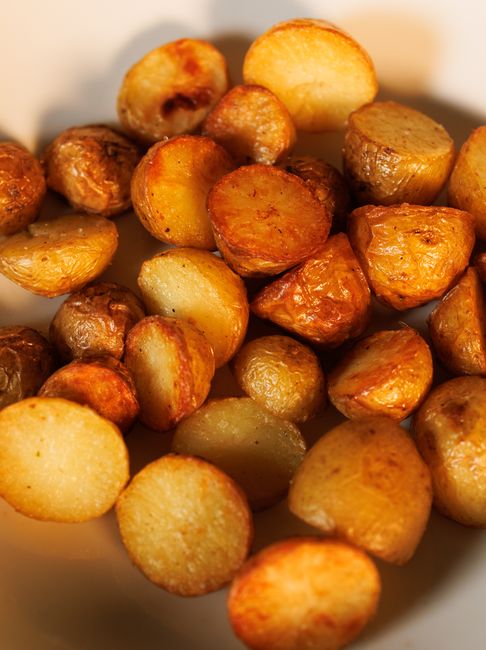
How to Fix Soft or Soggy Roast Potatoes
Match the specific problem you’re seeing to the fix below rather than changing everything at once.
Potatoes Are Pale and Never Brown
This is almost always an oven temperature problem. Roast at 425°F to 450°F, not 375°F or 400°F — potatoes need aggressive, dry heat to brown before they dry out.
Give them the full roasting time undisturbed. Opening the door repeatedly drops the oven temperature and adds moisture back in.
Potatoes Are Crispy Then Go Soft After Resting
Crispy potatoes trap steam inside once they leave the oven. If you cover them with foil or pile them into a serving dish with a lid, that trapped steam softens the shell within minutes.
Serve them uncovered, spread out rather than stacked, and as close to straight-from-the-oven as your meal timing allows.
Potatoes Are Crispy on the Bottom, Soft on Top
This means only one side is getting direct contact with hot fat and metal. Flip the potatoes halfway through roasting so both cut sides get their turn against the hot pan.
A heavy, dark metal sheet pan conducts heat far better than a light or nonstick one, and it makes a real difference here.
Potatoes Are Greasy Instead of Crispy
Too much oil pools around the potatoes and shallow-fries them into a soft, greasy texture rather than a dry, crisp one. Use just enough oil to coat, not drown, the potatoes.
If oil has pooled in the pan by the last 15 minutes, tip it off before the final blast of high heat.
Best Potatoes for Crispy Roasting
Starchy potatoes crisp up far better than waxy ones because they have less water and more surface starch, which is exactly what turns golden and crunchy in the oven.
Russets and Yukon Golds are the two best choices for crispy roast potatoes. Waxy varieties like red potatoes or fingerlings will roast, but they’ll stay closer to firm-and-tender than genuinely crisp, according to the Idaho Potato Commission’s guide to potato types.

| Potato | Starch level | Crispiness when roasted |
|---|---|---|
| Russet | High | Excellent — fluffy interior, shatters on the outside |
| Yukon Gold | Medium-high | Very good — slightly creamier interior, still crisps well |
| Red/new potatoes | Low (waxy) | Fair — holds shape, but skin rarely gets truly crisp |
| Fingerling | Low (waxy) | Fair — tender and buttery, more roasted than crisp |
How to Parboil Potatoes for Crispy Roasting
Parboiling roughs up the potato’s exterior so it has more surface area to crisp — this step matters more than almost anything else in the whole process.
- Cut potatoes into even, roughly 1.5 to 2-inch chunks so they cook at the same rate.
- Start them in cold, well-salted water, then bring to a boil.
- Boil for 8 to 10 minutes, until a knife slides in with slight resistance but the edges are just starting to fray.
- Drain thoroughly, then let them sit in the colander for 2 to 3 minutes so surface steam escapes.
- Shake the colander (with a lid on, or gently by hand) to rough up the edges before they go into the hot fat.
Undercooking this step is one reason potatoes take longer than expected to get tender in the first place — see why do potatoes take so long to cook if this is a recurring issue for you.
Skip this step and you’re roasting a smooth, sealed surface that has nowhere to grip the fat. That’s a large part of why straight-from-raw roast potatoes rarely crisp the way parboiled ones do, a point Serious Eats’ Food Lab breaks down in detail.

Best Oil or Fat for Crispy Roast Potatoes
Use a fat with a high smoke point and real flavor — this is what actually browns and crisps the potato’s surface. Duck fat, beef tallow, and refined avocado oil all hold up well at 425°F and above.
Olive oil works fine too, but extra-virgin varieties can start to smoke and taste bitter at high roasting temperatures; a refined or light olive oil is the safer pick for a hot oven.
Heat the fat in the pan in the oven for 5 to 10 minutes before adding the potatoes. Cold fat poured over cold potatoes just steams them for the first several minutes instead of searing them.

Best Oven Temperature and Pan for Crispy Roast Potatoes
Roast at 425°F to 450°F on a heavy, dark metal sheet pan for the best crisping. Glass and ceramic dishes insulate rather than conduct heat, so the potatoes closest to the pan surface never get hot enough fast enough.
Give potatoes room. A single, uncrowded layer with space between pieces lets hot air circulate and moisture escape instead of collecting as steam.
If your oven runs cool or you’re doubling a batch, use two pans rather than one crowded one — swapping pan positions halfway through if needed.
How to Keep Roast Potatoes Crispy After Roasting
Crispy potatoes are at their best in the first 5 to 10 minutes after they leave the oven. Salt them right when they come out, not before roasting, since salt draws out moisture and can undo the crisping.
Serve uncovered on a wide platter rather than piled into a deep bowl — stacking traps steam and softens the bottom layer fast.
If they need to wait, leave them on the sheet pan with the oven off and the door cracked rather than moving them to a covered dish.
How to Reheat Roast Potatoes and Keep Them Crispy
Leftover roast potatoes almost always come out of the microwave soft, since microwaves add moisture and don’t brown anything. For real crispness, dry heat is non-negotiable.
The oven or a toaster oven at 400°F to 425°F for about 10 to 15 minutes, spread in a single layer, is the most reliable option — see our full method for the best way to reheat roast potatoes crispy.
An air fryer works well too, usually in less time. For other reheating methods and timing, our guide on how to reheat roast potatoes covers stovetop and skillet options as well.
What to Serve with Crispy Roast Potatoes
Crispy roast potatoes work as a side for almost any roasted main. They’re a natural match for a roast chicken dinner tray bake recipe, or check our full list of potato sides for chicken for more pairing ideas.
If you’re rounding out the plate with vegetables, a roasted vegetable tray bake recipe roasts in the same oven window, and a simple sauce from our sauces for roasted veggies roundup dresses up either dish.
The Bottom Line
Most soft roast potatoes come down to a waxy potato, a skipped or rushed parboil, a crowded pan, or an oven that isn’t hot enough.
Switch to a starchy potato like a Russet or Yukon Gold, parboil until the edges fray, rough them up, and roast uncrowded at 425°F to 450°F in hot fat on a metal pan.
Serve them uncovered and fast — crispy potatoes soften quickly once they’re trapped in their own steam.
Frequently Asked Questions
Why are my roast potatoes soggy instead of crispy?
Soggy roast potatoes usually mean too much moisture on the surface, an overcrowded pan, or a cool oven. All three trap steam around the potato instead of letting it dry out and brown.
Should I parboil potatoes before roasting for crispiness?
Yes. Parboiling for 8 to 10 minutes softens and roughens the outer edge of the potato, which is exactly the texture that turns golden and crisp in a hot oven.
What is the best potato for crispy roast potatoes?
Starchy varieties like Russets and Yukon Golds crisp up far better than waxy potatoes such as red or fingerling potatoes, which hold onto more moisture.
Why do my roast potatoes go soft after they come out of the oven?
Covering them or piling them into a closed dish traps steam against the crispy shell. Serve them uncovered on a wide platter as soon as possible after roasting.
Can I make crispy roast potatoes without much oil?
You need at least a thin, even coating of oil or fat in direct contact with the potato surface to crisp properly. Too little fat leaves the potato drying out rather than browning.