
There are countless varieties of bread all over the world. Despite all of their differences, nearly every type of bread in the world has a rigid set of baking rules they must abide by to turn out right. Ciabatta is an Italian bread that breaks those rules.
Ciabatta requires much more hydration than a typical white loaf. Making the perfect loaf of ciabatta can be pretty tricky, which is why most people buy their ciabatta bread from the bakery. Like any bread, ciabatta has a limited shelf life of only 5 days, meaning you might have to get creative to use up your leftover ciabatta.
4 Things to do with Leftover Ciabatta
Ciabatta is much more versatile in the kitchen than most people think. It is mainly associated with sandwiches and paninis, but there are plenty of ways for you to use up your leftover ciabatta that goes beyond a simple sandwich:
1) Freeze It
Even if you wait to use your ciabatta only 1 day after buying a fresh loaf, you will likely notice a hint of staleness to the bread. That is because ciabatta is a very soft bread with a distinct airiness.
Instead of keeping your ciabatta bread on the counter for 5 days and settling for increasingly stale sandwiches, freeze it while it is still at its prime texture. Here is how:
- Slice It
Before freezing your ciabatta, slice it so that it is easier to access when you want a quick sandwich. Consider the size of a sandwich you usually have a prepare it in the same way – just don’t fill it! - Flash Freeze
Place your slices of ciabatta on a lined baking tray and flash-freeze the slices for roughly 1 hour or until they are nearly frozen solid. - Bag It
After the flash freezing, remove the slices from the freezer and place them into a sturdy freezer bag. Do not overcrowd the bag. - Secure Shut
Push as much air out of the freezer bag as possible, then quickly zip the bag shut. - Double Bag It
Take another freezer bag and place the air-tight ciabatta into the second bag. Secure the second freezer bag in the same way as the first. - Freeze
Now all you have to do is place the secured ciabatta in your freezer and let the cold work its magic.
You can freeze your ciabatta for up to 3 months and still get that wonderfully fresh texture once the bread defrosts.
When you are ready to eat your ciabatta, take a few slices from the freezer and pop them into your toaster. Or for non-toasted ciabatta, microwave the slices for up to 30 seconds.
You can then crack on and use it as you usually would to make bruschetta, toasted paninis or sandwiches.
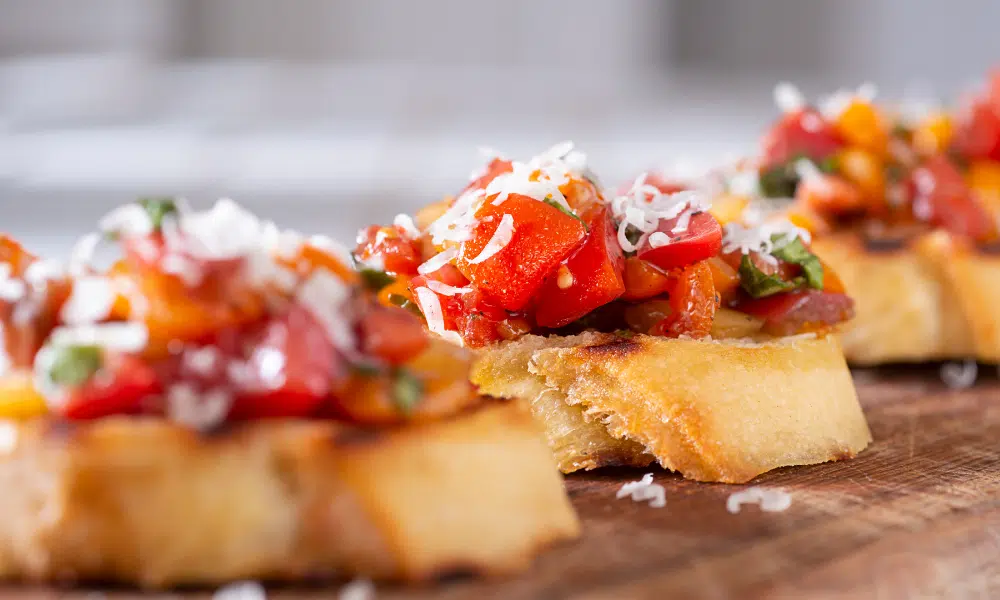
2) Brunch Worthy French Toast
The unique thing about ciabatta is that it has a distinct sweetness, making it the ideal bread for mildly sweet treats. Hence why it is a good idea to use your ciabatta to make French toast – just don’t tell any Italians!
You could make a sweet French toast as an afternoon treat, or you could cut back on the sugar and make a more savoury, brunch-worthy ciabatta French toast.
The ciabatta itself will offer just enough sweetness to the French toast to still make it a delicious brunch without being overwhelmingly sweet.
Though the interior of the ciabatta is soft, light, and airy, the crust of the bread has a delicate crisp to it. When the bread is soaked in an eggy French toast mixture and fried in delicious helpings of butter, that airy inside will remain soft while the crust will develop that toasty crunch with little effort on your part.
Essentially, using leftover ciabatta to make your French toast is a fool-proof way of getting perfect French toast every time.
3) Ciabatta Bread And Butter Pudding
Like how ciabatta is the ideal bread for making French toast, it can also make wonderfully textured bread and butter pudding.
Bread and butter pudding is not always a sweet dish, but when it is, the sweetness is much milder than other puddings. The hint of sweetness that ciabatta would provide bread and butter pudding would be the perfect amount in every bite.
Better yet, you don’t have to use up your fresh ciabatta leftovers to make bread and butter pudding. You can make the pudding using a stale ciabatta, as the custard will soak into the ciabatta and help to make it soft again.
If you are more of a fan of savoury bread and butter puddings, you can still use stale ciabatta to make your dish.
Do be cautious of the mild sweetness that the bread possesses, as it may interfere with your pudding depending on how savoury you want the dish to be. Otherwise, it could add the perfect amount of balancing sweetness to your dish.
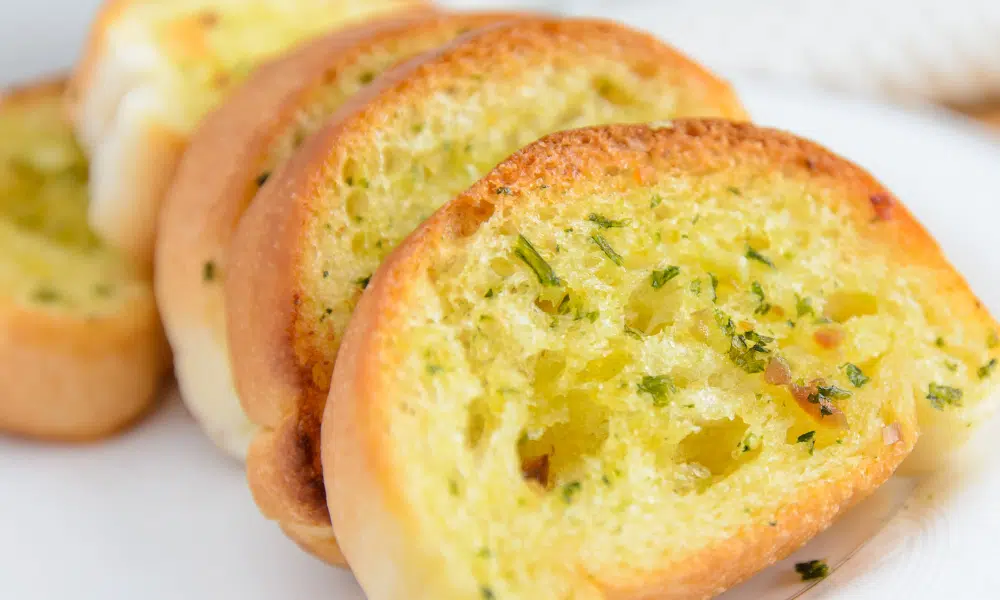
4) Ciabatta Garlic Bread
Nowadays, garlic bread brought in the grocery store is most likely made using a French baguette type of bread. But traditionally, ciabatta is used, which makes sense considering that both garlic bread and ciabatta are of Italian origin.
So, what better way to use your leftover ciabatta than to make the perfect garlic bread to serve alongside a creamy pasta dish?
Like with the bread pudding idea listed above, you do not have to use your ciabatta bread when it is at its freshest to make delicious garlic bread. Garlic bread is supposed to have a crunch to it but with a softer inside.
The oil used to make the garlic bread will soften up the staler inside of your leftover ciabatta, while the stale crust of the bread will crisp up perfectly in the oven.
When making ciabatta garlic bread, be bold and go over the top with the amount of garlic that you use. Apart from its very mild sweetness, ciabatta isn’t exactly the most flavourful bread. It will benefit from generous amounts of garlic and seasoning.
Leftover Ciabatta FAQs
Do you still have questions about what to do with leftover ciabatta? Then these FAQs might help you out:
Ciabatta will keep at room temperature or in the fridge for around 1 week. However, once sliced, it will begin to dry out within a few days.
Yes, you can. In fact, slightly stale ciabatta works really well as breadcrumbs as more of the texture is retained. Just give them a whizz in a food processor with some dried oregano, garlic powder and salt.

Acacia may be a freelance writer by day, but they are a food fanatic by night. They are always trying out new recipes or finding different ways to elevate classical dishes. But their biggest culinary aim is to educate others on the basics of the kitchen so that they too can enjoy delicious food.