
Some desserts just scream luxury, from an ombre rosette cake to an indulgent chocolate tart. Creme brulee is certainly considered a luxury dessert. It requires particular baking skills that present challenges not everyone has the patience to overcome.
When you do achieve a perfect creme brulee, it is almost too good to eat… almost.
The thing with creme brulee is that they are deceptively filling for a dessert that is essentially a baked custard with a fancy sugar topping. You don’t have to let your hard work go to waste. Instead, reheat it the next day!
To reheat creme brulee, heat your oven to 150c, then pop the creme brulee on a baking sheet and into the oven for 5 minutes. Check the custard is hot using a skewer. If it isn’t, reheat for a further 3 minutes.
How to Reheat Creme Brulee
Typically, creme brulee is a dessert served cold, with the only heat being residual heat from the layer of burnt sugar topping off the brulee.
However, like custard, many people prefer their creme brulee hot. There are several ways you can reheat your creme brulee without ruining the delicate taste and texture:
How to Reheat Creme Brulee in the Oven
The most fool-proof way to reheat your creme brulee is to reheat it the same way you could have cooked the dessert initially – in the oven! It is far simpler to reheat your creme brulee in the oven than it is to cook it fresh.
Just follow these easy steps:
- Heat The Oven
Before you reheat your brulee, turn your oven onto its fan setting and preheat to 150c degrees. - Ready The Brulee
To keep the creme brulee level while you reheat it, place the creme brulee ramekin or dish on a stable baking tray. - Reheat
Once the oven is hot enough, place the baking tray in the centre of your oven. Set a timer for 5 minutes and leave the brulee to reheat. - Check
After 5 minutes, open up the oven and gently stick a knife or skewer into the centre of the creme brulee to see if the custard has reheated all the way through. - Reheat Again
If it has, remove the brulee and enjoy. But if the centre of the creme brulee is still cold, heat for a further 5 minutes, checking every minute or so to stop the creme brulee from over cooking. - Serve Immediately
As soon as the creme brulee is hot enough, remove it from the oven and enjoy it straight away.
How to Reheat Creme Brulee in an Air Fryer
Nearly everyone and their mother has an air fryer nowadays, and who can blame them? They are cheaper to run than an oven and can produce even better results in some cases.
The good news is that you can reheat your creme brulee using an air fryer with minimal effort:
- Preheat The Air Fryer
For the best results, preheat your air fryer to roughly 180 degrees before you reheat your creme brulee. - Arrange The Brulee
Keep your creme brulee in its original ramekin or dish and place it directly into the centre of your air fryer basket. Or, if you are reheating 2 creme brulees, evenly space them apart in the air fryer. - Reheat
Close the air fryer and reheat the creme brulee for 5 minutes – 7 minutes, depending on how much creme brulee you are reheating. - Check And Serve
Open up the air fryer and check if the centre of the creme brulee has been reheated thoroughly using a knife or skewer. Then serve the creme brulee as soon as it is hot enough.
How to Reheat Creme Brulee Successfully
Like when making creme brulee from fresh, there are a few issues that can arise when reheating your leftover creme brulees. So here are a few tips to keep in mind to ensure your creme brulee tastes just as luxurious when reheated:
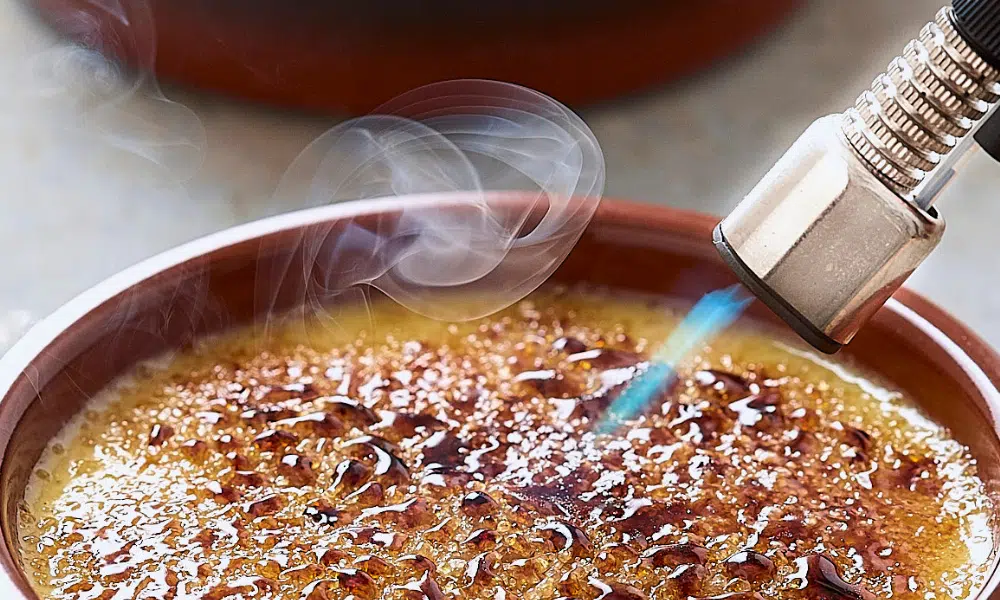
- Add a Fresh Layer of Sugar – The only part of leftover creme brulee that you may not be able to reheat appropriately is the sugar layer on top. As the sugar will already be melted when you reheat your leftovers, it will not necessarily reheat that well. For the whole creme brulee experience the next day, sprinkle a fresh layer of sugar on top of the brulee and melt it using a blow torch or your grill.
- Reheat in the Original Dish – There is no need to dirty another bowl or ramekin to reheat your creme brulee. Store it in the same dish that you originally cooked it in, and use the same dish to reheat the dessert. This will ensure that no flavour is lost in the reheating process.
- Spread Out Evenly – When reheating more than one creme brulee you should ensure that the ramekins are evenly spaced apart in your oven or microwave. This will ensure that the desserts reheat more evenly.
- Avoid Overcooking – The last thing you want to do is reheat your creme brulee for too long, as you will only overcook the custard and turn it into a burnt, rubbery mess. Follow the times detailed above carefully and stop cooking the brulee as soon as the custard is hot to the touch.
- Don’t Bother with the Microwave – Reheating creme brulee in a microwave requires a lot of extra steps, which is why the above methods are much easier.
Is It Safe to Reheat Creme Brulee?
As creme brulee is simply a fancy baked custard, it is very safe to reheat.
To stop the dairy in the brulee from turning rancid, you will need to store the dessert in your fridge and only for roughly 3 days. After 3 days, you’ll need to throw it out as there is a risk it will give you a bad stomach.
Reheating Creme Brulee FAQs
Do you have further queries about reheating creme brulee? Then check these out:
Of course! Creme brulee is just a custard that has been set. Providing that the custard is cooked through and then left to cool, you can enjoy creme brulee cold.
Yes, it can be delicious. In fact, you might find the vanilla flavour of the custard has intensified a little the next day.

Acacia may be a freelance writer by day, but they are a food fanatic by night. They are always trying out new recipes or finding different ways to elevate classical dishes. But their biggest culinary aim is to educate others on the basics of the kitchen so that they too can enjoy delicious food.