
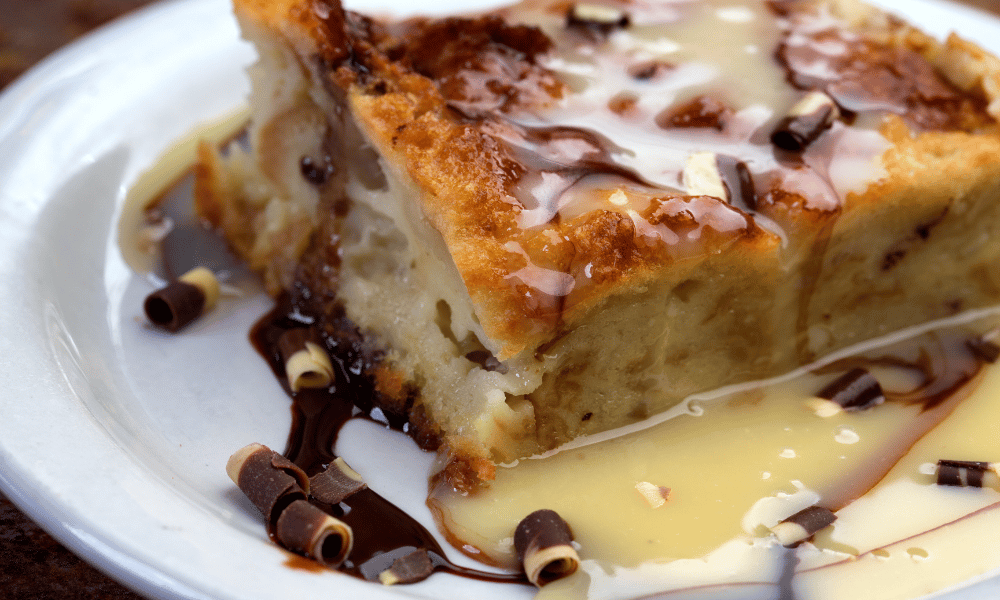
Bread and butter pudding has long been a hugely family-friendly dessert. It’s highly indulgent and super sweet, making it the perfect way to round off a big family celebration.
Typically, homemade bread and butter pudding is prepared in large portions, meaning you’re likely to have some pudding left over at the end of your meal. So, what’s the best way to use these delicious leftovers? Is it safe to reheat bread and butter pudding?
To reheat bread and butter pudding, if you have a whole serving, it’s best to pop it in the oven. However, if you have an individual portion that you want to reheat, you can do so in the microwave.
How to Reheat Bread and Butter Pudding
Bread and butter pudding is one of those desserts that can be easily reheated, so you don’t need to worry about eating it all in one go.
What’s more, you can refrigerate or freeze your leftovers, extending their serving life even further.
Reheating bread and butter pudding in the oven is the best way to go about it, but using the microwave is also a decent approach if you’re a little short of time.
Whichever method you choose, we explain the steps you need to follow in detail below so that you can enjoy this delicious dessert time and time again:
How to Reheat Bread and Butter Pudding in the Oven
Reheating bread and butter pudding in the oven ensures it is tasty and moist when you serve it. Here’s what you need to do:
- Remove it From the Fridge or Freezer
If you’ve been storing your bread and butter pudding in the fridge, remove it and allow it to sit at room temperature for around 30 minutes. If your bread and butter pudding is frozen, you must thaw it before you reheat it. - Preheat Oven
Switch on your oven and preheat to 300F or 150C. - Prepare Bread and Butter Pudding
Add your bread and butter pudding to a suitably sized ovenproof dish. Then, drizzle some additional milk or whisked eggs on the surface of the dessert. - Reheat
Cover your bread and butter pudding with tin foil and place it in the centre of the oven. Leave it in the oven for 20-25 minutes. - Serve and Enjoy
Once your bread and butter pudding is up to temperature, serve it with ice cream, custard or pouring cream and tuck in!
How to Reheat Bread and Butter Pudding in the Microwave
If you’re only reheating a small portion of bread and butter pudding, you can do so in the microwave by following the steps below:
- Prepare Bread and Butter Pudding
Add your bread and butter pudding to a microwave-safe dish and add a little cream or milk. Then, cover it with a paper towel and stand it in the microwave. - Reheat
On medium power, reheat the bread and butter pudding for around 2-3 minutes. Halfway through, check the pudding for doneness and return to the microwave if required. - Serve and Enjoy
Once your bread and butter pudding is piping hot, you’re ready to serve bread and butter pudding with various toppings and accompaniments.
How to Reheat Bread and Butter Pudding Successfully
If you want to have near-guaranteed success when it comes to reheating bread and butter pudding, then stick to these 3 essential tips:
- Only Reheat Once – Bread and butter pudding is a dessert that you should only reheat once. The reason for this is that the bread is likely to spoil or go soggy if you reheat it several times. After baking it initially, consider splitting your leftover bread and butter pudding into portions, so you can quickly reheat however much you need at any given time.
- Defrost First – If you have frozen your bread and butter pudding leftovers, you should defrost them first. Remove the pudding from the freezer and allow it to thaw overnight. Reheating it from frozen is possible but often results in a soggy pudding – yuck!
- Add Some Extra Milk – The most important thing to consider when reheating bread and butter pudding is the moisture levels. Whether you reheat your dessert in the oven or microwave, you should add some extra milk to prevent it from drying out during the reheating process.
Is It Safe to Reheat Bread and Butter Pudding?
Yes, reheating bread and butter pudding is perfectly safe. But because bread and butter pudding contains dairy, you need to be mindful of how you store it.
When you realise that you’re going to have leftovers, wrap your bread and butter pudding well and get it in the fridge or freezer as quickly as you can. The longer you leave your bread and butter pudding at room temperature, the more likely it is to spoil.
Reheating Bread and Butter Pudding FAQs
Do you still have questions about reheating bread and butter pudding? Then these FAQs might help:
Yes, you can reheat bread and butter pudding made with panettone. It will reheat best in the oven using the dish it was cooked in. It will take around 20 minutes at 150C.
Brioche bread and butter pudding can be reheated in the oven for around 20 to 25 minutes. You’ll want to add some whisked egg or milk to the tray first to avoid drying it out.
Yes, it does! If you add some form of moisture and avoid it drying out then bread and butter pudding that has been reheated will remain delicious.

Ross is a freelance writer with a passion for delicious food and drinks, having worked in the hospitality industry in the past. He began working with Let’s Foodie when it first launched to provide information on how to reheat, freeze and microwave different foods.