

If you’ve treated yourself to some seasonal duck eggs for something a little different, you might be wondering about the best way to prepare them. Can you, for instance, poach duck eggs?

Just like a chicken egg, duck eggs can be poached and the method remains roughly the same. Ultimately, you bring water to a boil, crack the eggs in and let them cook in the simmering water.
What You’ll Need to Poach Duck Eggs
Below are the 4 things you’re going to need to poach duck eggs successfully.
- 2 Fresh Duck Eggs: This comes down to how hungry you are. 1 poached egg is often enough if you’re serving it on toast.
- 1l Water: You’ll want enough water to give the eggs room to move around. If you don’t use enough water, they won’t poach properly.
- 2 tbsp White Wine Vinegar: Vinegar will help the egg whites to coagulate quickly. This will give you neatly poached duck eggs without any stringy white.
- Pinch of Salt and Black Pepper: You don’t need anything fancy to finish off poached eggs, just a little salt and pepper.
How to Poach Duck Eggs
While you might notice a slightly more intense flavour to duck eggs when compared to chicken eggs, the reality is that they’re not overly different. This fact means that you can poach duck eggs very similarly to chicken eggs by following these steps:
- Boil Water
Add the water, vinegar and salt to a large saucepan and bring the water up to a simmer. - Remove the Water
Remove the pan from the heat when you notice the water has progressed from a simmer to a boil. - Whisk
Whisk the water to create a whirlpool, and crack your eggs into the salted water. This helps them to stay together in the water. - Poach on Medium Heat
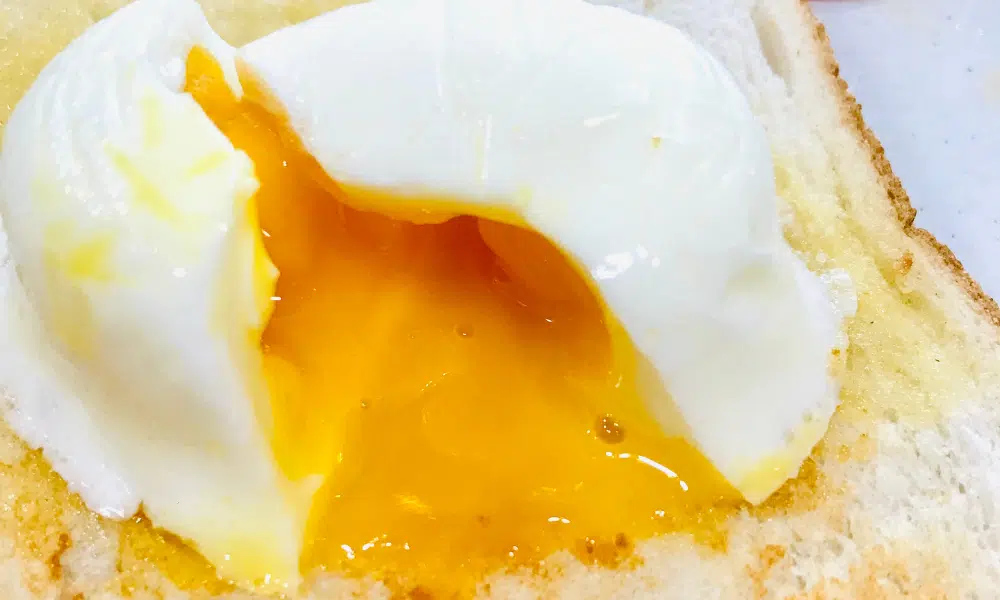
Place your pan back over a medium heat to maintain the simmer (the way should not be boiling), and allow your eggs to poach for around 3 to 4 minutes, depending on how firm you like your eggs. This will give you a runny yolk. Poach for 6 minutes for firm yolks. - Remove Eggs
Using a slotted spoon, remove your eggs and drain any excess water. You may want to carefully dab them with a paper towel. - Serve and Enjoy
Serve your poached duck eggs on freshly toasted bread, and season with salt and pepper to enjoy.
There are mixed messages about whether soft-centred duck eggs are safe to eat. They are, generally, as safe to chicken eggs to eat with a soft, runny centre.
Substitutes and Tweaks
Add herbs, such as rosemary or thyme to the water to subtly infuse the poached eggs with a slight herbal flavour.
Give your poached eggs a subtle umami flavour by adding a few drops of soy sauce to the poaching liquid.
Tips for Poaching Duck Eggs
Although the end result is pretty simple looking, poaching duck eggs (or eggs in general) seems to be something that people get wrong time and time again. Here are my top tips for helping ensure things go the right way:
- Temperature Trick: Before cracking the duck egg, let it come to room temperature. This helps it cook more evenly and reduces the chance of the yolk breaking.
- Freshness Test: Fresh eggs poach better because their whites are firmer. To test freshness, place the egg in a bowl of water. If it sinks and lays flat, it’s fresh. If it stands upright or floats, it’s older.
- Straining Secret: Crack the duck egg into a fine-mesh sieve over a bowl before poaching. This drains off the super runny part of the white, which can create those unwanted wispy bits.
- Saran Wrap Satchel: For ultra-neat poached eggs, place the egg in a cling film pouch, twist to secure, and poach the pouch. This isn’t traditional but can make for a beautifully shaped poached egg.
- The Swirl Myth: While many swear by the swirling vortex method and it’s the method I tend to opt for, it’s not always necessary, especially with super fresh eggs. Sometimes, a gentle drop into simmering water is all you need for a perfect poach.
They are richer and larger than chicken eggs, making them excellent for baking. For a savory option, frying or poaching them highlights their creamy yolk.
Poached Duck Eggs
Course: Lunch, BreakfastCuisine: FrenchDifficulty: Medium2
servings5
minutes5
minutes10
minutesPerfectly poached duck eggs with a soft, gooey yolk.
Ingredients
2 Duck Eggs
1 l Water
2 tbsp White Wine Vinegar
Salt
Black Pepper
Directions
- Bring the water up to a boil with the vingar and a pinch of salt. Once boiling, remove it from the heat.
- Stir the water to create a whirlpool, and crack your eggs into the water. This helps them to stay together in the water.
- Place your pan back over a medium heat to bring it to a gentle simmer (not a boil), and allow your eggs to poach for around 4 minutes, depending on how firm you like your eggs.
- Using a slotted spoon, remove your eggs and drain any excess water on paper towels. Be gentle, you do not want to break the eggs.
- Serve your poached duck eggs on freshly toasted bread, and season with salt and pepper to enjoy.

Ross is a freelance writer with a passion for delicious food and drinks, having worked in the hospitality industry in the past. He began working with Let’s Foodie when it first launched to provide information on how to reheat, freeze and microwave different foods.