
The thought of boiled chicken isn’t particularly appetising. Of all the ways to cook chicken, boiling it has got to be one of the worst, right? Well, it comes down to how you use it. There are actually some benefits. Here’s how to boil chicken (and how to use it).
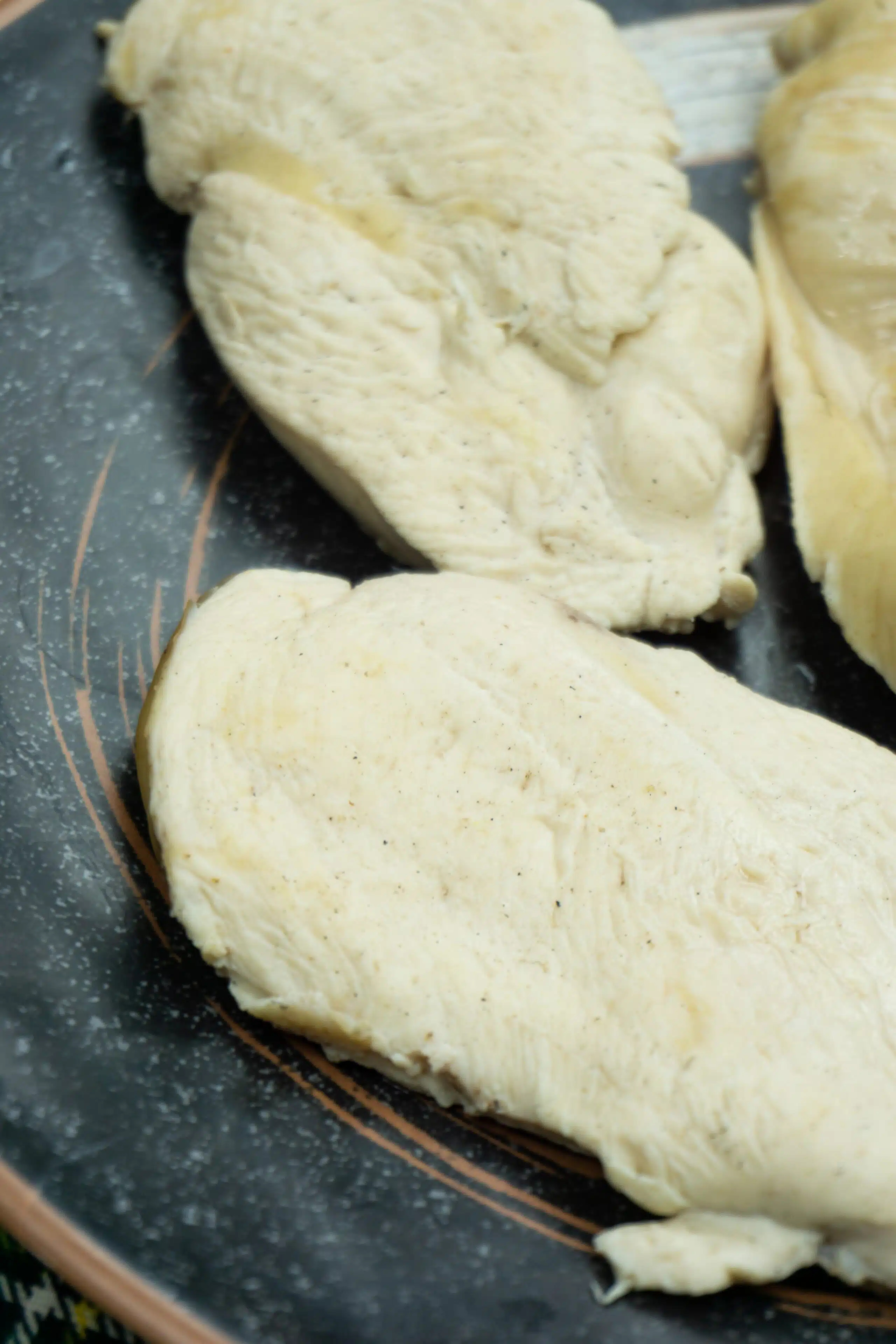
Ultimately, when boiling chicken you’ll actually end up poaching it. If you were to boil it for the entire cooking time, you’d end up with tough, chewy and rubbery chicken – especially when doing so with breasts.
Instead, you want to pop the chicken into boiling water then turn it down to a simmer to poach and cook through. You can then slice it for sandwiches, shred it for pies and stews, or eat it whole.
What You’ll Need to Boil Chicken
Although you could just pop a chicken breast into boiling water and wait for it to cook, it won’t be particularly exciting. Instead, there are a few aromatics you’ll want to include. These quantities are for serving 4 people:
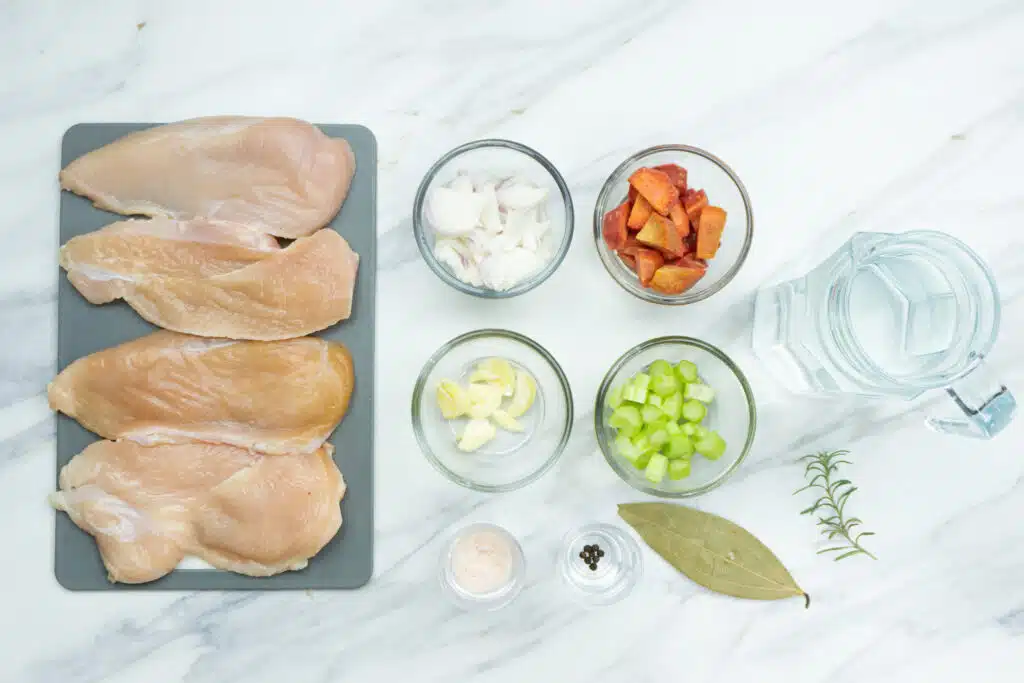
- 4 Boneless Skinless Chicken Breasts: If you’re serving 4 people with whole chicken breasts, then you’ll need 1 each. If you shred it, however, 4 breasts will serve up to 8 people.
- 2l Water: Approximately 2 litres of water will be enough to cook this chicken. The critical thing to remember is that the chicken should be fully submerged.
- 1 tbsp Salt: The water will make its way into the flesh of the chicken. If you season the water with a bit of salt, then you’ll season the chicken throughout.
- 1 Bay Leaf: I love bay leaves! For something so small, they impart so much flavour. You’ll only need 1 leaf here.
- 1 Onion, 1 Carrot, 1 Celery Stalk: Onion, carrot and celery are great flavour aromatics for the resultant stock. You just need to rough chop these.
- 3 Garlic Cloves: Garlic is another essential aromatic to include in the water. Just smash 3 garlic cloves with the palm of your hand.
- 8 Black Peppercorns: Whole peppercorns will infuse the stock with a subtle pepperiness, which will in turn flavour the chicken.
- 1 Sprig of Rosemary: Like the pepper, rosemary will slowly infuse flavour into the stock and then into your chicken.
How to Boil Chicken Breasts
For this boiled chicken recipe, you’ll need a large pot, big enough to fit all the ingredients, with space for the water to bubble up and, ideally, a meat thermometer.
- Prepare the Water
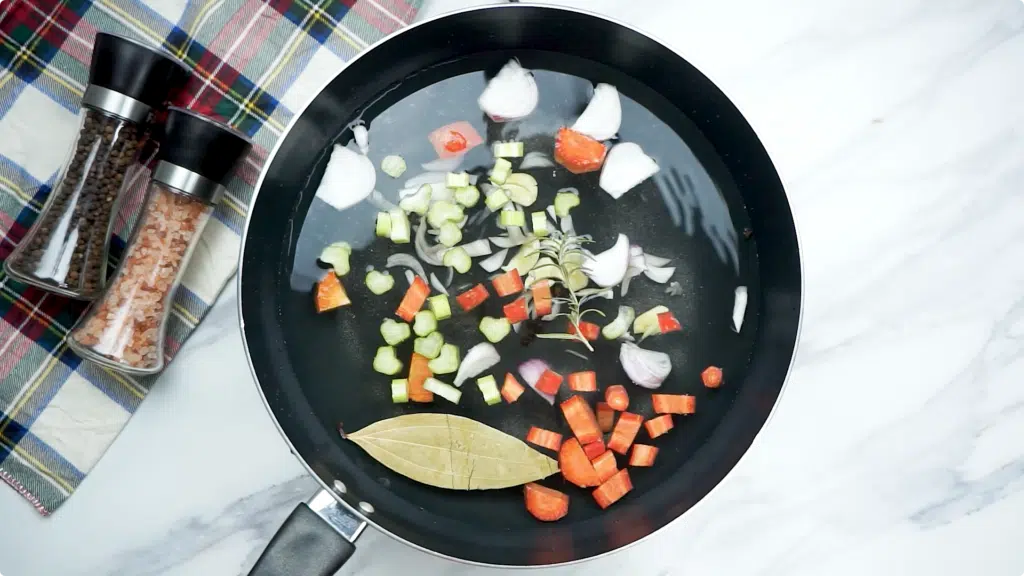
Add the water, salt, bay leaf, onion, smashed garlic, peppercorns, carrot, celery and rosemary. Bring the mixture to a boil over medium-high heat.
- Adding Chicken
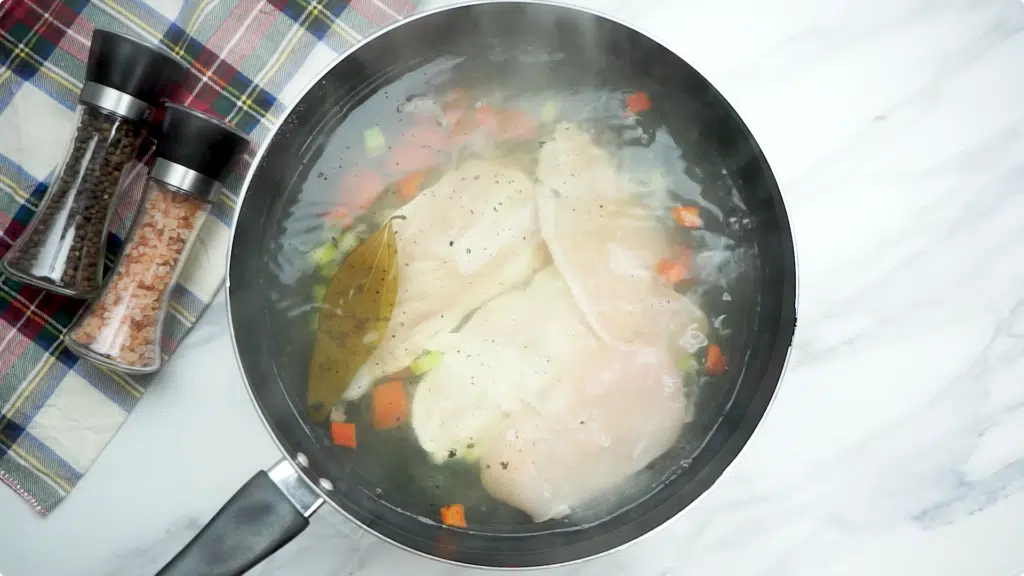
Slowly place the chicken into the water, ensuring they are fully submerged. You may need to rearrange them slightly to get them under the way.
- Boiling
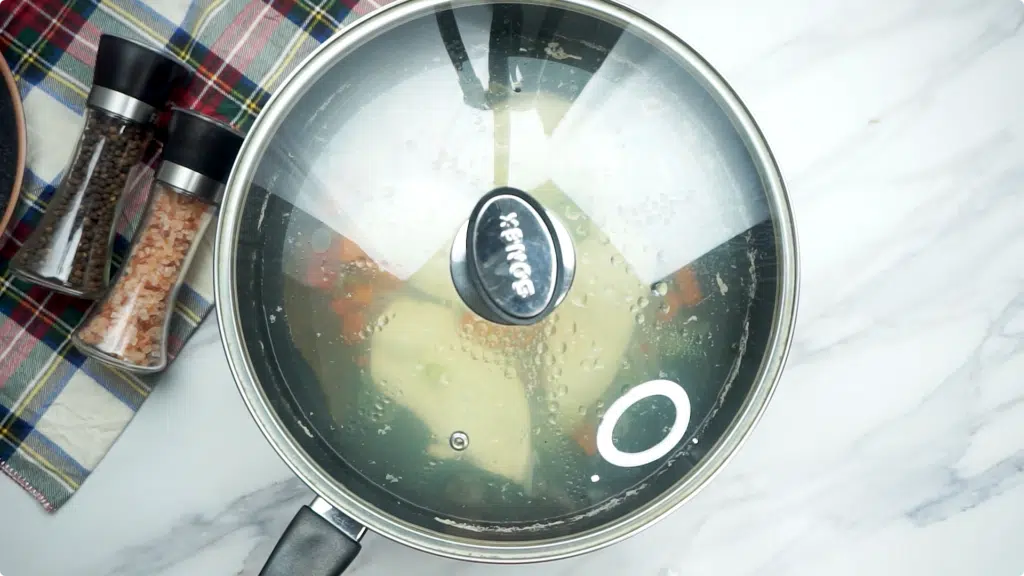
Reduce the heat to medium-low, allowing the water to simmer gently. Partially cover the pot with a lid. Let the chicken simmer for about 20-25 minutes. The chicken is done when its internal temperature reaches 75°C – when a meat probe is handy.
- Serving
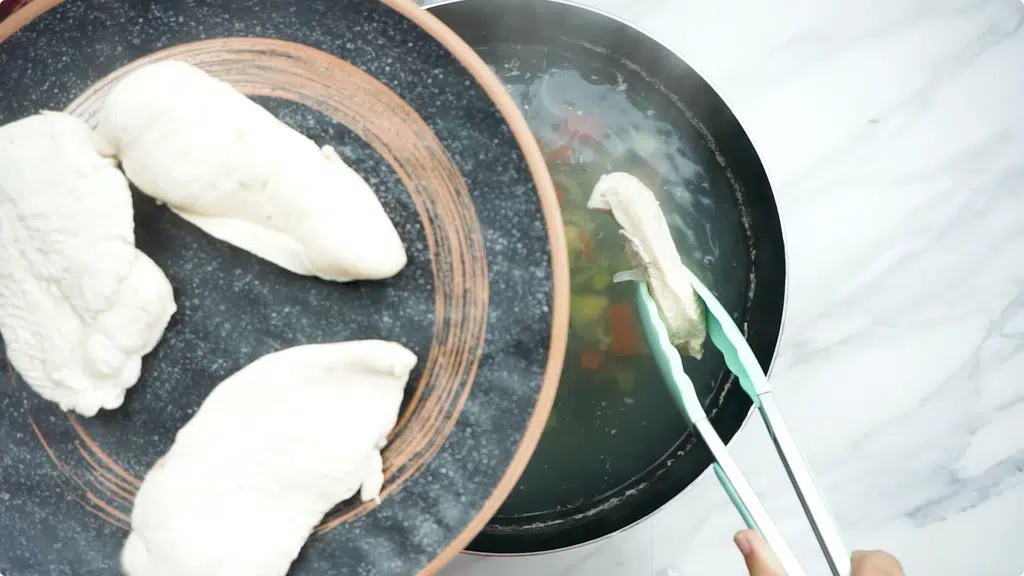
Once cooked, carefully remove the chicken breasts from the pot and place them on a plate. You can slice, dice, or shred the chicken or serve them whole.
- Bonus: Save the Broth
Don’t discard the cooking liquid! Strain it to remove solids, and you have a tasty light chicken broth that can be used in the base of soups and stews.
This is how to boil chicken breasts. The same method can be used for boiling other cuts of chicken. You will, of course, need to adjust the cooking time accordingly.
| Chicken Cut | Time |
|---|---|
| Boneless Chicken Breasts | 20-25 minutes |
| Boneless Chicken Thighs | 15-20 minutes |
| Whole Chicken | 60-90 minutes |
| Chicken Thighs | 25-30 minutes |
| Chicken Legs | 30-35 minutes |
| Chicken Drumsticks | 25-30 minutes |
| Chicken Wings | 15-20 minutes |
According to the UK Food Standards Agency, you should cook chicken until the internal temperature reaches 75°C. Use the timings above as a guideline, but always check the temperature with a meat probe.
Substitutes and Tweaks
Instead of water, you can use any boiling liquid, including coconut milk, chicken stock or broth.
Swap out the bay leaf for a pinch of saffron strands to add subtle saffron flavour to the chicken but also some colour.
Make it Asian-inspired by swapping the herbs with sliced ginger, star anise and a splash of soy sauce.
Make it Mediterranean-inspired by adding lemon slices, thyme sprigs and a drizzle of olive oil.
Boiled chicken has a fairly mild taste, even when you boil it with plenty of aromatics and seasoning. But this is part of the reason why it’s so versatile and can be stirred into so many different dishes.
Tips for Boiling Chicken Template
The method above is pretty foolproof, but I do have some more tips and tricks you may want to follow to guarantee you end up with delicious, moist chicken.
- Skim the Foam: As chicken boils, impurities can rise to the surface and create foam. Skim this off with a spoon for a clearer broth and better flavour.
- Let It Sit: Once you’ve finished boiling the chicken, turn the heat off but let the chicken sit in the pot for 10 to 15 minutes. The chicken will continue to take on all the flavour from the broth.
- Use Bone-In Pieces: While boneless cuts are quicker to cook, bone-in chicken pieces often yield more flavour, especially if you’re aiming to make a broth or stock.
- Stick to Woody Herbs: Soft, fresh herbs, such as basil or parsley, will wilt and turn to mush by the time the chicken has cooked. Use fresh herbs to garnish the chicken but woody herbs to infuse the liquid.
- Save the Broth: The poaching liquid left after boiling chicken is a basic chicken broth. Strain it, let it cool, and store it in the fridge or freezer in an airtight container for future use in soups and stews.
- Even Pieces: If using chicken pieces, ensure they’re roughly the same size. This ensures even cooking. If you have a mix of large and small pieces, consider starting the larger ones first and adding the smaller ones later.
- Versatility: Boiled chicken is a blank canvas. You can cover it in sauce. Add it to salads. Make chicken tacos. Stir it into pasta. Use it as a sandwich filling.
Yes, boiling chicken is safe when done properly. Ensure the chicken is fully cooked by checking it’s no longer pink inside and reaches an internal temperature of 75°C.
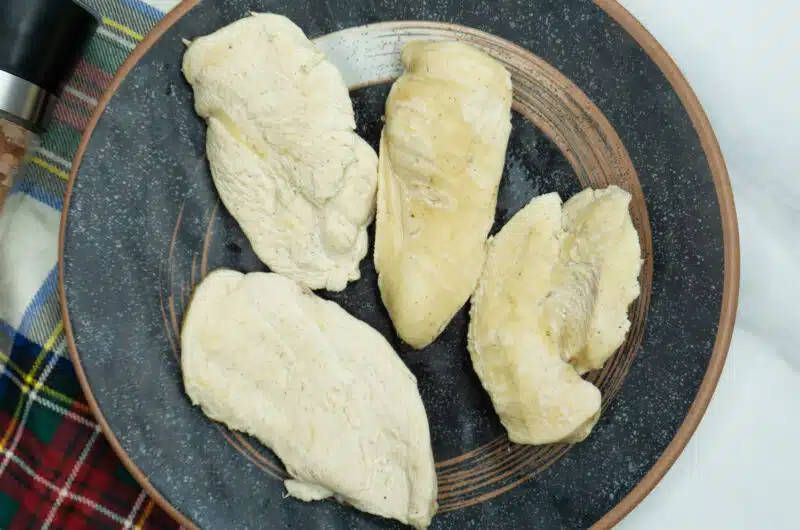
Herb-Infused Boiled Chicken
Course: MainCuisine: InternationalDifficulty: Easy4
servings10
minutes25
minutes35
minutesChicken breasts cooked in a herb-infused stock until tender and moist.
Ingredients
4 Boneless Chicken Breasts
2 l Water
1 tbsp Salt
1 Bay Leaf
1 Onion, Sliced
3 Garlic Cloves, Smashed
8 Black Peppercorns
1 Carrot, Roughly Chopped
1 Celery Stalk, Roughly Chopped
1 Sprig Fresh Rosemary
Directions
- In a large pot, add the water, salt, bay leaf, sliced onion, smashed garlic, peppercorns, chopped carrots, chopped celery, and rosemary. Bring the mixture to a boil over medium-high heat.
- Once the water is boiling, gently lower the chicken breasts into the pot, ensuring they are fully submerged.
- Reduce the heat to medium-low, ensuring the water maintains a gentle simmer. Partially cover the pot with a lid. Let the chicken simmer for about 20-25 minutes. The chicken is done when it’s no longer pink in the middle and its internal temperature reaches 75°C (165°F).
- Once cooked, carefully remove the chicken breasts from the pot and place them on a plate. You can slice, dice, or shred the chicken to use in various dishes or serve them whole with your favourite side dishes.
Recipe Video

Ross is a freelance writer with a passion for delicious food and drinks, having worked in the hospitality industry in the past. He began working with Let’s Foodie when it first launched to provide information on how to reheat, freeze and microwave different foods.