Key Takeaways
- Washing salmon doesn't remove bacteria — it just splashes contaminated water around your kitchen.
- Cooking salmon to a safe internal temperature is what actually kills harmful bacteria.
- USDA guidance specifically advises against rinsing raw fish, meat, seafood, and poultry.
- That fishy smell isn't bacteria — it dissipates with air exposure or a good marinade.
- Pat salmon dry with paper towels instead of rinsing it; that's the step that actually improves the cook.
The Short Answer: Skip the Rinse
I get why the instinct is there. Salmon comes out of its packaging looking a little slimy, smelling a little fishy, and the sink is right there.
The short answer is no — you should not wash salmon before cooking it.
Rinsing doesn’t remove bacteria in any meaningful way, and it actually creates a bigger mess to worry about than the one you started with.
Salmon is one of the easiest proteins to get right once you stop overthinking the prep, and it’s a staple on plenty of healthy eating plans, including the Mediterranean diet foods list.
In my kitchen, the fillet goes straight from the package to a paper towel, never near the faucet.
Why Washing Salmon Actually Increases Risk
Here’s the part that surprised me the first time I read into it seriously: washing raw fish doesn’t just fail to help, it actively spreads risk around your kitchen.
When you run salmon under the tap, water hits the fillet and bounces back off it in tiny droplets you can’t really see.
Those droplets land on your faucet handle, the sink basin, your backsplash, the counter, and sometimes your clothing.
Any bacteria that was on the surface of the fish is now spread across a much wider area, and it’s an area you’re not going to sanitize before you touch it again.
That’s the mechanism behind why the USDA is blunt about this: cross-contamination from splashing is a real, documented food safety hazard, not just a theoretical one.
I’ve found the safer habit is to treat the packaging itself as the contaminated zone — open it over the sink, transfer the fish directly to a board, and wash your hands immediately after.

What Actually Kills Bacteria in Salmon
Cooking is the step that does the real work here, not water.
Heat denatures bacterial proteins and kills pathogens outright, which is why the temperature you pull salmon off the heat at matters far more than whether you rinsed it beforehand.
The USDA’s safe minimum internal temperature for fish is 145°F, measured at the thickest part of the fillet with a food thermometer.
That said, plenty of experienced cooks — myself included — pull salmon a bit earlier, around 125°F to 130°F, for a center that’s still silky and just barely opaque, then let it rest for a couple minutes as it coasts up a few more degrees.
That’s a texture preference, not a food-safety recommendation, so if you’re serving someone who’s pregnant, elderly, very young, or immunocompromised, cook straight to the USDA’s 145°F mark instead.
Carryover cooking is real — a fillet pulled at 130°F can climb another 5 to 8 degrees while it rests, so account for that or you’ll end up with a drier piece of fish than you wanted.

| Internal Temp | Texture | Notes |
|---|---|---|
| 120°F–125°F | Very soft, translucent center | Below USDA safe minimum; sushi-grade sourcing matters here |
| 125°F–130°F | Silky, barely opaque | Popular chef preference; not the food-safety recommendation |
| 145°F | Firm, fully opaque, flakes easily | USDA safe minimum internal temperature for fish |
| 150°F+ | Dry, chalky | Common overcooking result if carryover isn't accounted for |
Why That Fishy Smell Isn't Bacteria
A lot of the urge to rinse salmon comes down to smell, not actual food safety concern.
Fresh salmon shouldn’t smell overpoweringly fishy — a strong ammonia-like odor is more often a sign the fish is past its prime, not something a quick rinse will fix.
If the smell is mild and just typical fresh-fish smell, letting the fillet sit uncovered on a plate for 10 to 15 minutes lets a lot of that dissipate naturally.
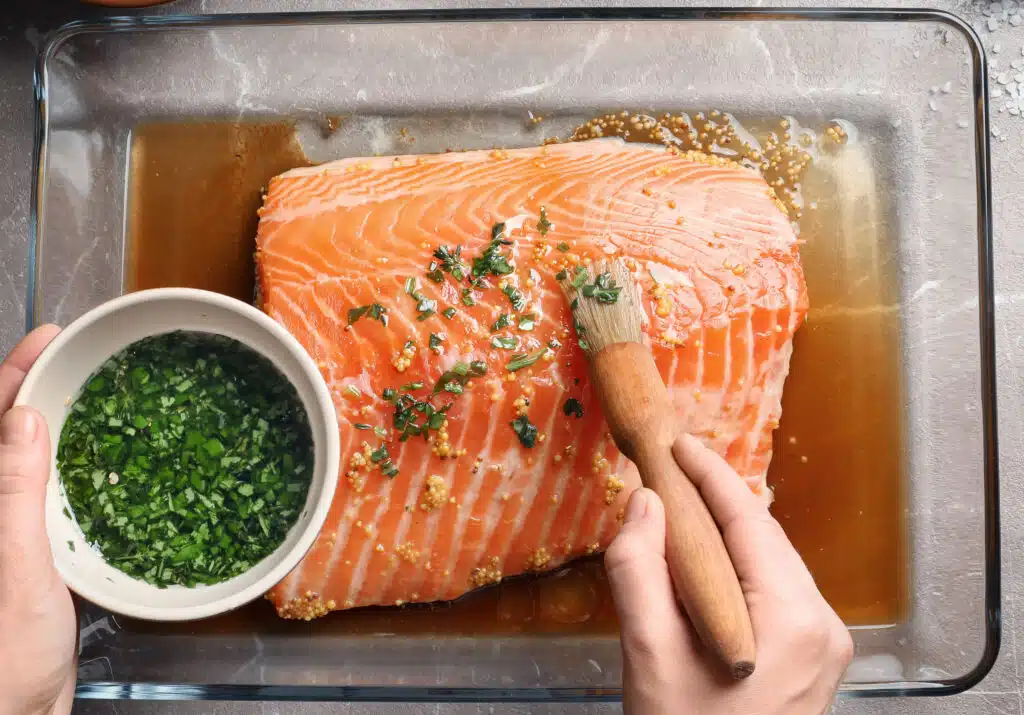
A splash of lemon juice or a quick marinade does the same job while adding flavor instead of just water.
I usually reach for something simple — soy sauce, sesame oil, grated ginger, and a little garlic — and honestly, the smell issue solves itself. If you want more options, these marinades for salmon are worth keeping on hand.
Once it’s cooked, a good sauce does even more to round things out; I keep a running list of sauces for salmon for exactly this reason.
What Food Safety Experts Actually Say
This isn’t just a personal-preference thing — it’s backed by federal guidance, not folk wisdom.
The USDA states plainly: ‘Do not rinse raw fish, seafood, meat, and poultry. Bacteria in these raw juices can splash and spread to other foods and surfaces.
Cooking foods thoroughly will kill harmful bacteria.’
The USDA’s own washing-food guidance backs this up in more detail, and it applies to every raw protein, not just salmon.
The FDA’s guidance on selecting and serving fresh and frozen seafood safely similarly focuses on proper storage and cooking temperature, not rinsing, as the safety control.
The CDC’s Four Steps to Food Safety framework — clean, separate, cook, chill — is worth internalizing here too: the ‘clean’ step refers to your hands, tools, and surfaces, not the raw protein itself.
So this isn’t a gray area. No major US food safety authority recommends rinsing raw fish, and the USDA specifically advises against it.
How to Handle Salmon Safely Without Washing It
Skipping the rinse doesn’t mean skipping good hygiene — it just redirects your effort to where it actually matters.
Pat the fillet dry with paper towels before it hits the pan; this is genuinely the step people skip that would improve their cooking.
A dry surface sears instead of steams, which is the difference between a golden crust and pale, flabby skin.
Use a dedicated cutting board for raw fish, and wash it — along with your knife and hands — with hot soapy water immediately after.
Never let raw salmon or its packaging juices touch produce, cooked food, or anything that won’t be cooked again.
If you’re cooking salmon alongside other proteins for a bigger meal, the same separation logic applies — it’s the same principle behind guidance on whether you can cook chicken and beef together safely.
And if you’re batch-cooking or reheating leftovers rather than starting from raw, the rinsing question doesn’t even apply — for that, see our guide on how to microwave salmon without drying it out.
Common Mistakes People Make With Raw Salmon
Beyond the rinsing habit itself, a few related mistakes tend to travel together, so it’s worth flagging them while we’re on the subject.
Running the fillet under hot water instead of cold is actually worse than a cold rinse — warm water pushes the fish into the temperature danger zone faster and can start to slightly cook the surface, changing the texture before it even hits the pan.
Another one I see constantly: using the same cutting board for salmon and then, without washing it, slicing lemon or herbs for the same dish. That garnish is now cross-contaminated, even though it looks perfectly clean.
Refreezing salmon that’s already been thawed is a separate risk worth knowing about — once it’s thawed in the fridge, cook it within a day or two rather than putting it back in the freezer raw.
And over-marinating is a quieter mistake — acidic marinades left on salmon for more than 30 to 45 minutes start to break down the surface texture, giving you a mushy exterior instead of a firm one. Fifteen to thirty minutes is usually the sweet spot for a fillet.
Last one: don’t let raw salmon sit out at room temperature while you finish prepping everything else. Keep it refrigerated until the pan or oven is actually ready to go.
How Long Salmon Keeps, and Signs It's Gone Bad
Since we’re already talking about handling raw salmon safely, it’s worth covering how long it actually lasts, since that matters more for safety than washing ever did.
Fresh raw salmon keeps in the refrigerator for 1 to 2 days after purchase, stored in its original packaging or wrapped tightly and set on a plate to catch any drips.
Cooked salmon holds up a bit longer — 3 to 4 days refrigerated in an airtight container.
In the freezer, raw salmon stays good for 3 to 6 months for best quality, though it remains technically safe well beyond that as long as it’s stayed frozen solid the whole time.
As for telling when it’s turned: trust your nose and eyes over the calendar date. Fresh salmon should look bright, slightly translucent, and moist without being slimy to the touch.
It smells mild, like the ocean, not sharp or sour.
If the flesh looks dull or grayish, feels sticky or tacky rather than just moist, or the smell is sharp, sour, or ammonia-like, don’t try to rescue it by washing it — that smell is a sign of bacterial breakdown that a rinse won’t reverse. Toss it instead.
Frozen Salmon, Marinating, and Other Common Scenarios
A few related situations trip people up almost as often as the main washing question does.
Frozen salmon doesn’t need washing either — just pick off any large ice crystals from the packaging and thaw it slowly in the refrigerator overnight rather than under running water.
If you’re marinating, skip the rinse and go straight from packaging into the marinade; the acid and salt in most marinades do more for flavor and texture than water ever could.
Comparing notes with other seafood products is useful too — pre-breaded items work differently, which is why it’s worth knowing whether fish fingers are pre cooked before you plan cooking times around them.
Once your salmon is cooked, it’s endlessly versatile — I love turning leftover fillets into a quick salmon fried rice, or pairing a fresh-cooked piece with one of these rice sides for salmon for a fast weeknight dinner.

Frequently Asked Questions
Should you wash frozen salmon before cooking?
No. Remove any large ice crystals by hand, then thaw the fillet slowly in the refrigerator rather than rinsing it under water.
Can you soak salmon in water to clean it?
Soaking doesn't improve food safety and won't meaningfully reduce bacteria. It may mute odor slightly, but a marinade or proper cooking does more for both safety and flavor.
Do you wash salmon before marinating it?
No. Take it straight from the packaging into the marinade, then refrigerate it until you're ready to cook.
Should you dry salmon before cooking it?
Yes. Patting salmon dry with paper towels removes surface moisture so it sears properly instead of steaming in the pan.
Does washing salmon get rid of the fishy smell?
It can reduce it temporarily, but so does letting the fillet air out for 10 to 15 minutes or using a marinade, without the cross-contamination risk of rinsing.
Is it safe to eat salmon skin?
Yes, as long as the fillet is fresh and properly cooked. The skin crisps up nicely in a hot, dry pan and doesn't need to be rinsed beforehand any more than the flesh does.
Can you use vinegar or lemon juice instead of water to clean salmon?
You can splash lemon juice or vinegar on salmon for flavor, but it isn't a food-safety step. It won't meaningfully reduce bacteria, and cooking to a safe internal temperature is still what matters.
What's the difference between washing salmon and brining it?
Washing is a quick rinse meant to 'clean' the surface and offers no safety benefit. Brining is an intentional soak in a saltwater solution for a set time that seasons the fish and helps it retain moisture during cooking — the two aren't interchangeable.