
In our house, Yorkshire puddings are an almost weekly occurrence, being a ubiquitous part of the Sunday roast. Pancakes, on the other hand, are an occasional treat, and there have been years it has only occurred to me to make pancakes on Pancake Day.
Both recipes are simple to make, and yet I always find myself reaching for my recipe cards, as I can never quite remember the quantities. So, I thought it would be worth knowing – can these recipes be used interchangeably?
Both pancake mix and Yorkshire pudding batter are made using plain flour, eggs and milk. Ideally, Yorkshire puddings need more eggs to help them rise, but in a pinch, you could use the recipes interchangeably.
Is Pancake Mix the Same as Yorkshire Pudding Mix?
You can find a whole host of recipes for both pancake mix and Yorkshire pudding batter on the internet, all claiming to be the best one, with many promising to include a failsafe secret ingredient or technique.
Broadly speaking, both are made using plain flour (not self-raising flour!), eggs and milk.
Whereas pancakes are perfectly flat and are fried in a pan on the hob, Yorkshire puddings are baked in the oven and are expected to rise into a dome or cup shape.
While the basic recipes use the same ingredients, the quantities are a little different. Generally, pancake batter is thinner in consistency, using a greater quantity of milk.
Pancake batter should resemble the thickness of single cream, whereas Yorkshire pudding batter is more like the consistency of double cream and should coat the back of a spoon.
How Do You Make Pancakes?
As a rough guide, pancakes can be made using 100g of plain flour, 2 large eggs and 300ml of milk. Whisk the ingredients together, then leave to rest for 30 minutes.
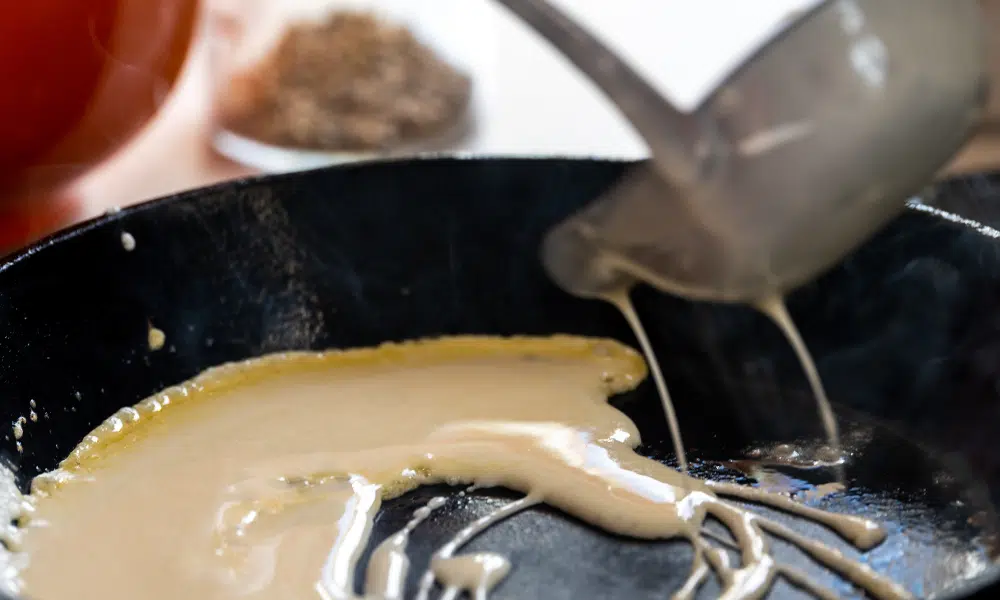
Place some oil in a frying pan on the hob on medium-high heat, then add a little batter, tip to spread it across the bottom of the pan, then fry until golden on each side.
How Do You Make Yorkshire Puddings?
To make Yorkshire puddings, place 70g plain flour in a bowl, whisk in 2 large eggs until smooth, then slowly add 100ml of milk and whisk until completely lump-free. Yorkshire pudding batter should then be left to rest in the fridge, ideally for at least 2 hours.
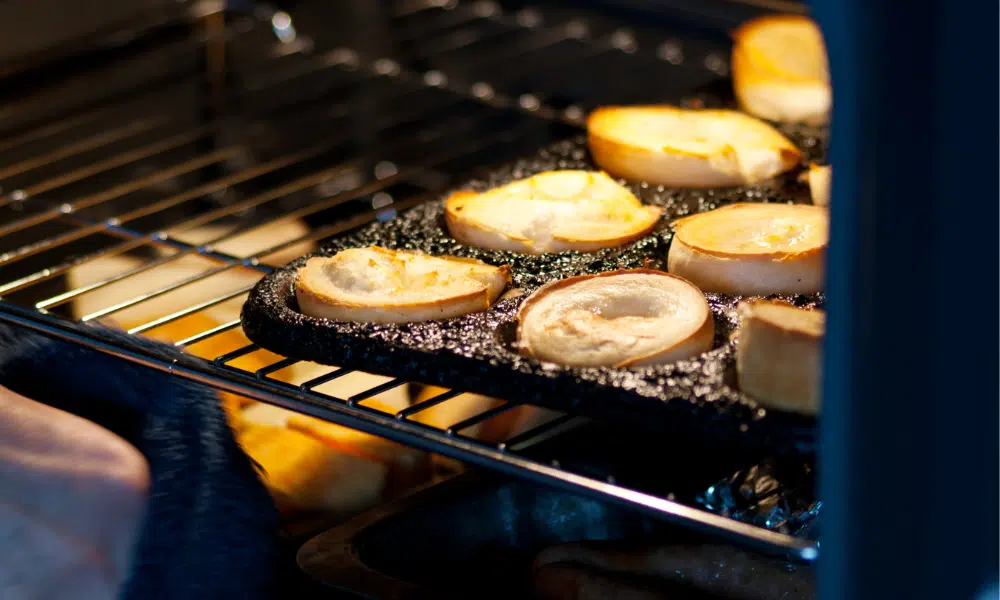
When you are ready to cook your Yorkshire puddings, preheat the oven to 230oC. Place a dice of lard in each compartment of a 12-hole muffin tin, then place in the oven.
When the fat starts to smoke, remove the tin and pour a little of the batter into each hole. Bake in the oven for 20-25 minutes until the puddings have risen and browned.
What Is the Difference Between Pancake Mix and Yorkshire Pudding Mix?
As already noted, there isn’t a lot of difference between the mixes themselves; the ingredients are the same, just in slightly different quantities. However, the methods used to cook them are very different, resulting in a completely different final product.
Interestingly, given the similarity of the recipes, Yorkshire puddings are generally considered savoury, while pancakes are usually seen as sweet.
Yorkshire puddings are a favourite alongside a roast dinner and are also popular with sausages as part of that family favourite, Toad in the Hole.
Some like their Yorkshire pudding to be as big as a dinner plate, making it a perfect container for all kinds of gravy or sauce-based dishes, such as a casserole or even a curry!
Pancakes, on the other hand, tend to be served with sweet toppings. Lemon and sugar are a firm favourite in our house, followed closely by golden syrup. Sweet sauces and syrups are also popular, as well as chocolate spread and jam.
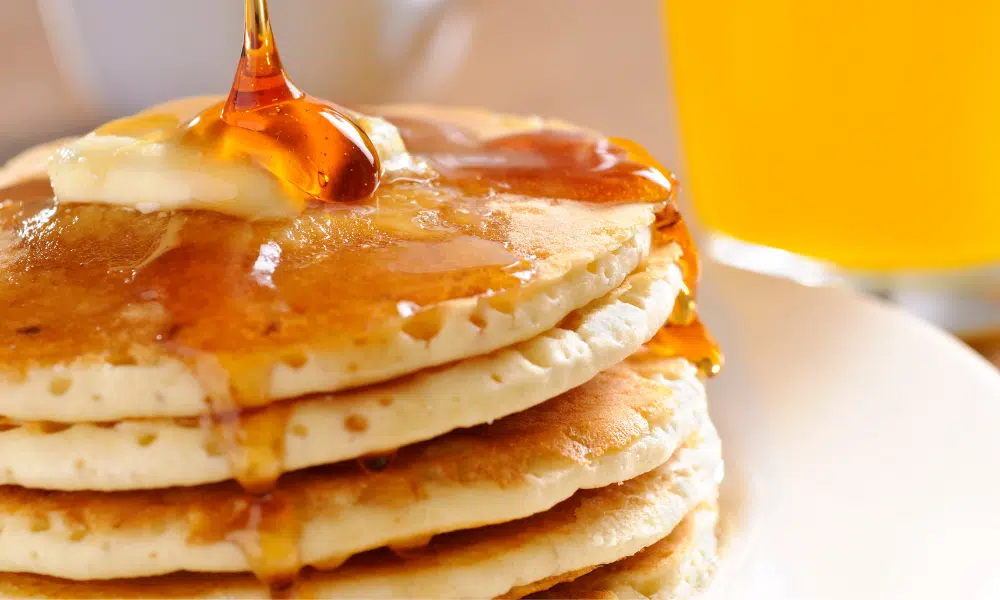
Although less common, savoury pancakes are an excellent option for a lunch or light dinner. Toppings can go from something simple like ham and cheese or mixed vegetables to those that take a little more time to prepare, like Bolognese or haddock and prawns.
Can You Use Packet Pancake Mix to Make Yorkshire Puddings?
Many shop-bought mixes are sold as being suitable for making both pancakes and Yorkshire puddings. Often this will be made clear in the name of the product and in the cooking instructions on the back of the packaging.
If it isn’t clear from the packaging, check the ingredients, as some pancake mixes include sugar, in which case it won’t be suitable for making Yorkshire puddings.
What Else Can You Use Pancake Mix for?
So, we’ve established that you can use pancake mix to make Yorkshire puddings, but if you’re looking for other ways to use up leftover pancake mix, there are other options.
Firstly, pancake mix will keep in the fridge for up to two days, so if you just can’t manage to eat them all in one evening, consider finishing them off tomorrow.
Alternatively, pancake batter freezes well, so pour it into a freezer bag and freeze it for up to three months. Just make sure you label it.
Pancake mix also makes a great batter for chicken or fish. You can add herbs and spices to the mix, then dip pieces of chicken or fish in the mixture before cooking in a deep-fat fryer or a frying pan.
What About Scotch Pancakes and American-Style Pancakes?
The batter used to make the thicker pancakes associated with breakfast, such as Scotch pancakes or American-style pancakes, does contain different ingredients, so it isn’t suitable for making Yorkshire puddings.
These types of pancakes are thick, light and fluffy. Typically recipes will include self-raising flour rather than plain flour or will include a raising agent such as baking powder. There is usually sugar in these recipes too.
Pancake Mix FAQs
Do you have further questions about pancake mix and how it can be used for things other than pancakes? Then check these out:
Yes, you can use pancake mix as the base for waffles but you will need to add some ingredients to it, such as some oil and maybe even some extra eggs so your waffles are light and fluffy.
Pancake mix can be used to make crepes but you will need to loosen it a little with a splash of milk so you can get your crepes nice and thin when cooking them.
Sources
Where we obtain our information and verify the facts in this article:
Martha Stewart
How to make traditional pancakes.
BBC Good Food
How to make classic Yorkshire puddings.
Freeze It
How to store pancakes in the freezer.

Elizabeth Masterman is a freelance writer, part-time teacher and mum of two. She loves cooking family meals and tasty bakes, and uses her freezer to make her busy life a little bit easier. When she has free-time (which is rare!) she loves running, crafting and spending time outdoors.