
We have all experienced the frustration of being in the middle of making a dinner you have been looking forward to only to realise that you are missing the simplest ingredient you need to make the dish. For some of us, such a realisation can ruin our day.
A very common improvisation that often happens in the kitchen is swapping out missing flour for corn flour. This may work when you are making something with only a little flour, but what happens if you are making something that uses a lot of flour? Like the beloved Yorkshire pudding?
Yorkshire puddings are among the few dishes that will work fine using corn flour. But to ensure your puddings turn out as they should, follow a gluten-free Yorkshire pudding recipe.
Do Yorkshire Puddings Need Flour?
The great thing about Yorkshire puddings is that they require very few ingredients, all of which are part of the everyday kitchen anyway so you are likely to have what you need or a suitable alternative to hand whenever you decide to make them.
That said, your Yorkshire puddings will not bake as they should if you decide to skip out on any of the necessary ingredients or their alternatives, including flour.
Some think flour and a leavening agent make Yorkshire puddings rise and develop their shape in the oven.
That is false; it is mainly the eggs and the batter’s reaction to the hot oil that makes them puff up as they should.
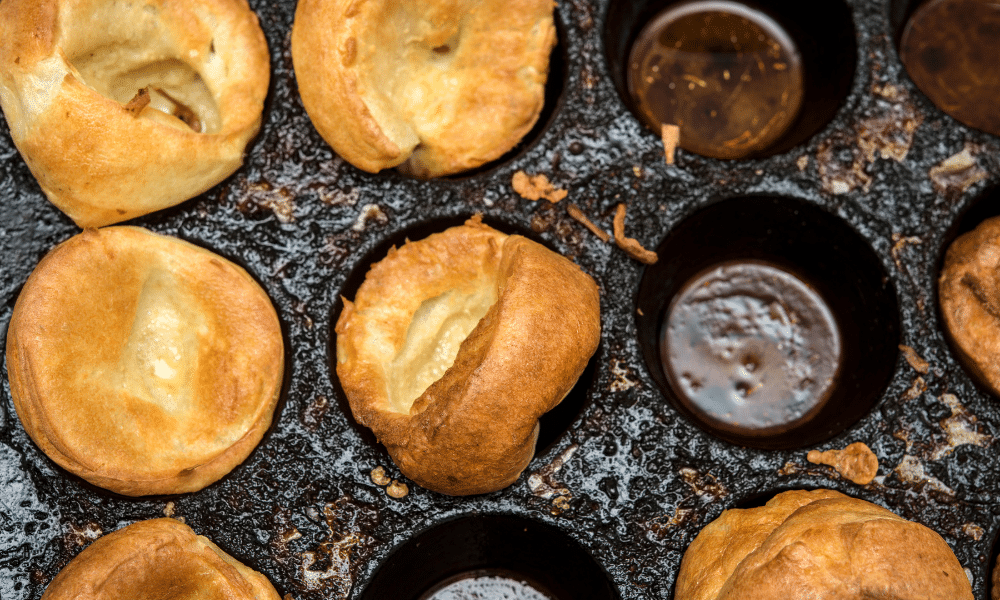
The flour is included in the batter to bind everything together and thicken the batter. Otherwise, with how much milk and how many eggs are used to make Yorkshire puddings, you would be left with a sloppy mess.
So, while you can swap out the flour for corn flour or gluten-free flour very successfully, you will still need to use some alternative instead of skipping out of the flour aspect altogether for your Yorkshire puddings to work.
Is a Leavening Agent Required?
No leavening agent is needed to make Yorkshire puddings, contrary to popular belief.
All you need to make the puddings rise as they should is hot oil and well beaten eggs.
Even when using regular flour like most Yorkshire pudding recipes require, you do not need to use baking powder, baking powder, or anything of the sort. In fact, trying to use a leavening agent runs the risk of ruining the puddings.
Is Corn Flour Gluten Free
The reason that most, if not all, gluten free Yorkshire pudding recipes rely on corn flour to replace flour in a traditional Yorkshire pudding recipe is because corn flour is a simple, affordable, easy to find flour that is entirely gluten free.
Of course, you should always double check the packaging of anything you buy if you have gluten intolerances. But corn flour sold at your local supermarket should be gluten free.
Corn Flour vs Plain Flour
Okay, so now that we have established that you should have no issues using corn flour in place of regular flour when making Yorkshire puddings, you might be wondering what else you can make the same substitution for.
Are corn flour and plain flour really that different? Let us take a look and some of their similarities and differences:
Floury Definition
Most people associate the term flour with plain or self-rising flour. However, corn flour is also a type of flour by its definition.
A flour is essentially any fine powder that has been made using ground nuts, grains, or seeds, including corn (hence corn flour) and wheat.
Thickening Agents
Corn flour is very commonly used in the kitchen to make a slurry, which is corn flour that is mixed with cold water until it dissolves. This can then be added to soups, sauces or stews to help thicken up the liquid which is made possible as corn flour includes starch.
Similarly, flour also includes starch and so can be used to thicken up sauces, soups and other hot liquid dishes, too. To do so, the same method for when using corn flour is used to prevent the flour from clumping together.
Source Ingredient
As most people know, plain flour that is used so widely in cooking is a wheat product made by grinding down wheat into a fine powder. Because it is made from wheat, plain flour includes gluten so it does not suit all diets.
Corn flour is made using dried corn that is ground into an ultra-fine powder. Corn does not include gluten but is instead a starch, making it safe for gluten-free diets.
Included Nutrients
Due to the different source ingredients used to make corn flour and plain flour, there is a lot of nutrients like more protein and minerals that corn flour lacks.
Sure, corn flour has fibre, but that is only so useful when it comes to the science of the cooking world. That is why you will rarely see corn flour in baking recipes as most cookies and cakes need the protein of plain flour to develop the right textures.
Yorkshire Pudding FAQs
If you have further questions about Yorkshire puddings and how to make them then check out these FAQs:
Yes, cornstarch is the name used in the US and corn flour is the name used in the UK for the same ingredient.
Although you can make a batter with self raising flour, you may have some textural issues when using self raising flour. They may puff up and then collapse with too much raising agent.
Sources
Where we obtain our information and verify the facts in this article:
Gluten Free Tranquility
How to make Yorkshire puddings without flour
Bake It With Love
Comparing corn flour with plain flour

Acacia may be a freelance writer by day, but they are a food fanatic by night. They are always trying out new recipes or finding different ways to elevate classical dishes. But their biggest culinary aim is to educate others on the basics of the kitchen so that they too can enjoy delicious food.